In terms of production, Generations made more use of striking locations than previous Trek films. David Carson’s direction and the editing were crisp and effective. There are differing opinions on the lighting-- unusual for a Trek film, and specifically different from the lighting within the Enterprise-D as seen in the TNG series. Some viewers see this lighting—particularly the contrast of light and shadow—as one of the film’s artistic strong points. When I first saw it in a theatre, it looked like a problem. Projection in ordinary movie theatres is not always ideal, and the shadowy areas were very dark. Even on my DVD now, the contrast between light and dark appears exaggerated. So I don’t think it really works, especially inside the Enterprise, where it seems too extreme to be realistic.
The lighting is just about perfect, however, in two key scenes: the soft outdoor light when Picard and Kirk are talking on horseback, and the bright sunlight streaming through the ruins of the Enterprise when Riker and Picard are talking at the end of the film.
The choice of the rocky Valley of the Sun for Veridian 3 did make for some striking shots, but overall I thought it was bothersome. The starkness of the landscape may have seemed “alien,” but we’ve seen this kind of barren landscape repeatedly in Trek films. It has the quality of Vulcan in Trek I, III and IV, and of the Shakaree planet in V. Moore and Braga said they originally conceived of it as a jungle, which would have been visually better as well as more thematically appropriate (time as a predator.) This location looked lifeless. (Perhaps its contrast to Kirk’s Nexus landscapes was part of the point.) Even visually, it was too bright, too harsh to keeping watching for long. It was also so “perfect” that some backgrounds looked more like matte paintings than the real mountains they probably were.
The important effects, however, were very effective: the Nexus ribbon, the Enterprise-D crash. Both Enterprise ships looked great, inside and out. The Stellar Cartography effects may be a little dated now, but the set is still impressive.
Many TNG fans, myself included, were troubled by how little most of the Enterprise-D crew got to do in this movie. We were used to seeing more character interaction. DeForest Kelly once said that Trek films are a collection of moments, and they all got at least one (though Dr. Crusher did seem shortchanged.) But there was the excuse that a lot of time was given over to Kirk and the opening Enterprise B scene.
Still, despite all these misgivings, I still enjoy watching this movie. On first viewing I loved many of the scenes separately, and I loved Dennis McCarthy’s music, especially the opening and the theme. And I was very taken with the time metaphors, and Picard’s last speech—which I don’t hesitate to say I have recorded and memorized. I’m come to appreciate more aspects of this movie on subsequent viewings, and to forgive its flaws.
Tuesday, April 10, 2007


The shooting script and the novelization by J.M. Dillard add a few details. In the script, Picard wonders if forcing Worf to walk the plank (in the sailing ship scene) is taking things too far. Riker replies that when they held Counsellor Troi’s promotion in ancient Rome, “we threw her to the lions, remember?”
After Kirk’s first death on the Enterprise-B, the novelization includes scenes of Spock and McCoy reacting to the news. In both, Guinan’s experience in the Nexus is revealed to be the source of her uncanny “sixth sense” that transcends time, as evidenced by her knowing that the alternate timeline in “Yesterday’s Enterprise” was wrong.
But neither deals with the most obvious problem: why does Picard choose to go back to confront Soran at a time and place where Soran has the upper hand? Why not days before, on the Enterprise? (In fact, the novelization makes it worse—Picard can’t think of an alternate solution, when most people who saw the movie readily could.)
Dillard gives Kirk an additional set of Nexus fantasies—weddings with several of his lady loves, with friends in attendance like Gary Mitchell and Will Decker---all in the best fanfiction spirit.
The Special Collection DVD has the Braga/Moore audio commentary (often insightful but like a lot of these commentaries they make simple mistakes that indicate they've forgotten aspects of their own movie and are too busy talking to notice) and the always entertaining Okudas text commentary. The second disk has a number of featurettes, not very well organized and none of them particularly distinguished, although it's always fun to see the cast and other participants talk about the movie, and in this case the TNG actors tell us their impressions as the series ended and the movie began, as well as the differences in how each was done. There are several segments on visual effects but nothing on the music.
The deleted scenes include rough footage for what was to be an early scene in which Kirk lands after skydiving from orbit, no big loss to the film. The others are discards of scenes that appear, including the original ending of Kirk shot in the back. There's a nice tribute to original series art director Matt Jeffries.
After Kirk’s first death on the Enterprise-B, the novelization includes scenes of Spock and McCoy reacting to the news. In both, Guinan’s experience in the Nexus is revealed to be the source of her uncanny “sixth sense” that transcends time, as evidenced by her knowing that the alternate timeline in “Yesterday’s Enterprise” was wrong.
But neither deals with the most obvious problem: why does Picard choose to go back to confront Soran at a time and place where Soran has the upper hand? Why not days before, on the Enterprise? (In fact, the novelization makes it worse—Picard can’t think of an alternate solution, when most people who saw the movie readily could.)
Dillard gives Kirk an additional set of Nexus fantasies—weddings with several of his lady loves, with friends in attendance like Gary Mitchell and Will Decker---all in the best fanfiction spirit.
The Special Collection DVD has the Braga/Moore audio commentary (often insightful but like a lot of these commentaries they make simple mistakes that indicate they've forgotten aspects of their own movie and are too busy talking to notice) and the always entertaining Okudas text commentary. The second disk has a number of featurettes, not very well organized and none of them particularly distinguished, although it's always fun to see the cast and other participants talk about the movie, and in this case the TNG actors tell us their impressions as the series ended and the movie began, as well as the differences in how each was done. There are several segments on visual effects but nothing on the music.
The deleted scenes include rough footage for what was to be an early scene in which Kirk lands after skydiving from orbit, no big loss to the film. The others are discards of scenes that appear, including the original ending of Kirk shot in the back. There's a nice tribute to original series art director Matt Jeffries.
Sunday, March 04, 2007

TrekCheck: Trek XI and Shatner's Brain
By now you've seen the stories: Paramount has officially announced Star Trek XI for Christmas 2008, to be directed by J.J. Abrams. The real news to come will be the casting, as rumors continue to emphasize such big names as Matt Damon and Gary Sinise. The casting will tell us finally what Trek characters are featured, which will give us some idea of the story, and probably the budget.
Repeated rumors have turned out so far to be pretty accurate, so we may soon face the reality of other actors playing Kirk and Spock. The one repeated rumor that never seemed credible to me was that the film would center on Starfleet Academy, not only because of the Harve Bennett proposal but the new William Shatner novel with Judith and Gar Stevens, The Academy: Collision Course, which sounds like it could be a series of novels, especially since Shatner proposed it as an idea for a post-Enterprise Star Trek series. We've also heard tell that the film isn't limited to one time period, which would make sense in an Abrams film---what little I've seen of Lost seems to be largely about flashbacks.
The delicate matter of replacing Kirk and Spock while the actors who created them are still on the scene is likely still of concern to the moviemakers, if not to the most enthusiastic fans of a Trek Reboot. These guys are global icons, and new actors playing their signature characters is not the walk in the park some enthusiasts seem to think. Audience acceptance is not guaranteed.
I'd guess that Abrams also knew he had to at least have Shatner and Nimoy's blessing or things could get ugly with fans. He apparently approached them about "being involved," and Shatner has indicated he got an invitation to be in the film.
And this is where Shatner's brain comes in. I'll start my speculations by repeating that I haven't ever spoken with him (though I've been in the same room with him, chatting with Leonard Nimoy) but that I basically respect him. He's made inconsistent statements on Trek XI, and there can be many reasons why. I don't know his thinking, but I can't help guessing.
So I've tried to figure out the various statements he's made or have been attributed to him concerning Trek XI. So let me speculate that early on, he really wanted to be in the 11th Star Trek movie, and he probably did that commercial for satellite TV (or whatever it was) in which he donned the crimson movie uniform, and strode around a blue-screen bridge among cinema images of his crew, in order to show he still had the right stuff.
And in fact the commercial suggested he does have another Kirk moment in him. But statements he made afterwards suggest the experience sobered him. He hinted that too much digital trickery had been required to make him look that good. In any case, it was after that commercial aired that he began downplaying the idea of appearing in Trek XI. After all, Kirk had been killed in Generations, how would the writers overcome that? he said, sounding dubious.
Of course, he himself had already solved that problem once. Almost immediately after Generations, Shatner engineered Kirk's resurrection in his novel, The Return--Kirk's body is reanimated by nanites thanks to the Romulans and the Borg. And that's only one of many possibilities--it is science fiction, after all.
The Star Trek movie that would probably win over fans while making new ones would involve a fairly substantive role in the story for Shatner and Nimoy, so that the whole film would be a kind of series of flashbacks, or an interaction between the past and their present. A simple cameo of them looking down from heaven (or the Nexus) really wouldn't do it. (And there's the question of whether Nimoy would do it without some real involvement in the story--he turned down a kind of cameo in Generations.)
There are risks to showing this continuum, but if the new Kirk is as heavy duty as Matt Damon, he could deal with the danger of damaging the suspension of disbelief. As I've mentioned before, unless Abrams and Paramount have secretly but firmly ruled out sequels, everyone involved has to be thinking that this may not be a one-time deal: the new Kirk may be starting a new Trek film series. If there is too much a Shatner and Nimoy story, it could confuse the issue. They are still powerful icons. But that could be used to good advantage. Nobody really wants to see the same attitude to them attempted seriously as was satirized in the Generations Enterprise bridge scene (with Kirk, the living legend, getting applause for saying, "Take her out.") If they accomplish something important to the story in Trek XI, everyone would be happy, and authentically moved.
So like everybody else I await the next announcements, and hope that Abrams nod to Roddenberry in his first quotes as designated director will result in a real Star Trek movie, and not (as some wag has already suggested) a Lost, in Space.
By now you've seen the stories: Paramount has officially announced Star Trek XI for Christmas 2008, to be directed by J.J. Abrams. The real news to come will be the casting, as rumors continue to emphasize such big names as Matt Damon and Gary Sinise. The casting will tell us finally what Trek characters are featured, which will give us some idea of the story, and probably the budget.
Repeated rumors have turned out so far to be pretty accurate, so we may soon face the reality of other actors playing Kirk and Spock. The one repeated rumor that never seemed credible to me was that the film would center on Starfleet Academy, not only because of the Harve Bennett proposal but the new William Shatner novel with Judith and Gar Stevens, The Academy: Collision Course, which sounds like it could be a series of novels, especially since Shatner proposed it as an idea for a post-Enterprise Star Trek series. We've also heard tell that the film isn't limited to one time period, which would make sense in an Abrams film---what little I've seen of Lost seems to be largely about flashbacks.
The delicate matter of replacing Kirk and Spock while the actors who created them are still on the scene is likely still of concern to the moviemakers, if not to the most enthusiastic fans of a Trek Reboot. These guys are global icons, and new actors playing their signature characters is not the walk in the park some enthusiasts seem to think. Audience acceptance is not guaranteed.
I'd guess that Abrams also knew he had to at least have Shatner and Nimoy's blessing or things could get ugly with fans. He apparently approached them about "being involved," and Shatner has indicated he got an invitation to be in the film.
And this is where Shatner's brain comes in. I'll start my speculations by repeating that I haven't ever spoken with him (though I've been in the same room with him, chatting with Leonard Nimoy) but that I basically respect him. He's made inconsistent statements on Trek XI, and there can be many reasons why. I don't know his thinking, but I can't help guessing.
So I've tried to figure out the various statements he's made or have been attributed to him concerning Trek XI. So let me speculate that early on, he really wanted to be in the 11th Star Trek movie, and he probably did that commercial for satellite TV (or whatever it was) in which he donned the crimson movie uniform, and strode around a blue-screen bridge among cinema images of his crew, in order to show he still had the right stuff.
And in fact the commercial suggested he does have another Kirk moment in him. But statements he made afterwards suggest the experience sobered him. He hinted that too much digital trickery had been required to make him look that good. In any case, it was after that commercial aired that he began downplaying the idea of appearing in Trek XI. After all, Kirk had been killed in Generations, how would the writers overcome that? he said, sounding dubious.
Of course, he himself had already solved that problem once. Almost immediately after Generations, Shatner engineered Kirk's resurrection in his novel, The Return--Kirk's body is reanimated by nanites thanks to the Romulans and the Borg. And that's only one of many possibilities--it is science fiction, after all.
The Star Trek movie that would probably win over fans while making new ones would involve a fairly substantive role in the story for Shatner and Nimoy, so that the whole film would be a kind of series of flashbacks, or an interaction between the past and their present. A simple cameo of them looking down from heaven (or the Nexus) really wouldn't do it. (And there's the question of whether Nimoy would do it without some real involvement in the story--he turned down a kind of cameo in Generations.)
There are risks to showing this continuum, but if the new Kirk is as heavy duty as Matt Damon, he could deal with the danger of damaging the suspension of disbelief. As I've mentioned before, unless Abrams and Paramount have secretly but firmly ruled out sequels, everyone involved has to be thinking that this may not be a one-time deal: the new Kirk may be starting a new Trek film series. If there is too much a Shatner and Nimoy story, it could confuse the issue. They are still powerful icons. But that could be used to good advantage. Nobody really wants to see the same attitude to them attempted seriously as was satirized in the Generations Enterprise bridge scene (with Kirk, the living legend, getting applause for saying, "Take her out.") If they accomplish something important to the story in Trek XI, everyone would be happy, and authentically moved.
So like everybody else I await the next announcements, and hope that Abrams nod to Roddenberry in his first quotes as designated director will result in a real Star Trek movie, and not (as some wag has already suggested) a Lost, in Space.
Monday, February 26, 2007


A Year Late, the Academy Honors Scotty
After last year's Oscars, I wrote about the omission of James Doohan from the ritual honoring of those in the motion picture industry who had died the previous year. I must not have been the only one who noticed. James Doohan was honored at the 2007 Oscars among those the industry lost in the past year (he died on July 20, 2005.) The tribute showed a moment from Star Trek: The Motion Picture, with Captain Kirk saying "Thank you, Mr. Scott" at the end of the shuttle ride to the Enterprise, and Scotty replying, "Aye, Sir"--it was the only dialogue in the entire tribute reel--followed by an image of Doohan in this film on split screen with him in a later Trek film, perhaps Generations, as his name came on the screen. Later this week (March 3) is the 87th anniversary of Doohan's birth.
Also honored in that tribute was Jane Wyatt, who played Amanda, Spock's mother (she died on October 20, 2006.) The images of her that were shown appeared to be from her first feature, Lost Horizon, directed by Frank Capra. (Most of her scenes were cut from the film seen in recent decades in the U.S. until a restored version came out on DVD.) Her last big screen appearance was as Amanda in Star Trek IV: The Voyage Home. An assistant director on that film was Frank Capra III.
It was fitting perhaps that Star Trek was part of the ceremony this year, as it was an Academy celebration that honored its past (with Steven Speilberg, George Lucas and Francis Ford Coppola presenting the Best Director award to Marty Scorcese) and directed attention not only to its future (with the international diversity of nominees) but everyone's future, with the Best Documentary Award (and Best Song) to An Inconvenient Truth, Al Gore's film about the Climate Crisis, and the Academy's official committment to taking action to save the future from the worst effects of global heating.
After last year's Oscars, I wrote about the omission of James Doohan from the ritual honoring of those in the motion picture industry who had died the previous year. I must not have been the only one who noticed. James Doohan was honored at the 2007 Oscars among those the industry lost in the past year (he died on July 20, 2005.) The tribute showed a moment from Star Trek: The Motion Picture, with Captain Kirk saying "Thank you, Mr. Scott" at the end of the shuttle ride to the Enterprise, and Scotty replying, "Aye, Sir"--it was the only dialogue in the entire tribute reel--followed by an image of Doohan in this film on split screen with him in a later Trek film, perhaps Generations, as his name came on the screen. Later this week (March 3) is the 87th anniversary of Doohan's birth.
Also honored in that tribute was Jane Wyatt, who played Amanda, Spock's mother (she died on October 20, 2006.) The images of her that were shown appeared to be from her first feature, Lost Horizon, directed by Frank Capra. (Most of her scenes were cut from the film seen in recent decades in the U.S. until a restored version came out on DVD.) Her last big screen appearance was as Amanda in Star Trek IV: The Voyage Home. An assistant director on that film was Frank Capra III.
It was fitting perhaps that Star Trek was part of the ceremony this year, as it was an Academy celebration that honored its past (with Steven Speilberg, George Lucas and Francis Ford Coppola presenting the Best Director award to Marty Scorcese) and directed attention not only to its future (with the international diversity of nominees) but everyone's future, with the Best Documentary Award (and Best Song) to An Inconvenient Truth, Al Gore's film about the Climate Crisis, and the Academy's official committment to taking action to save the future from the worst effects of global heating.
Wednesday, February 14, 2007

24 vs. Star Trek
by William S. Kowinski
We watched the whole first season of "24." We were fascinated by the "ticking clock" device, the fact that each episode was supposed to represent a full day. We were sucked in by the stories--which of Jack Bauer's colleagues was the traitor, who will get the ear of the presidential candidate (the good guys, the bad guys), what will happen to his daughter, his wife? There were some credibility problems but its forward momentum and the characters kept us tuned in.
Then it was renewed as a series, though it seemed fantastic that another credible plot could be constructed using that all-in-one-day, ticking clock format. So we tuned in again for the first show of that second season, and they had what looked like a story that might work. Keifer Sutherland, so impressive before, was as intense as ever. But early in that show, he tortured a possible witness, and then killed him in cold blood. And that's when I stopped watching, and I haven't seen a full episode since.
But I have seen enough, and heard enough about the show, to know that if anything "24" has escalated the elements of that episode that turned me off--a level and kind of violence that simply isn't credible, and is otherwise excessive and gratuitious, its only function being to compensate with cheap thrills for the lack of inventiveness in the storytelling.
This past week or so, these aspects of "24" have become quite controversial. I saw Keifer Sutherland on the Charlie Rose show, saying that politically he's a liberal, that the torture in the show is a device, that in reality such "ticking clock" scenarios hardly ever happen (where the good guys have to extract information about an imminent attack) and that getting such information through torture almost never happens (as Sutherland said, people being tortured will tell you whatever you want to hear.) Yet he remains the star of the show--it's won him awards, and as he acknowledged, it rescued a very shaky career. But it's all just a show, he said.
But evidence is emerging that it doesn't stop there. Since 9/11, shows like "24" have increasingly shown graphic and violent torture. And these scenes are literally being reenacted by real interrogators, torturing real people, in some cases replicating what they just saw on "24."
Although "24" is the most frequent and violent purveyor of TV dramatized torture, it isn't alone. Another show that human rights groups name is "Lost," produced by J.J. Abrams, who happens to be the producer in charge of the next Star Trek feature film--in effect, in charge of the Star Trek future.
But isn't this torture and violence part of the gritty reality of the post-9/11 world of terrorism? And isn't it a legitimate tool of drama anyway? In examining these and related questions, we might also discover why the world needs Star Trek and especially the Star Trek vision, now more than ever.
by William S. Kowinski
We watched the whole first season of "24." We were fascinated by the "ticking clock" device, the fact that each episode was supposed to represent a full day. We were sucked in by the stories--which of Jack Bauer's colleagues was the traitor, who will get the ear of the presidential candidate (the good guys, the bad guys), what will happen to his daughter, his wife? There were some credibility problems but its forward momentum and the characters kept us tuned in.
Then it was renewed as a series, though it seemed fantastic that another credible plot could be constructed using that all-in-one-day, ticking clock format. So we tuned in again for the first show of that second season, and they had what looked like a story that might work. Keifer Sutherland, so impressive before, was as intense as ever. But early in that show, he tortured a possible witness, and then killed him in cold blood. And that's when I stopped watching, and I haven't seen a full episode since.
But I have seen enough, and heard enough about the show, to know that if anything "24" has escalated the elements of that episode that turned me off--a level and kind of violence that simply isn't credible, and is otherwise excessive and gratuitious, its only function being to compensate with cheap thrills for the lack of inventiveness in the storytelling.
This past week or so, these aspects of "24" have become quite controversial. I saw Keifer Sutherland on the Charlie Rose show, saying that politically he's a liberal, that the torture in the show is a device, that in reality such "ticking clock" scenarios hardly ever happen (where the good guys have to extract information about an imminent attack) and that getting such information through torture almost never happens (as Sutherland said, people being tortured will tell you whatever you want to hear.) Yet he remains the star of the show--it's won him awards, and as he acknowledged, it rescued a very shaky career. But it's all just a show, he said.
But evidence is emerging that it doesn't stop there. Since 9/11, shows like "24" have increasingly shown graphic and violent torture. And these scenes are literally being reenacted by real interrogators, torturing real people, in some cases replicating what they just saw on "24."
Although "24" is the most frequent and violent purveyor of TV dramatized torture, it isn't alone. Another show that human rights groups name is "Lost," produced by J.J. Abrams, who happens to be the producer in charge of the next Star Trek feature film--in effect, in charge of the Star Trek future.
But isn't this torture and violence part of the gritty reality of the post-9/11 world of terrorism? And isn't it a legitimate tool of drama anyway? In examining these and related questions, we might also discover why the world needs Star Trek and especially the Star Trek vision, now more than ever.

Pulp Torture
How "realistic" are the torture scenes in "24," where they are conducted by U.S. government officials? One recent news story had this to say:
Retired U.S. Army Col. Stu Herrington, who learned interrogation techniques in Vietnam and is an expert asked by the Army to consult on conditions at Guantanimo Bay, said that if Bauer worked for him, he'd be headed for a court-martial.
"I am distressed by the fact that the good guys are depicted as successfully employing what I consider are illegal, immoral and stupid tactics, and they're succeeding," Herrington said. "When the good guys are doing something evil and win, that bothers me."
In fact, it appears that these torture methods aren't based on research into real practices. In another story (in the New Yorker magazine): Howard Gordon, who is the series’ “show runner,” or lead writer, told me that he concocts many of the torture scenes himself. “Honest to God, I’d call them improvisations in sadism,” he said.
The article describes some of these inventions: The show’s villains usually inflict the more gruesome tortures: their victims are hung on hooks, like carcasses in a butcher shop; poked with smoking-hot scalpels; or abraded with sanding machines. But the good guys do it, too:
With unnerving efficiency, suspects are beaten, suffocated, electrocuted, drugged, assaulted with knives, or more exotically abused; almost without fail, these suspects divulge critical secrets.
That is contrary to the experience of generations of intelligence agency interrogators and military officers: torture doesn't work in acquiring information, kindness does. But that's not what viewers see--including American viewers in Iraq. One former U.S. Army specialist, Tony Lagouranis, was one of several officers who visited the set of "24" to talk about just how upset they were. One reason for their distress: some American interrogators in Iraq--usually the younger ones, who through no fault of their own hadn't received much training--were literally imitating what they saw on "24" and similar programs. A professor at a military academy said that one of his biggest training challenges is Jack Bauer.
In the real world, torture inflicts lasting wounds on both the tortured and the torturer. Now there are millions of people watching these scenes, and as fantastic as they may appear to some, many believe them. They believe the view of the world that they represent. And this view is not always there by coincidence.
How "realistic" are the torture scenes in "24," where they are conducted by U.S. government officials? One recent news story had this to say:
Retired U.S. Army Col. Stu Herrington, who learned interrogation techniques in Vietnam and is an expert asked by the Army to consult on conditions at Guantanimo Bay, said that if Bauer worked for him, he'd be headed for a court-martial.
"I am distressed by the fact that the good guys are depicted as successfully employing what I consider are illegal, immoral and stupid tactics, and they're succeeding," Herrington said. "When the good guys are doing something evil and win, that bothers me."
In fact, it appears that these torture methods aren't based on research into real practices. In another story (in the New Yorker magazine): Howard Gordon, who is the series’ “show runner,” or lead writer, told me that he concocts many of the torture scenes himself. “Honest to God, I’d call them improvisations in sadism,” he said.
The article describes some of these inventions: The show’s villains usually inflict the more gruesome tortures: their victims are hung on hooks, like carcasses in a butcher shop; poked with smoking-hot scalpels; or abraded with sanding machines. But the good guys do it, too:
With unnerving efficiency, suspects are beaten, suffocated, electrocuted, drugged, assaulted with knives, or more exotically abused; almost without fail, these suspects divulge critical secrets.
That is contrary to the experience of generations of intelligence agency interrogators and military officers: torture doesn't work in acquiring information, kindness does. But that's not what viewers see--including American viewers in Iraq. One former U.S. Army specialist, Tony Lagouranis, was one of several officers who visited the set of "24" to talk about just how upset they were. One reason for their distress: some American interrogators in Iraq--usually the younger ones, who through no fault of their own hadn't received much training--were literally imitating what they saw on "24" and similar programs. A professor at a military academy said that one of his biggest training challenges is Jack Bauer.
In the real world, torture inflicts lasting wounds on both the tortured and the torturer. Now there are millions of people watching these scenes, and as fantastic as they may appear to some, many believe them. They believe the view of the world that they represent. And this view is not always there by coincidence.

Torture Porn
The Parents Television Council found no prime-time TV scenes of torture in 1996 and 1997. But in 2003, there were 228 such scenes, and over 100 in both 2004 and 2005. In the first five seasons of "24" alone, there were 64 torture scenes--about one torture scene for every two episodes. Moreover, before 2001 most TV torture was conducted by villains.
Is terrorism and 9/11 the reason--or the excuse? Torture and graphic violence work in TV and movie stories because they tap into a very basic survival instinct. As a species, we become instantly alert to threat, poised to fight or flee. Violence gets our full attention like nothing else, not even sex.
This attention is accompanied by heightened sensations, a chemical tension. It can be fascinating, and addictive. We come back for more. What better formula could there be for a TV series, and its sponsors?
It's also very, very easy. Getting that addicted attention doesn't require great effort with story, dialogue, ideas or even production values. Acting extreme emotions is also relatively easy, even if it's the kind that's most often awarded. Writers don't have to sweat out an ingeniously plotted and paced story, they don't have to come up with something new every week. It's almost all n the editing. They just push the same reliable buttons. It's as good as printing your own pay check.
But why hasn't TV done this to this extent before? Viewers wouldn't put up with it. They would be scandalized, embarrassed and offended, and perhaps even insulted. But this supposed new reality of a world suddenly filled with dark forces has given these writers, producers and actors permission to push these buttons. People have been convinced by their leaders that they are threatened as never before, that these are extraordinarily dangerous times, and that they have much to fear from terrorists and "evildoers." Fear has given the audience permission to indulge in what I've seen referred to as "torture porn."
Exploring the dark side of our unconscious is one thing. It has to be done very carefully and consciously, but that's not what this is. This is exploiting and manipulating the unconscious, with the viewer none the wiser.
As for its relationship to the external world: yes, the kind of terrorism that resulted in the 9-11 suicide attacks is a different threat than most the U.S. has faced, requiring new ways of responding. Torture however is not one of them--not an effective way, that is, although clearly it is being done, in Iraq and elsewhere.
And yes, the world is dangerous--but it's been dangerous for a long time. What America has experienced does not bear comparison with the London Blitz, or even what goes on today in many other western countries, let alone what life is like in Darfur.
It is the fear and not the actual danger that makes torture comforting, and dramatizing it as effective is reassuring. Though it may make the viewer feel safer, in reality it doesn't make us safer. It's fundamentally dishonest to portray it as effective. It is also sadistic, because it is dramatized to give the viewer pleasure.
This dark view of the world as predominately violent runs deep--it's fundamental to the dominant view of human nature derived from a perverse Social Darwinist interpretation of natural selection: the dog eats dog, survival of the fittest view. Such a view may even add to the violence, providing excuses to those who foment it, or who enable it with trade in weapons that constantly become more deadly and easier to obtain and use.
But that dark view is unbalanced--it simply ignores the contrary evidence we see everyday in our lives and in the natural world, where cooperation, nurture, giving and compassion are as natural and at least as necessary as anything else. But you won't get that idea from watching the so-called reality shows, any more than the plethora of dramas that depict how violent and perverse the world around us is. (You did get that idea of balance--of humanity's straddling state-- from Star Trek, right from the start.)
But we don't really have to go that deep to see why violence predominates on TV, or why torture is the style of the day. Violence is push-button drama; fear is the first ingredient of the adrenalin cocktail. During the Cold War (in real terms, a much greater threat to each of us in North America than terrorism), that was the template for the us vs. them simplification and the terms of violence. The rise in urban crime in the 70s, though real, was vastly overblown by media using fear to sell papers and get viewers, and politicians using fear to motivate voters. It also jump-started the dominance of police and crime shows, which also are prospering lavishly since 9/11.
Fear as a mighty motivator for political gain is also feeding torture porn. While Kiefer Sutherland may call himself liberal, and the "24" show runner quoted before calls himself a moderate Democrat, the co-creator and executive producer who really calls the shots, Joel Surnow, is a self-described "right-wing nut job" who is close friends with Rush Limbaugh. "24" is broadcast on Fox, affliated with Fox News, notorious for its far right slant. It's no coincidence that "24" is the darling of right wing bloggers and commentators. Surnow is straightforward about it being an expression of the Bush-Cheney view of the world. With an extremely simplistic division of the world into the forces of good (the U.S. and the Administration, which by definition can do no evil or even wrong) and the forces of evil (who do no good, and have no grievances or reasons for their views or behavior, they just hate us), and a hold on the electorate (at least up to 2005) based on keeping them fearful, this is a very easy worldview to dramatize.
But how real is it? There is a certain symmetry to politicians with no experience in war preparing the perfect worldview for writers with no experience in war or knowledge of interrogation. This all came together on the set of "24" when that delegation of military officers arrived, including U.S. Army Brigadier General Patrick Finnegan, the dean of the United States Military Academy at West Point. According to the New Yorker:
Finnegan and the others had come to voice their concern that the show’s central political premise—that the letter of American law must be sacrificed for the country’s security—was having a toxic effect. In their view, the show promoted unethical and illegal behavior and had adversely affected the training and performance of real American soldiers.
Finnegan told the producers that “24,” by suggesting that the U.S. government perpetrates myriad forms of torture, hurts the country’s image internationally. Finnegan, who is a lawyer, has for a number of years taught a course on the laws of war to West Point seniors—cadets who would soon be commanders in the battlefields of Iraq and Afghanistan. He always tries, he said, to get his students to sort out not just what is legal but what is right. However, it had become increasingly hard to convince some cadets that America had to respect the rule of law and human rights, even when terrorists did not. One reason for the growing resistance, he suggested, was misperceptions spread by “24,” which was exceptionally popular with his students. As he told me, “The kids see it, and say, ‘If torture is wrong, what about “24”?’ ” He continued, “The disturbing thing is that although torture may cause Jack Bauer some angst, it is always the patriotic thing to do.”
Gary Solis, a retired law professor who designed and taught the Law of War for Commanders curriculum at West Point, told me that he had similar arguments with his students. He said that, under both U.S. and international law, “Jack Bauer is a criminal. In real life, he would be prosecuted.” Yet the motto of many of his students was identical to Jack Bauer’s: “Whatever it takes.” His students were particularly impressed by a scene in which Bauer barges into a room where a stubborn suspect is being held, shoots him in one leg, and threatens to shoot the other if he doesn’t talk. In less than ten seconds, the suspect reveals that his associates plan to assassinate the Secretary of Defense. Solis told me, “I tried to impress on them that this technique would open the wrong doors, but it was like trying to stomp out an anthill.”
Another of the veteran interrogators at the meeting had a list of 17 methods that proved successful in obtaining information--and none of them was abusive.
Those attending the meeting did not include executive producer Surnow. He was on the phone with Roger Ailes, chairman of the Fox News channel, discussing the development of a right-wing comedy news show.
The Parents Television Council found no prime-time TV scenes of torture in 1996 and 1997. But in 2003, there were 228 such scenes, and over 100 in both 2004 and 2005. In the first five seasons of "24" alone, there were 64 torture scenes--about one torture scene for every two episodes. Moreover, before 2001 most TV torture was conducted by villains.
Is terrorism and 9/11 the reason--or the excuse? Torture and graphic violence work in TV and movie stories because they tap into a very basic survival instinct. As a species, we become instantly alert to threat, poised to fight or flee. Violence gets our full attention like nothing else, not even sex.
This attention is accompanied by heightened sensations, a chemical tension. It can be fascinating, and addictive. We come back for more. What better formula could there be for a TV series, and its sponsors?
It's also very, very easy. Getting that addicted attention doesn't require great effort with story, dialogue, ideas or even production values. Acting extreme emotions is also relatively easy, even if it's the kind that's most often awarded. Writers don't have to sweat out an ingeniously plotted and paced story, they don't have to come up with something new every week. It's almost all n the editing. They just push the same reliable buttons. It's as good as printing your own pay check.
But why hasn't TV done this to this extent before? Viewers wouldn't put up with it. They would be scandalized, embarrassed and offended, and perhaps even insulted. But this supposed new reality of a world suddenly filled with dark forces has given these writers, producers and actors permission to push these buttons. People have been convinced by their leaders that they are threatened as never before, that these are extraordinarily dangerous times, and that they have much to fear from terrorists and "evildoers." Fear has given the audience permission to indulge in what I've seen referred to as "torture porn."
Exploring the dark side of our unconscious is one thing. It has to be done very carefully and consciously, but that's not what this is. This is exploiting and manipulating the unconscious, with the viewer none the wiser.
As for its relationship to the external world: yes, the kind of terrorism that resulted in the 9-11 suicide attacks is a different threat than most the U.S. has faced, requiring new ways of responding. Torture however is not one of them--not an effective way, that is, although clearly it is being done, in Iraq and elsewhere.
And yes, the world is dangerous--but it's been dangerous for a long time. What America has experienced does not bear comparison with the London Blitz, or even what goes on today in many other western countries, let alone what life is like in Darfur.
It is the fear and not the actual danger that makes torture comforting, and dramatizing it as effective is reassuring. Though it may make the viewer feel safer, in reality it doesn't make us safer. It's fundamentally dishonest to portray it as effective. It is also sadistic, because it is dramatized to give the viewer pleasure.
This dark view of the world as predominately violent runs deep--it's fundamental to the dominant view of human nature derived from a perverse Social Darwinist interpretation of natural selection: the dog eats dog, survival of the fittest view. Such a view may even add to the violence, providing excuses to those who foment it, or who enable it with trade in weapons that constantly become more deadly and easier to obtain and use.
But that dark view is unbalanced--it simply ignores the contrary evidence we see everyday in our lives and in the natural world, where cooperation, nurture, giving and compassion are as natural and at least as necessary as anything else. But you won't get that idea from watching the so-called reality shows, any more than the plethora of dramas that depict how violent and perverse the world around us is. (You did get that idea of balance--of humanity's straddling state-- from Star Trek, right from the start.)
But we don't really have to go that deep to see why violence predominates on TV, or why torture is the style of the day. Violence is push-button drama; fear is the first ingredient of the adrenalin cocktail. During the Cold War (in real terms, a much greater threat to each of us in North America than terrorism), that was the template for the us vs. them simplification and the terms of violence. The rise in urban crime in the 70s, though real, was vastly overblown by media using fear to sell papers and get viewers, and politicians using fear to motivate voters. It also jump-started the dominance of police and crime shows, which also are prospering lavishly since 9/11.
Fear as a mighty motivator for political gain is also feeding torture porn. While Kiefer Sutherland may call himself liberal, and the "24" show runner quoted before calls himself a moderate Democrat, the co-creator and executive producer who really calls the shots, Joel Surnow, is a self-described "right-wing nut job" who is close friends with Rush Limbaugh. "24" is broadcast on Fox, affliated with Fox News, notorious for its far right slant. It's no coincidence that "24" is the darling of right wing bloggers and commentators. Surnow is straightforward about it being an expression of the Bush-Cheney view of the world. With an extremely simplistic division of the world into the forces of good (the U.S. and the Administration, which by definition can do no evil or even wrong) and the forces of evil (who do no good, and have no grievances or reasons for their views or behavior, they just hate us), and a hold on the electorate (at least up to 2005) based on keeping them fearful, this is a very easy worldview to dramatize.
But how real is it? There is a certain symmetry to politicians with no experience in war preparing the perfect worldview for writers with no experience in war or knowledge of interrogation. This all came together on the set of "24" when that delegation of military officers arrived, including U.S. Army Brigadier General Patrick Finnegan, the dean of the United States Military Academy at West Point. According to the New Yorker:
Finnegan and the others had come to voice their concern that the show’s central political premise—that the letter of American law must be sacrificed for the country’s security—was having a toxic effect. In their view, the show promoted unethical and illegal behavior and had adversely affected the training and performance of real American soldiers.
Finnegan told the producers that “24,” by suggesting that the U.S. government perpetrates myriad forms of torture, hurts the country’s image internationally. Finnegan, who is a lawyer, has for a number of years taught a course on the laws of war to West Point seniors—cadets who would soon be commanders in the battlefields of Iraq and Afghanistan. He always tries, he said, to get his students to sort out not just what is legal but what is right. However, it had become increasingly hard to convince some cadets that America had to respect the rule of law and human rights, even when terrorists did not. One reason for the growing resistance, he suggested, was misperceptions spread by “24,” which was exceptionally popular with his students. As he told me, “The kids see it, and say, ‘If torture is wrong, what about “24”?’ ” He continued, “The disturbing thing is that although torture may cause Jack Bauer some angst, it is always the patriotic thing to do.”
Gary Solis, a retired law professor who designed and taught the Law of War for Commanders curriculum at West Point, told me that he had similar arguments with his students. He said that, under both U.S. and international law, “Jack Bauer is a criminal. In real life, he would be prosecuted.” Yet the motto of many of his students was identical to Jack Bauer’s: “Whatever it takes.” His students were particularly impressed by a scene in which Bauer barges into a room where a stubborn suspect is being held, shoots him in one leg, and threatens to shoot the other if he doesn’t talk. In less than ten seconds, the suspect reveals that his associates plan to assassinate the Secretary of Defense. Solis told me, “I tried to impress on them that this technique would open the wrong doors, but it was like trying to stomp out an anthill.”
Another of the veteran interrogators at the meeting had a list of 17 methods that proved successful in obtaining information--and none of them was abusive.
Those attending the meeting did not include executive producer Surnow. He was on the phone with Roger Ailes, chairman of the Fox News channel, discussing the development of a right-wing comedy news show.

There Are Four Lights!
Over the years, Star Trek has portrayed torture from time to time. In the original series, it was sci-fi torture, very stylized, and always done by villains. Often it was an abuse of a "scientific" process, like mind-control. In the Berman-Braga era, it became more graphic at times, and less integral to a science fiction plot. By the end, there were instances in Enterprise where it seemed really gratuitious and excessive. I wrote at the time that perhaps Manny Coto was auditioning for the job he got on the writing staff of "24."
But the instance of torture that Star Trek fans are likely to remember best was early in the Berman era, in a classic Next Generation two-parter in season 6, "Chain of Command." The second episode (written by Frank Abatemarco, who also gets story credit for the first part) centered on Captain Picard's torture at the hands of a Cardassian officer (played by David Warner.) This was perhaps the best and most honest drama ABOUT torture in any TV series. It was in the finest Star Trek tradition.
It is a very sophisticated story. The writer did a great deal of research, some of it with Amnesty International. Warner is a villain, but through the conversations he has with Picard, we learn more about him and his own sufferings--he is "humanized" in that sense. We see the dangerous games that the Federation and the Cardassians are playing, reminicent of the Cold War or the Middle East. Jellico is the officer who replaces Picard as commander of the Enterprise, and he is hard and mercurial--maybe a Jack Bauer type--and a curious analogue to Warner's Cardassian.
This is very skillful drama, with suspense, twists and turns, and a lot of human drama of emotions: Riker is subordinate over Jellico's apparent dismissal of Picard's safety. Picard sacrifices himself when he is led to believe that Doctor Crusher would be tortured in his place. And so on.
But the episode is remembered for being bracingly forthcoming about torture. It's said that Patrick Stewart wanted the torture to appear real, and he insisted on being naked for several key scenes. But the motivations and effects, and not just the torture itself, were explored. At first the intent seems to be to get information from Picard, but that was quickly accomplished with drugs--Picard did not have the information sought. Then his captor caused him terrible pain and privation in the effort to get him to say there were five lights above him, and not the four he saw.
Picard comes out and says that everyone knows that torture has proven ineffective in obtaining information, or in exerting longterm control. So the only reason for it is to give the torturer pleasure.
This is partly Picard's psychological ploy to shock the Cardassian, but there's truth in it. This is the dark secret of torture porn. It can give pleasure to torturer and witnesses, but more to the point, it gives comfort--even the comfort of indiscriminate, unconscious revenge in the guise of specific justice, which becomes possible with power.
In Iraq and at Guantanamo it is clearly an instrument of revenge, of dominance, which give comfort and pleasure of a kind. It temporarily assuages fear by giving the torturer control. And viewers of TV torture are also given the illusion of control, and the comfort of feeling safer. Apart from mindless self-deception, the cost is self-degradation, brutalization and betrayal of human values, as well as silent support of the kind of injustice that routinely and notoriously occurs at Guantanamo.
For many fans, Picard is the hero because he never gives in--his final cry, "There are four lights!" is chilling and thrilling at the same time. But there is a coda, in his conversation with Counsellor Troi back on the Enterprise, when he admits that he was very close to giving the answer his torturer demanded. It is a sobering moment. Picard's return to the Enterprise restores the human balance, but we have learned how fragile this can be, in a much more meaningful way than by some simplistic appeal to primal fear. It is an argument for civilization, as TNG often is, and not an argument for winning at any cost.
At one point in "Chain of Command" the Cardassian tells his young daughter that human parents don't care about their children as Cardassian parents do. This is the us vs. them, we are good and they are evil assumption, as well as the sci-fi model that the everyone unlike us is a monster, which Star Trek opposed with stories that revealed complexities, balances and other possibilities. That Star Trek is criticized for being unrealistic because it has some balance and complexity, is what's terrifying to me.
This is the science fiction of consciousness that I mourn because it is so clearly missing (except perhaps for Dr. Who.) Sure, we need cautionary tales, as long as we truly learn something from them. But we need visions and models of a better future, too. And it is my chief worry about Star Trek's rebirth at this time, when it seems nobody can creatively think past the latest fad in Bush-Cheney's model of a terrorized terrified world of Good vs. Evildoers, mixed in with war movie versions of World War II, dressed up with a few sci-fi superficialities. It's not real, it's just easier.
The last thing I want to see is a Star Trek movie that embraces this reflex manipulation in the guise of drama, and these phony cliches about torture, or that being "gritty and dark" is actually more real, rather than just an easier way to excite an audience. And those who propose this act like it's some big insight, instead of something that people like Gene Roddenberry knew was the easier way, and rejected. Because it's less interesting, less real, and less human. And it's as sure a dead end for the future as can be imagined.
I hope the Star Trek movie can transcend this. I hope that the fact that "Lost" and "Alias" are on the list of TV shows that feature torture isn't predicting the Star Trek future.
Over the years, Star Trek has portrayed torture from time to time. In the original series, it was sci-fi torture, very stylized, and always done by villains. Often it was an abuse of a "scientific" process, like mind-control. In the Berman-Braga era, it became more graphic at times, and less integral to a science fiction plot. By the end, there were instances in Enterprise where it seemed really gratuitious and excessive. I wrote at the time that perhaps Manny Coto was auditioning for the job he got on the writing staff of "24."
But the instance of torture that Star Trek fans are likely to remember best was early in the Berman era, in a classic Next Generation two-parter in season 6, "Chain of Command." The second episode (written by Frank Abatemarco, who also gets story credit for the first part) centered on Captain Picard's torture at the hands of a Cardassian officer (played by David Warner.) This was perhaps the best and most honest drama ABOUT torture in any TV series. It was in the finest Star Trek tradition.
It is a very sophisticated story. The writer did a great deal of research, some of it with Amnesty International. Warner is a villain, but through the conversations he has with Picard, we learn more about him and his own sufferings--he is "humanized" in that sense. We see the dangerous games that the Federation and the Cardassians are playing, reminicent of the Cold War or the Middle East. Jellico is the officer who replaces Picard as commander of the Enterprise, and he is hard and mercurial--maybe a Jack Bauer type--and a curious analogue to Warner's Cardassian.
This is very skillful drama, with suspense, twists and turns, and a lot of human drama of emotions: Riker is subordinate over Jellico's apparent dismissal of Picard's safety. Picard sacrifices himself when he is led to believe that Doctor Crusher would be tortured in his place. And so on.
But the episode is remembered for being bracingly forthcoming about torture. It's said that Patrick Stewart wanted the torture to appear real, and he insisted on being naked for several key scenes. But the motivations and effects, and not just the torture itself, were explored. At first the intent seems to be to get information from Picard, but that was quickly accomplished with drugs--Picard did not have the information sought. Then his captor caused him terrible pain and privation in the effort to get him to say there were five lights above him, and not the four he saw.
Picard comes out and says that everyone knows that torture has proven ineffective in obtaining information, or in exerting longterm control. So the only reason for it is to give the torturer pleasure.
This is partly Picard's psychological ploy to shock the Cardassian, but there's truth in it. This is the dark secret of torture porn. It can give pleasure to torturer and witnesses, but more to the point, it gives comfort--even the comfort of indiscriminate, unconscious revenge in the guise of specific justice, which becomes possible with power.
In Iraq and at Guantanamo it is clearly an instrument of revenge, of dominance, which give comfort and pleasure of a kind. It temporarily assuages fear by giving the torturer control. And viewers of TV torture are also given the illusion of control, and the comfort of feeling safer. Apart from mindless self-deception, the cost is self-degradation, brutalization and betrayal of human values, as well as silent support of the kind of injustice that routinely and notoriously occurs at Guantanamo.
For many fans, Picard is the hero because he never gives in--his final cry, "There are four lights!" is chilling and thrilling at the same time. But there is a coda, in his conversation with Counsellor Troi back on the Enterprise, when he admits that he was very close to giving the answer his torturer demanded. It is a sobering moment. Picard's return to the Enterprise restores the human balance, but we have learned how fragile this can be, in a much more meaningful way than by some simplistic appeal to primal fear. It is an argument for civilization, as TNG often is, and not an argument for winning at any cost.
At one point in "Chain of Command" the Cardassian tells his young daughter that human parents don't care about their children as Cardassian parents do. This is the us vs. them, we are good and they are evil assumption, as well as the sci-fi model that the everyone unlike us is a monster, which Star Trek opposed with stories that revealed complexities, balances and other possibilities. That Star Trek is criticized for being unrealistic because it has some balance and complexity, is what's terrifying to me.
This is the science fiction of consciousness that I mourn because it is so clearly missing (except perhaps for Dr. Who.) Sure, we need cautionary tales, as long as we truly learn something from them. But we need visions and models of a better future, too. And it is my chief worry about Star Trek's rebirth at this time, when it seems nobody can creatively think past the latest fad in Bush-Cheney's model of a terrorized terrified world of Good vs. Evildoers, mixed in with war movie versions of World War II, dressed up with a few sci-fi superficialities. It's not real, it's just easier.
The last thing I want to see is a Star Trek movie that embraces this reflex manipulation in the guise of drama, and these phony cliches about torture, or that being "gritty and dark" is actually more real, rather than just an easier way to excite an audience. And those who propose this act like it's some big insight, instead of something that people like Gene Roddenberry knew was the easier way, and rejected. Because it's less interesting, less real, and less human. And it's as sure a dead end for the future as can be imagined.
I hope the Star Trek movie can transcend this. I hope that the fact that "Lost" and "Alias" are on the list of TV shows that feature torture isn't predicting the Star Trek future.
Sunday, February 04, 2007
Site News: Format
I've gone to the new goggle/blogspot template that allows "labels" which makes the site more searchable. I'll continue to improve the labelling--it's incomplete at the moment, but the major categories are there.
The way it works is this: click on the label in the list to the side, and the posts with that label will appear on your screen. It's a way the reader can organize posts to suit a specific interest. You can also click on the label under a specific post.
I've gone to the new goggle/blogspot template that allows "labels" which makes the site more searchable. I'll continue to improve the labelling--it's incomplete at the moment, but the major categories are there.
The way it works is this: click on the label in the list to the side, and the posts with that label will appear on your screen. It's a way the reader can organize posts to suit a specific interest. You can also click on the label under a specific post.
Tuesday, January 16, 2007

TrekCheck: Of Vulcans and Klingons and Life on Mars
Trek references are so normal they aren't often noted. But in my continuing mission to note just how normal they've become--and how deeply the often maligned Star Trek saga is embedded in the common psyche--I have two pretty remarkable references, both on Keith Olbermann's MSNBC program, "Countdown," which is rapidly becoming one of the most watched cable news shows.
Last Monday, Olbermann discussed the news that a scientist had theorized the 1970s Mars mission may have unknowingly killed Martian life, and he did so within the context of the Prime Directive. Don't believe me? From the show's transcript:
OLBERMANN: United Federation of Planets starship captain James Tiberius Kirk could tell you that the prime directive prohibits any interference in primitive cultures, the ones that have not achieved warp drive yet. But Captain Kirk was not above violating the prime directive when circumstances or a blue skin the female in a fir bikini warranted. In our number three story on the COUNTDOWN tonight, it turns out that, as you can see in this computerized simulation we prepared, NASA may have accidentally violated the prime directive big time during its landings on Mars in the 1970‘s. In layman‘s terms, the NASA lander may have made it all the way to mars, might have actually found life on the surface, and then smashed it.
He then introduced his guest to discuss this by saying, Beaming in via satellite transmission right now Derrick Pitts, chief astronomer of the Franklin Institute, in Philadelphia, one of our favorite guides through the final frontier.
Trek references like those in the introduction of the astronomer (who made a few of his own) are common enough when dealing with anything about outer space, although they do tend to show that Trek remains the predominant reference point in terms of space mythos. But the context of the Prime Directive was quite apt--which shows the influence of Star Trek on how we think about some of the important moral, ethical, value questions regarding the universe.
But the Trek reference of the week had to be from a speech on the floor of the U.S. House of Representatives by Rep. David Wu, who used Vulcan and Klingon analogies to talk about the latest Bush proposal to escalate the Iraq war. He refers to the neocons who call themselves the Vulcans--or at least according to a book about them. Their Vulcan analogy is to the Roman god of fire, but Rep. Wu's is to Trek. Again, it was Countdown that broadcast this excerpt on Friday:
REP. DAVID WU, HOUSE MEMBER: This president has listened to some people, the so called Vulcans in the White House, the ideologues. But, you know, unlike the Vulcans of Star Trek, who made their decisions based on logic and fact, these guys make it on ideology. These aren‘t Vulcans. They are our Klingons in the White House. But unlike the real Klingons of Star Trek, these Klingons have never fought a battle of their own. Don‘t let faux Klingons send real Americans to war. It‘s wrong.
I love the "real Klingons" line.
Update: John Stewart used this very clip on Tuesday's Daily Show, with on-air comments from Leonard Nimoy and George Takei. It was pretty funny. I'm sure it'll be on YouTube any minute now, and on the Daily Show/ Comedy Central site.
In Trek news...
Star Trek Enterprise has begun its run on the Sci-Fi Channel, which inspires two observations. First, the Sci-Fi Channel has already done a better job of promoting the series than UPN ever did in 4 years. And second, it was the Sci-Fi Channel's counterprogramming of Battlestar Galactica and the other programs in its "Sci-Fi Friday" lineup that helped to doom Enterprise in its last year, despite the first half of its last season was probably its strongest and most promising period.
Trek XI news and/or gossip is that a script draft is complete, William Shatner has been asked to appear in the film, he says it concerns Kirk and Spock in younger days, and the exec producer suggests that those who aren't familiar with Trek might be a better audience for the film that those who are, because they will come to it with an "open mind."
That seems to signal some noticeable changes in the Trek universe--or in what fans have come to call "continuity." (The term is partially from the dictionary definition, and partly from the more specialized film term. There's a position on movie sets that used to be called "script girl," then "continuity" and now "script supervisor." But it doesn't mean what "continuity" means in Trektalk. Continuity within a film is a matter of managing scenes which are shot out of sequence, to make sure everything is consistent in terms of one thing following another in the script's world of time--the costumes are the same when they're supposed to be, script changes don't violate the logic of the script, etc. Trektalk continuity is more like consistency with the established Trek universe in the "canon" of previous TV and movies.)
On the other hand, the script is also said to jump around in time, capable of including Shatner's Kirk and Nimoy's Spock, so continuity in that sense is embraced. So will Trek XI satisfy the keepers of canon? (Another borrowed term, originating from canon law, as in the Catholic Church, and these days debated as constituting the indispensible works of literature, the canon.) Or will there be changes in Roddenberry's Star Trek universe, to the extent that Trek becomes a mythos more like Superman and Batman--told and retold in different ways? No one knows yet, but that second possibility is a big change, if it happens.
And in site non-news, yeah, I promised the Trekalog essay on Generations by now. I'm working on it. Soon.
Trek references are so normal they aren't often noted. But in my continuing mission to note just how normal they've become--and how deeply the often maligned Star Trek saga is embedded in the common psyche--I have two pretty remarkable references, both on Keith Olbermann's MSNBC program, "Countdown," which is rapidly becoming one of the most watched cable news shows.
Last Monday, Olbermann discussed the news that a scientist had theorized the 1970s Mars mission may have unknowingly killed Martian life, and he did so within the context of the Prime Directive. Don't believe me? From the show's transcript:
OLBERMANN: United Federation of Planets starship captain James Tiberius Kirk could tell you that the prime directive prohibits any interference in primitive cultures, the ones that have not achieved warp drive yet. But Captain Kirk was not above violating the prime directive when circumstances or a blue skin the female in a fir bikini warranted. In our number three story on the COUNTDOWN tonight, it turns out that, as you can see in this computerized simulation we prepared, NASA may have accidentally violated the prime directive big time during its landings on Mars in the 1970‘s. In layman‘s terms, the NASA lander may have made it all the way to mars, might have actually found life on the surface, and then smashed it.
He then introduced his guest to discuss this by saying, Beaming in via satellite transmission right now Derrick Pitts, chief astronomer of the Franklin Institute, in Philadelphia, one of our favorite guides through the final frontier.
Trek references like those in the introduction of the astronomer (who made a few of his own) are common enough when dealing with anything about outer space, although they do tend to show that Trek remains the predominant reference point in terms of space mythos. But the context of the Prime Directive was quite apt--which shows the influence of Star Trek on how we think about some of the important moral, ethical, value questions regarding the universe.
But the Trek reference of the week had to be from a speech on the floor of the U.S. House of Representatives by Rep. David Wu, who used Vulcan and Klingon analogies to talk about the latest Bush proposal to escalate the Iraq war. He refers to the neocons who call themselves the Vulcans--or at least according to a book about them. Their Vulcan analogy is to the Roman god of fire, but Rep. Wu's is to Trek. Again, it was Countdown that broadcast this excerpt on Friday:
REP. DAVID WU, HOUSE MEMBER: This president has listened to some people, the so called Vulcans in the White House, the ideologues. But, you know, unlike the Vulcans of Star Trek, who made their decisions based on logic and fact, these guys make it on ideology. These aren‘t Vulcans. They are our Klingons in the White House. But unlike the real Klingons of Star Trek, these Klingons have never fought a battle of their own. Don‘t let faux Klingons send real Americans to war. It‘s wrong.
I love the "real Klingons" line.
Update: John Stewart used this very clip on Tuesday's Daily Show, with on-air comments from Leonard Nimoy and George Takei. It was pretty funny. I'm sure it'll be on YouTube any minute now, and on the Daily Show/ Comedy Central site.
In Trek news...
Star Trek Enterprise has begun its run on the Sci-Fi Channel, which inspires two observations. First, the Sci-Fi Channel has already done a better job of promoting the series than UPN ever did in 4 years. And second, it was the Sci-Fi Channel's counterprogramming of Battlestar Galactica and the other programs in its "Sci-Fi Friday" lineup that helped to doom Enterprise in its last year, despite the first half of its last season was probably its strongest and most promising period.
Trek XI news and/or gossip is that a script draft is complete, William Shatner has been asked to appear in the film, he says it concerns Kirk and Spock in younger days, and the exec producer suggests that those who aren't familiar with Trek might be a better audience for the film that those who are, because they will come to it with an "open mind."
That seems to signal some noticeable changes in the Trek universe--or in what fans have come to call "continuity." (The term is partially from the dictionary definition, and partly from the more specialized film term. There's a position on movie sets that used to be called "script girl," then "continuity" and now "script supervisor." But it doesn't mean what "continuity" means in Trektalk. Continuity within a film is a matter of managing scenes which are shot out of sequence, to make sure everything is consistent in terms of one thing following another in the script's world of time--the costumes are the same when they're supposed to be, script changes don't violate the logic of the script, etc. Trektalk continuity is more like consistency with the established Trek universe in the "canon" of previous TV and movies.)
On the other hand, the script is also said to jump around in time, capable of including Shatner's Kirk and Nimoy's Spock, so continuity in that sense is embraced. So will Trek XI satisfy the keepers of canon? (Another borrowed term, originating from canon law, as in the Catholic Church, and these days debated as constituting the indispensible works of literature, the canon.) Or will there be changes in Roddenberry's Star Trek universe, to the extent that Trek becomes a mythos more like Superman and Batman--told and retold in different ways? No one knows yet, but that second possibility is a big change, if it happens.
And in site non-news, yeah, I promised the Trekalog essay on Generations by now. I'm working on it. Soon.
Saturday, January 13, 2007

On Donner, On Lester--Flying Superman II
The DVD is called Superman II: The Director's Cut, but of course it isn't. When director Richard Donner was filming the 1978 Superman, he was also filming scenes meant to be used in a sequel. But after the first movie was a huge hit, there was discord. Marlon Brando apparently wanted more money for the scenes he'd already shot, and the producers wouldn't pay him. Richard Donner was either fired from completing the sequel, or quit. Apparently some other actors, notably Gene Hackman, wouldn't work with another director, although he allowed (or had to allow) the scenes he'd shot to be used.
In any case, Richard Lester took over as director of the 1980 release version of Superman II. He also directed III, released in 1983. But fans remained curious about the scenes Donner shot that weren't used, and his vision for the sequel. When the Brando estate allowed his scenes to be used, it was possible for an approximation of the movie Donner would have made to be assembled.
So this isn't the "Director's cut," since Richard Lester is the director of record, and especially since Donner didn't shoot the rest of the film, and also didn't himself assemble this footage, or choose the shots used. He did however approve it, and he appears in a bonus track to introduce it, and to talk about it.
With a script by Mario Puzo, Donner created an American classic in the 1978 Superman. It was first of all a highly innovative movie in many ways. It was technically advanced. It was bigger than movies had been in a long time. And in the self-consciously hip, sophisticated 70s, it dared to be a kind of throwback, to an epic with a quality of innocence, leavened with humor that was ironic without being cynical. Gently ironic, perhaps--a movie that commented on the brittle and sometimes empty sophistication of modern life, and wasn't afraid to say that some old bedrock values could still soar. (It also played to the New York frustration with the city's crime in the late 70s.)
I attended one of the first screenings of Superman in New York for media and special guests. Everyone connected with movies wanted to see it. As I was on my way in to the second screening of the evening, I met director Brian DePalma coming out of the first, with someone I knew. Everybody talked about it for months. When I interviewed director Francois Truffaut later in the year, he talked about it. From those long, swooping big opening credits--the first time that had been done--to the film's lush photography and the scope of the production, everyone knew it had raised the bar on a certain kind of Hollywood film. Together with Star Wars and Close Encounters the year before, and Star Trek: The Motion Picture the year after, this movie and Superman II started the high adventure blockbusters that have become a staple of Hollywood ever since.
Superman remains a great movie. The mythic quality begins with the Krypton origins, and then becomes deeply American in the heartland vistas of the Smallville section, all setting up the 1930s American superhero confronting the modern Metropolis for the rest of the movie. The brittle, cynical, superficial city yearns for a hero, but instead of Dirty Harry or Rambo they get a guy with an open face, an innocent grin, who stands for truth, justice and the American Way in the post-Watergate, post-Vietnam 70s.
So I was interested to get the Donner version of Superman II from Netflix, which I did, and then took another look at the Lester version on DVD. There's no comparison.
[continued after photo]
The DVD is called Superman II: The Director's Cut, but of course it isn't. When director Richard Donner was filming the 1978 Superman, he was also filming scenes meant to be used in a sequel. But after the first movie was a huge hit, there was discord. Marlon Brando apparently wanted more money for the scenes he'd already shot, and the producers wouldn't pay him. Richard Donner was either fired from completing the sequel, or quit. Apparently some other actors, notably Gene Hackman, wouldn't work with another director, although he allowed (or had to allow) the scenes he'd shot to be used.
In any case, Richard Lester took over as director of the 1980 release version of Superman II. He also directed III, released in 1983. But fans remained curious about the scenes Donner shot that weren't used, and his vision for the sequel. When the Brando estate allowed his scenes to be used, it was possible for an approximation of the movie Donner would have made to be assembled.
So this isn't the "Director's cut," since Richard Lester is the director of record, and especially since Donner didn't shoot the rest of the film, and also didn't himself assemble this footage, or choose the shots used. He did however approve it, and he appears in a bonus track to introduce it, and to talk about it.
With a script by Mario Puzo, Donner created an American classic in the 1978 Superman. It was first of all a highly innovative movie in many ways. It was technically advanced. It was bigger than movies had been in a long time. And in the self-consciously hip, sophisticated 70s, it dared to be a kind of throwback, to an epic with a quality of innocence, leavened with humor that was ironic without being cynical. Gently ironic, perhaps--a movie that commented on the brittle and sometimes empty sophistication of modern life, and wasn't afraid to say that some old bedrock values could still soar. (It also played to the New York frustration with the city's crime in the late 70s.)
I attended one of the first screenings of Superman in New York for media and special guests. Everyone connected with movies wanted to see it. As I was on my way in to the second screening of the evening, I met director Brian DePalma coming out of the first, with someone I knew. Everybody talked about it for months. When I interviewed director Francois Truffaut later in the year, he talked about it. From those long, swooping big opening credits--the first time that had been done--to the film's lush photography and the scope of the production, everyone knew it had raised the bar on a certain kind of Hollywood film. Together with Star Wars and Close Encounters the year before, and Star Trek: The Motion Picture the year after, this movie and Superman II started the high adventure blockbusters that have become a staple of Hollywood ever since.
Superman remains a great movie. The mythic quality begins with the Krypton origins, and then becomes deeply American in the heartland vistas of the Smallville section, all setting up the 1930s American superhero confronting the modern Metropolis for the rest of the movie. The brittle, cynical, superficial city yearns for a hero, but instead of Dirty Harry or Rambo they get a guy with an open face, an innocent grin, who stands for truth, justice and the American Way in the post-Watergate, post-Vietnam 70s.
So I was interested to get the Donner version of Superman II from Netflix, which I did, and then took another look at the Lester version on DVD. There's no comparison.
[continued after photo]

For my money, the Lester version is better, in almost every way.
The Lester version is better paced--it's more exciting, and it's funnier. (The humor may be a generational thing. Some people hate it in this film, as they hate it in Star Trek movies. But it flows naturally from lots of films in the 60s and 70s, and before that from the 40s and 30s, which we didn't think were at all "cheesy." Or maybe it's that some don't like any ironic distance in their adventure fantasies.) The story moves along faster, yet the characterizations and situations are better. The plot is more carefully developed, though the scenes are longer in the Donner version. There's real emotion in the relationship of Clark and Lois that I didn't feel in the Donner version. And while the Brando footage was interesting, it doesn't add much.
In fact, I liked the scenes with Susannah York as Superman's mother better. Somehow, Superman telling her about Lois--that he loves her--was more poignant, and played better than telling his authoritarian dad, with the furrowed Brando brow and the voice (or accent) of Claude Rains, the Invisible Man. The Fortress scenes themselves made more sense in Lester, especially when Clark explained how he built the place with the one crystal. This sets up the creative power of that crystal to restore his powers later.
Of course, Donner didn't really make his version. The people who assembled his footage--using what seems like just about everything he shot---then added the Lester footage they needed to make the story complete. They also substituted a nonsensical ending, taken from the first movie. (If Superman could reverse time every time he wanted, what else would he have to do when something bad happened? In the first film it was an emotional outburst that led him to violate his father's "prime directive," so it made sense. Also, the time reversal didn't apparently work in the Arctic, where Clark returned to repay the bully for something he hadn't done.)
It looks more like a rough cut than a finished film, which in some ways is appropriate, since the whole idea was to show what Donner shot. But that doesn't make it a better movie. The guys who put it together boast that they changed a lot of Lester's shots--doing closeups instead of long shots, etc. But in every case I could compare, I liked the original shot--the Lester shot--better.
Finally, there were Donner's comments on the DVD, which really put me off. He pretended not to remember Lester's name. A certain amount of payback may be warranted--the release version doesn't mention Donner in the credits either--but Donner ought to let go of this childish petulance almost 30 years later. Why insult Lester? Richard Lester is a distinguished director--I'd say he made more good films, and more important films that Donner has: both Beatles films, the Three Musketeer films, and such classics as Petulia, How I Won the War, The Knack and The Bed-Sitting Room. Donner made the Lethal Weapon films, which I admire. But not much else.
I'm glad I saw the Donner DVD, and we'll never know if he would have made a better Superman II than Lester did. But Lester made a great one--a different kind of film from the first one, but a landmark film of its kind--and it remains the definitive Superman II.
The Lester version is better paced--it's more exciting, and it's funnier. (The humor may be a generational thing. Some people hate it in this film, as they hate it in Star Trek movies. But it flows naturally from lots of films in the 60s and 70s, and before that from the 40s and 30s, which we didn't think were at all "cheesy." Or maybe it's that some don't like any ironic distance in their adventure fantasies.) The story moves along faster, yet the characterizations and situations are better. The plot is more carefully developed, though the scenes are longer in the Donner version. There's real emotion in the relationship of Clark and Lois that I didn't feel in the Donner version. And while the Brando footage was interesting, it doesn't add much.
In fact, I liked the scenes with Susannah York as Superman's mother better. Somehow, Superman telling her about Lois--that he loves her--was more poignant, and played better than telling his authoritarian dad, with the furrowed Brando brow and the voice (or accent) of Claude Rains, the Invisible Man. The Fortress scenes themselves made more sense in Lester, especially when Clark explained how he built the place with the one crystal. This sets up the creative power of that crystal to restore his powers later.
Of course, Donner didn't really make his version. The people who assembled his footage--using what seems like just about everything he shot---then added the Lester footage they needed to make the story complete. They also substituted a nonsensical ending, taken from the first movie. (If Superman could reverse time every time he wanted, what else would he have to do when something bad happened? In the first film it was an emotional outburst that led him to violate his father's "prime directive," so it made sense. Also, the time reversal didn't apparently work in the Arctic, where Clark returned to repay the bully for something he hadn't done.)
It looks more like a rough cut than a finished film, which in some ways is appropriate, since the whole idea was to show what Donner shot. But that doesn't make it a better movie. The guys who put it together boast that they changed a lot of Lester's shots--doing closeups instead of long shots, etc. But in every case I could compare, I liked the original shot--the Lester shot--better.
Finally, there were Donner's comments on the DVD, which really put me off. He pretended not to remember Lester's name. A certain amount of payback may be warranted--the release version doesn't mention Donner in the credits either--but Donner ought to let go of this childish petulance almost 30 years later. Why insult Lester? Richard Lester is a distinguished director--I'd say he made more good films, and more important films that Donner has: both Beatles films, the Three Musketeer films, and such classics as Petulia, How I Won the War, The Knack and The Bed-Sitting Room. Donner made the Lethal Weapon films, which I admire. But not much else.
I'm glad I saw the Donner DVD, and we'll never know if he would have made a better Superman II than Lester did. But Lester made a great one--a different kind of film from the first one, but a landmark film of its kind--and it remains the definitive Superman II.
Tuesday, December 19, 2006

TrekCheck: A New Animated Series--I Don't Think So
There's some buzz about a project that seems one step away from getting the green light at CBS for a new Star Trek series, sort of. As described by its producers, I think it would be a big mistake that could haunt the saga for years to come.
There are several good ideas involved. First, it's animated, which I suggested back when Enterprise went off the air might be a good approach. Second, it takes the Star Trek universe farther into the future rather than back to its seen and unseen past. It's also being suggested as a kind of web series, which has possibilities. But that's where the good ideas end, from my perspective, and I think from that of the whole Star Trek enterprise.
One of the producers, David Rossi, has been widely quoted, starting at the Trek Movie Report. His description of the 26th century Trek universe, and his reasons for how that universe is constructed, are the major problems. Rossi and company want to create a 26th century in which the Federation is fractured in the aftermath of galactic war, apparently (but not really) begun by the Romulans, leaving Andoria destroyed, the Klingon Empire occupied and Vulcan no longer a Federation world. The series follows the captain of the 26th century Enterprise, as he tries to return to Star Trek's mission of exploration.
Rossi's reason for creating this premise is that "couching big social issues in allegories so they are more palatable is kind of passé now. Today shows deal with these issues head on, so we decided to make the entire show an allegory. The premise is an allegory for the post-9/11 world we live in. A world of uncertainty and fear."
First of all, Rossi doesn't seem to understand what allegory is, even in the looser sense in which it means a kind of metaphor or symbolic representation. The idea he attacks--"couching big social issues in allegories"--is precisely one of the chief characteristics of Star Trek, and of science fiction as it has been practiced since H.G. Wells. The idea that "today shows deal with these issues head on" and then to say that "the premise is an allegory" is a basic contradiction.
What Rossi likely means by dealing "with these issues head on" is that he is taking the pieces of the known Star Trek universe and using them to make a war movie--an essentially contemporary war movie set in the future, which mirrors his conception of the "post-9/11 world" of "uncertainty and fear." It's hard to conceive of a less imaginative premise, or one that is less in the spirit of Star Trek.
First of all, it is based on the flimsiest of cliches. Parroting the idea that the world changed forever with 9/11 does not make it so, and there is abundant evidence that this is simply platitude, cant, political hogwash, naive history, clueless geopolitical observation, and way too easy. Sure, it makes for the kind of easily understood "concept" that communicates in five minute pitch sessions. And the idea of warfare, terrorism, torture and intrigue certainly makes for easy filmmaking, at least conceptually. The drama is built-in. The action is guaranteed, like a video game, like, well, a cartoon.
"A world of uncertainty and fear" may describe today, but it also describes the 1960s and every decade since, not to mention the 1860s, 1606, etc. It also doesn't fully describe any of these times, including today. It's not a reality, it's a hook.
Not only does this vision set Star Trek back a couple of centuries in perception of the world and the future, it is singularly unimaginative. It certainly saves on the wear and tear of trying to imagine an actual Star Trek future a century and a half or so after the 24th century Gene Roddenberry and his initial TNG group invented. There was real thought behind that, not only in terms of technologies but also in terms of "people" (meaning humans and other similar sentient beings) and societies. This was real science fiction--not a complete transplant of somebody's very limited idea of an early 21st century reality, with cooler weapons and adversaries distinguished by bumpy or non-bumpy foreheads.
In terms of its relation to the world and the future, Star Trek began as an alternative to the limited Us vs. Them, Social Darwinist view, in which a cycle of violence and vengeance is fated. In creative terms, it began as an alternative to the simplistic shoot 'em up school of drama, in which all the easy emotional buttons are pushed.
Star Trek's human adventure was about the struggle to fulfill the human potential, and to explore the mysteries of the universe and our place in it. It was about self-knowledge that helps us to reach for that potential. Granted that in the world of television and entertainment, and given schedules and so on, that ideal was not always realized on the screen. But it was often enough, or clearly enough, that Star Trek became identified with it.
Each story was an inquiry into a piece of that complex puzzle, as the crew perhaps learned something about humanity in contrast to new life and new civilizations they encountered, or through science fiction situations that worked on several levels. Meanwhile, the series explored the characters and evolving relationships of the crew and other familiar figures, to shed more light on the Star Trek enterprise of exploring ourselves and modeling a better future, complete with its difficulties and complexities.
I don't have a lot of confidence that this animated series as described in this way would be that Star Trek (even with the idea that the series hero is trying to get Starfleet back to exploring. It sounds a little too much like Michael Corleone in Godfather III--"I try to get out but they keep pulling me back in!") It sound like it would hijack Star Trek nomenclature and the Star Trek universe for something very different, and much, much less interesting.
In a sense it is unfair to ask an animated series with six minute episodes (!) to bear this responsibility, but the unfortunate reality is that it would be Star Trek's first foray into the future beyond the established 24th century, and as such would be a precedent. Even the Star Trek novels that go beyond the so-called canon of what's been on screen (ending with Star Trek Nemesis) are regarded as the other novels are--as variations, more or less self-contained, or alternate Trek universes (like the Shatnerverse.) But being the first and only post-Nemesis series on screen, even if animated, and even if on computer screens, sets a more serious precedent for the Star Trek universe.
And in doing so, it would taint that Star Trek universe beyond the 24th century, where no Star Trek has yet gone. It would be a damaging mistake, in my view. Rearranging the known elements of the Star Trek 24th century, especially in this melodramatic fashion, seems like exploitation. The premise lacks the imagination that made Star Trek unique and worth following.
Additional Dialogue...
Finally caught up with Jonathan Frakes' The Librarian: Return to King Solomon's Mines on TV, and enjoyed it. But the commercials really fractured it for me. I look forward to really seeing it, on DVD.
Maybe it shouldn't, but it still amazes me how many Star Trek references fly by in newspapers, on TV (MSNBC news host Keith Olbermann mentions that referees are not "issued phasers") and in movies. A couple that jumped out at me recently: a running gag on the new Dr. Who series, begun the first season when Rose tells someone the Doctor's name is Spock (and I did see this season on DVD and it makes a world of difference; it's certainly made me impatient with the second season on TV, but that comes to DVD next month) with a reference or two the second season, culminating in the latest episode to air in the U.S. (the next to last) in which the Doctor tries to get a kid to do the Vulcan hand sign--without ever identifying it-- then more or less mind melds with him.
The very same night (last Friday) on the CBS series Numb3rs, the Peter MacNichol character, Dr. Larry Fleinhardt, is talking about his imminent assignment aboard the Space Shuttle, when he gets a cell phone call--and his ringtone is very clearly the Star Trek communicator sound. And it's not just the brief version we heard on Boston Legal when William Shatner quickly answers his cell, but a couple of long "rings." And the perfect thing about it: nobody mentions it, though Dr. Larry does seem a bit embarrassed. That's what's especially interesting about these references: they never say they are Star Trek references. It's just assumed that if you're cool enough, you'll know.
Update: Another category of Trek references are in the more "intellectual" publications, and I caught this one in the current New York Review of Books--by Margaret Atwood (a globally famous novelist, author of The Handmaiden's Tale set in the future) about Richard Powers. She suggests that he deserves major literary awards but the award-givers may have "...drawn back, as if they've suddenly felt that they might be giving an award to somebody not quite human—to Mr. Spock of Star Trek, for instance. He's got a Vulcan mind-meld on the critics, all right..."
Coming Soon...
Star Trek's fortieth anniversary year gives way to the 20th anniversary year of Star Trek: The Next Generation. I hope to get an early start later this month by continuing my "Trekalog" series of essays on the ten Star Trek feature films, with the first TNG movie, Generations. Meanwhile, check the Trekalog essays on the first six features (with handy links) below.
Though there's a lot of interest in the original series, likely to continue if the rumored premise of the next Star Trek movie as dealing with its time proves true, and I'll continue to write about it, especially in relation to contemporary issues. But I do expect to emphasize TNG more in the coming year. Though the stars of the original series are known around the world, and many of the Star Trek elements begun in that series are part of world mythology now, I believe writer Jeff Greenwald is right--it is Star Trek: The Next Generation as a whole that is best known and best loved around the world. In my own view, it is the continuation and fruition of Star Trek as it began in the original series. So expect more TNG here, and maybe even in the form of more Trek fiction, in the spirit of Datalove, The Cold and Lily (posted under the nom de net of Morgan Dash.)
So keep on Trekkin'--and happy holidays!
The Trekalog (so far)
Star Trek: The Motion Picture
Star Trek II: The Wrath of Khan
Star Trek III: The Search for Spock
Star Trek IV: The Voyage Home
Star Trek V: The Final Frontier
Star Trek VI: The Undiscovered Country
There's some buzz about a project that seems one step away from getting the green light at CBS for a new Star Trek series, sort of. As described by its producers, I think it would be a big mistake that could haunt the saga for years to come.
There are several good ideas involved. First, it's animated, which I suggested back when Enterprise went off the air might be a good approach. Second, it takes the Star Trek universe farther into the future rather than back to its seen and unseen past. It's also being suggested as a kind of web series, which has possibilities. But that's where the good ideas end, from my perspective, and I think from that of the whole Star Trek enterprise.
One of the producers, David Rossi, has been widely quoted, starting at the Trek Movie Report. His description of the 26th century Trek universe, and his reasons for how that universe is constructed, are the major problems. Rossi and company want to create a 26th century in which the Federation is fractured in the aftermath of galactic war, apparently (but not really) begun by the Romulans, leaving Andoria destroyed, the Klingon Empire occupied and Vulcan no longer a Federation world. The series follows the captain of the 26th century Enterprise, as he tries to return to Star Trek's mission of exploration.
Rossi's reason for creating this premise is that "couching big social issues in allegories so they are more palatable is kind of passé now. Today shows deal with these issues head on, so we decided to make the entire show an allegory. The premise is an allegory for the post-9/11 world we live in. A world of uncertainty and fear."
First of all, Rossi doesn't seem to understand what allegory is, even in the looser sense in which it means a kind of metaphor or symbolic representation. The idea he attacks--"couching big social issues in allegories"--is precisely one of the chief characteristics of Star Trek, and of science fiction as it has been practiced since H.G. Wells. The idea that "today shows deal with these issues head on" and then to say that "the premise is an allegory" is a basic contradiction.
What Rossi likely means by dealing "with these issues head on" is that he is taking the pieces of the known Star Trek universe and using them to make a war movie--an essentially contemporary war movie set in the future, which mirrors his conception of the "post-9/11 world" of "uncertainty and fear." It's hard to conceive of a less imaginative premise, or one that is less in the spirit of Star Trek.
First of all, it is based on the flimsiest of cliches. Parroting the idea that the world changed forever with 9/11 does not make it so, and there is abundant evidence that this is simply platitude, cant, political hogwash, naive history, clueless geopolitical observation, and way too easy. Sure, it makes for the kind of easily understood "concept" that communicates in five minute pitch sessions. And the idea of warfare, terrorism, torture and intrigue certainly makes for easy filmmaking, at least conceptually. The drama is built-in. The action is guaranteed, like a video game, like, well, a cartoon.
"A world of uncertainty and fear" may describe today, but it also describes the 1960s and every decade since, not to mention the 1860s, 1606, etc. It also doesn't fully describe any of these times, including today. It's not a reality, it's a hook.
Not only does this vision set Star Trek back a couple of centuries in perception of the world and the future, it is singularly unimaginative. It certainly saves on the wear and tear of trying to imagine an actual Star Trek future a century and a half or so after the 24th century Gene Roddenberry and his initial TNG group invented. There was real thought behind that, not only in terms of technologies but also in terms of "people" (meaning humans and other similar sentient beings) and societies. This was real science fiction--not a complete transplant of somebody's very limited idea of an early 21st century reality, with cooler weapons and adversaries distinguished by bumpy or non-bumpy foreheads.
In terms of its relation to the world and the future, Star Trek began as an alternative to the limited Us vs. Them, Social Darwinist view, in which a cycle of violence and vengeance is fated. In creative terms, it began as an alternative to the simplistic shoot 'em up school of drama, in which all the easy emotional buttons are pushed.
Star Trek's human adventure was about the struggle to fulfill the human potential, and to explore the mysteries of the universe and our place in it. It was about self-knowledge that helps us to reach for that potential. Granted that in the world of television and entertainment, and given schedules and so on, that ideal was not always realized on the screen. But it was often enough, or clearly enough, that Star Trek became identified with it.
Each story was an inquiry into a piece of that complex puzzle, as the crew perhaps learned something about humanity in contrast to new life and new civilizations they encountered, or through science fiction situations that worked on several levels. Meanwhile, the series explored the characters and evolving relationships of the crew and other familiar figures, to shed more light on the Star Trek enterprise of exploring ourselves and modeling a better future, complete with its difficulties and complexities.
I don't have a lot of confidence that this animated series as described in this way would be that Star Trek (even with the idea that the series hero is trying to get Starfleet back to exploring. It sounds a little too much like Michael Corleone in Godfather III--"I try to get out but they keep pulling me back in!") It sound like it would hijack Star Trek nomenclature and the Star Trek universe for something very different, and much, much less interesting.
In a sense it is unfair to ask an animated series with six minute episodes (!) to bear this responsibility, but the unfortunate reality is that it would be Star Trek's first foray into the future beyond the established 24th century, and as such would be a precedent. Even the Star Trek novels that go beyond the so-called canon of what's been on screen (ending with Star Trek Nemesis) are regarded as the other novels are--as variations, more or less self-contained, or alternate Trek universes (like the Shatnerverse.) But being the first and only post-Nemesis series on screen, even if animated, and even if on computer screens, sets a more serious precedent for the Star Trek universe.
And in doing so, it would taint that Star Trek universe beyond the 24th century, where no Star Trek has yet gone. It would be a damaging mistake, in my view. Rearranging the known elements of the Star Trek 24th century, especially in this melodramatic fashion, seems like exploitation. The premise lacks the imagination that made Star Trek unique and worth following.
Additional Dialogue...
Finally caught up with Jonathan Frakes' The Librarian: Return to King Solomon's Mines on TV, and enjoyed it. But the commercials really fractured it for me. I look forward to really seeing it, on DVD.
Maybe it shouldn't, but it still amazes me how many Star Trek references fly by in newspapers, on TV (MSNBC news host Keith Olbermann mentions that referees are not "issued phasers") and in movies. A couple that jumped out at me recently: a running gag on the new Dr. Who series, begun the first season when Rose tells someone the Doctor's name is Spock (and I did see this season on DVD and it makes a world of difference; it's certainly made me impatient with the second season on TV, but that comes to DVD next month) with a reference or two the second season, culminating in the latest episode to air in the U.S. (the next to last) in which the Doctor tries to get a kid to do the Vulcan hand sign--without ever identifying it-- then more or less mind melds with him.
The very same night (last Friday) on the CBS series Numb3rs, the Peter MacNichol character, Dr. Larry Fleinhardt, is talking about his imminent assignment aboard the Space Shuttle, when he gets a cell phone call--and his ringtone is very clearly the Star Trek communicator sound. And it's not just the brief version we heard on Boston Legal when William Shatner quickly answers his cell, but a couple of long "rings." And the perfect thing about it: nobody mentions it, though Dr. Larry does seem a bit embarrassed. That's what's especially interesting about these references: they never say they are Star Trek references. It's just assumed that if you're cool enough, you'll know.
Update: Another category of Trek references are in the more "intellectual" publications, and I caught this one in the current New York Review of Books--by Margaret Atwood (a globally famous novelist, author of The Handmaiden's Tale set in the future) about Richard Powers. She suggests that he deserves major literary awards but the award-givers may have "...drawn back, as if they've suddenly felt that they might be giving an award to somebody not quite human—to Mr. Spock of Star Trek, for instance. He's got a Vulcan mind-meld on the critics, all right..."
Coming Soon...
Star Trek's fortieth anniversary year gives way to the 20th anniversary year of Star Trek: The Next Generation. I hope to get an early start later this month by continuing my "Trekalog" series of essays on the ten Star Trek feature films, with the first TNG movie, Generations. Meanwhile, check the Trekalog essays on the first six features (with handy links) below.
Though there's a lot of interest in the original series, likely to continue if the rumored premise of the next Star Trek movie as dealing with its time proves true, and I'll continue to write about it, especially in relation to contemporary issues. But I do expect to emphasize TNG more in the coming year. Though the stars of the original series are known around the world, and many of the Star Trek elements begun in that series are part of world mythology now, I believe writer Jeff Greenwald is right--it is Star Trek: The Next Generation as a whole that is best known and best loved around the world. In my own view, it is the continuation and fruition of Star Trek as it began in the original series. So expect more TNG here, and maybe even in the form of more Trek fiction, in the spirit of Datalove, The Cold and Lily (posted under the nom de net of Morgan Dash.)
So keep on Trekkin'--and happy holidays!
The Trekalog (so far)
Star Trek: The Motion Picture
Star Trek II: The Wrath of Khan
Star Trek III: The Search for Spock
Star Trek IV: The Voyage Home
Star Trek V: The Final Frontier
Star Trek VI: The Undiscovered Country
Saturday, November 25, 2006
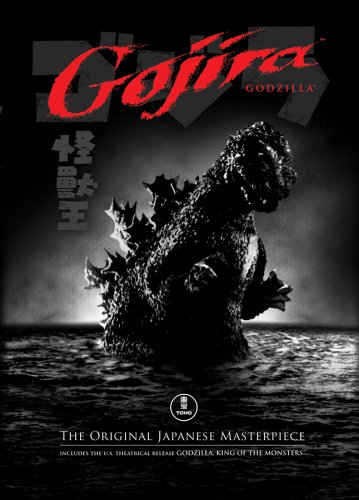
Gojira: The Monster Revealed
by William S. Kowinski
It took 50 years (and more than 25 sequels) to reach a few U.S. movie theatres, and another two years to become widely available on DVD, but now we can all see the original Japanese film, Gojira, made in 1954. Star Trek fans may be interested in this, because the original film—not the U.S. version-- is the same sort of science fiction of consciousness as Trek, dealing with real world issues through story that is science fiction, symbol or allegory, and an action adventure film all at once.
Until now, all we’ve seen of this movie are the scenes that remained when some 40 minutes of the original were cut and replaced with 20 minutes of new scenes starring Raymond Burr. This amalgamation opened in 1956 as Godzilla: King of the Monsters, and became an international sensation.
That the Japanese original was never released in the U.S. might seem to suggest it was an inferior film. Now we have the evidence that this simply isn’t true. All of the special effects sequences are the same as in the U.S. version, but what surrounds them makes the difference.
It’s understandable to some extent why a 1954 U.S. audience might not appreciate Gojira. It is really a Japanese film, and most Americans weren’t even seeing foreign language films from Europe yet. The differences of course extend beyond language, to culture and styles of storytelling, and the use of the filmmaking vocabulary. Even today, it probably helps to have seen a few Japanese films of the period, like those of the acknowledged master, Akira Kurosawa, to fully appreciate Gojira. (Anime may be relevant in other ways, but not historically.) The DVD commentary on Gojira does help a lot on cultural interpretations, though—it explains why family is so important, why one character is so ashamed to have divulged a secret, and so on.
In the mid-50s, it was probably considered still a bit risky to even adapt a Japanese film that showed Japanese on screen--not only did U.S. films have a history of depicting Japanese in subservient and racially cliched roles, but there was still substantial hangover of feeling from the virilently anti-Japanese war propaganda from World War II just 9 years before, which attacked Japanese as people (racially) and as a culture as well as an enemy nation. But the U.S. had occupied Japan until 1952, so more Americans had been there, and Hollywood had made a few films set in Japan. Still, in 1966 when George Takei became a regular on Star Trek as an officer on the bridge of a starship, it was a step forward that had not been taken until then.
As for the movie itself, pace isn’t really the problem. Although the story in Gojira is more centered on the characters, and some of the dialogue runs a little long, it actually moves faster than the tedious beginning of the U.S. film (which I suspect has been cut a lot in the TV versions most people have seen, getting it to the monster faster but making the basic story even more rudimentary, if not confusing.)
But the original Gojira is a powerful film, in its story, dialogue, acting, musical score and especially its images. Even without knowing the specific history that saturates this film, its authenticity is unmistakable just from seeing it. Perhaps it takes some small familiarity with Japanese music to fully appreciate the score (by Akira Ifkube), but I’m guessing that most viewers will feel how much more powerful it is in the original.
by William S. Kowinski
It took 50 years (and more than 25 sequels) to reach a few U.S. movie theatres, and another two years to become widely available on DVD, but now we can all see the original Japanese film, Gojira, made in 1954. Star Trek fans may be interested in this, because the original film—not the U.S. version-- is the same sort of science fiction of consciousness as Trek, dealing with real world issues through story that is science fiction, symbol or allegory, and an action adventure film all at once.
Until now, all we’ve seen of this movie are the scenes that remained when some 40 minutes of the original were cut and replaced with 20 minutes of new scenes starring Raymond Burr. This amalgamation opened in 1956 as Godzilla: King of the Monsters, and became an international sensation.
That the Japanese original was never released in the U.S. might seem to suggest it was an inferior film. Now we have the evidence that this simply isn’t true. All of the special effects sequences are the same as in the U.S. version, but what surrounds them makes the difference.
It’s understandable to some extent why a 1954 U.S. audience might not appreciate Gojira. It is really a Japanese film, and most Americans weren’t even seeing foreign language films from Europe yet. The differences of course extend beyond language, to culture and styles of storytelling, and the use of the filmmaking vocabulary. Even today, it probably helps to have seen a few Japanese films of the period, like those of the acknowledged master, Akira Kurosawa, to fully appreciate Gojira. (Anime may be relevant in other ways, but not historically.) The DVD commentary on Gojira does help a lot on cultural interpretations, though—it explains why family is so important, why one character is so ashamed to have divulged a secret, and so on.
In the mid-50s, it was probably considered still a bit risky to even adapt a Japanese film that showed Japanese on screen--not only did U.S. films have a history of depicting Japanese in subservient and racially cliched roles, but there was still substantial hangover of feeling from the virilently anti-Japanese war propaganda from World War II just 9 years before, which attacked Japanese as people (racially) and as a culture as well as an enemy nation. But the U.S. had occupied Japan until 1952, so more Americans had been there, and Hollywood had made a few films set in Japan. Still, in 1966 when George Takei became a regular on Star Trek as an officer on the bridge of a starship, it was a step forward that had not been taken until then.
As for the movie itself, pace isn’t really the problem. Although the story in Gojira is more centered on the characters, and some of the dialogue runs a little long, it actually moves faster than the tedious beginning of the U.S. film (which I suspect has been cut a lot in the TV versions most people have seen, getting it to the monster faster but making the basic story even more rudimentary, if not confusing.)
But the original Gojira is a powerful film, in its story, dialogue, acting, musical score and especially its images. Even without knowing the specific history that saturates this film, its authenticity is unmistakable just from seeing it. Perhaps it takes some small familiarity with Japanese music to fully appreciate the score (by Akira Ifkube), but I’m guessing that most viewers will feel how much more powerful it is in the original.

That history, however, is important. The film history is simple: A recent internationally successful re-release of the original King Kong was an inspiration for the Japanese film industry, which had not yet done a full scale monster movie in 1954. More directly, Gojira adapts the basic plot of an American film released the year before, The Beast From 20,000 Fathoms, which was the first movie monster to be unleashed by atomic bomb explosions, as well as the first of the Ray Harryhausen stop-motion animation monster flicks. (It was adapted from a story by Ray Bradbury; the script writer receiving first credit is Fred Freiberger, later a Star Trek original series producer.)
But the place of Gojira in the larger history is what distinguishes it. This movie was released only 9 years after World War II ended, and barely two years after the U.S. officially ended its occupation of Japan, though it maintained many military bases for decades (some are still there.) It was one of the first postwar Japanese films that didn’t have to pass through U.S. censors.
The war in the Pacific had been fought principally between Japan and the U.S., and it had been savage. Especially after the surprise attack on the U.S fleet in Pearl Harbor, Japan had naval superiority, highly trained warriors and master tacticians. They won most early battles. The war against Hitler in Europe had priority for the U.S., and for awhile mostly old aircraft and weaponry could be spared for the Pacific.
Japan had taken island after island and was about to take Australia, when the Allies stopped their momentum. America began to send new ships, planes and weapons, until the Allies had superiority. Then fighting for those islands, like Guadacanal and Iwo Jima, became intense and bloody. Even when outnumbered, the Japanese army used caves and underground bunkers to prolong the killing. But the Allies prevailed, and were in striking distance of Japan itself. A bombing campaign decimated some 80 Japanese cities. In a single raid on Tokyo in March 1945, American bombers killed upwards of a hundred thousand people, and left the city burning. How close Japan was to its unconditional surrender before the Bombs were dropped is still debated, but in August 1945 two atomic bombs were dropped on human beings for the first time, in Japan.
A single Bomb each destroyed Hiroshima and Nagasaki. Some 75,000 people died in Hiroshima from the blast and fire. Five years later, radiation effects more than doubled the dead, to some 200,000. The vast majority of those who died from the Nagasaki bomb were from radiation, months and years later. Some effects of radiation were apparent within days and weeks, which included very ugly and painful immediate illnesses, as people decayed from the inside. Other effects, principally cancers, took years. American officials denied these first immediate radiation effects were real, claiming the reports were Japanese propaganda.
They were still denying that radiation posed substantial threats when the first U.S. hydrogen bombs were being exploded in the Pacific. In March 1954, the U.S. tested an H-Bomb that was 750 to 1,000 times more powerful than the Hiroshima bomb, at Bikini Atoll in the Pacific near Japan. Although ships in the area were warned, when winds changed the test was held anyway, and 85 miles away, a Japanese fishing boat with a crew of 23—the Fukuryu Maru, or Lucky Dragon—were close enough to see the explosion, and to feel the radioactive ash falling on them. The crew became ill by the time they reached port, one crew member soon died, and there was a panic in Japan over contaminated fish from other boats.
Everyone in Japan knew of these events, of course. And many of them found their way into Gojira.
But the place of Gojira in the larger history is what distinguishes it. This movie was released only 9 years after World War II ended, and barely two years after the U.S. officially ended its occupation of Japan, though it maintained many military bases for decades (some are still there.) It was one of the first postwar Japanese films that didn’t have to pass through U.S. censors.
The war in the Pacific had been fought principally between Japan and the U.S., and it had been savage. Especially after the surprise attack on the U.S fleet in Pearl Harbor, Japan had naval superiority, highly trained warriors and master tacticians. They won most early battles. The war against Hitler in Europe had priority for the U.S., and for awhile mostly old aircraft and weaponry could be spared for the Pacific.
Japan had taken island after island and was about to take Australia, when the Allies stopped their momentum. America began to send new ships, planes and weapons, until the Allies had superiority. Then fighting for those islands, like Guadacanal and Iwo Jima, became intense and bloody. Even when outnumbered, the Japanese army used caves and underground bunkers to prolong the killing. But the Allies prevailed, and were in striking distance of Japan itself. A bombing campaign decimated some 80 Japanese cities. In a single raid on Tokyo in March 1945, American bombers killed upwards of a hundred thousand people, and left the city burning. How close Japan was to its unconditional surrender before the Bombs were dropped is still debated, but in August 1945 two atomic bombs were dropped on human beings for the first time, in Japan.
A single Bomb each destroyed Hiroshima and Nagasaki. Some 75,000 people died in Hiroshima from the blast and fire. Five years later, radiation effects more than doubled the dead, to some 200,000. The vast majority of those who died from the Nagasaki bomb were from radiation, months and years later. Some effects of radiation were apparent within days and weeks, which included very ugly and painful immediate illnesses, as people decayed from the inside. Other effects, principally cancers, took years. American officials denied these first immediate radiation effects were real, claiming the reports were Japanese propaganda.
They were still denying that radiation posed substantial threats when the first U.S. hydrogen bombs were being exploded in the Pacific. In March 1954, the U.S. tested an H-Bomb that was 750 to 1,000 times more powerful than the Hiroshima bomb, at Bikini Atoll in the Pacific near Japan. Although ships in the area were warned, when winds changed the test was held anyway, and 85 miles away, a Japanese fishing boat with a crew of 23—the Fukuryu Maru, or Lucky Dragon—were close enough to see the explosion, and to feel the radioactive ash falling on them. The crew became ill by the time they reached port, one crew member soon died, and there was a panic in Japan over contaminated fish from other boats.
Everyone in Japan knew of these events, of course. And many of them found their way into Gojira.
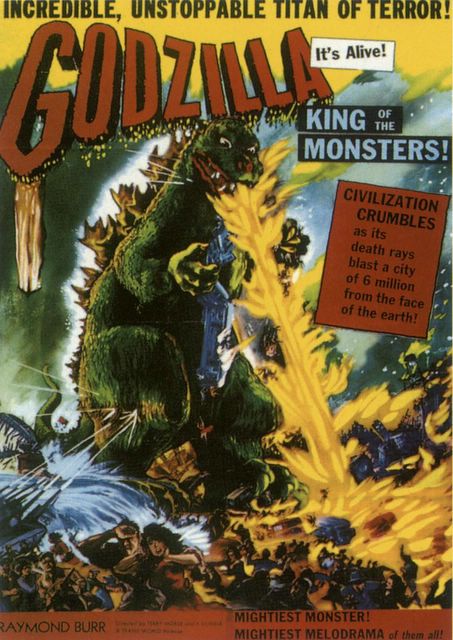
Ishiro Honda was a young director, a friend of the great Kurosawa, who had been drafted into the Japanese military, and was a prisoner of war in China. Returning to Japan after the war, he passed through the devastated Hiroshima.
Honda admitted openly, then and years later, that he intended Gogira to raise the issue of the danger to humankind of nuclear testing and nuclear weapons themselves. The U.S. version makes but one reference to Godzilla being a prehistoric beast resurrected by H-Bomb testing--by 1956, lots of “bug-eyed monsters” were hitting U.S. drive-ins, all created by atomic bombs, so that much wasn’t unusual. But in the Japanese version, not only were the H-Bomb tests discussed several times, and Nagasaki mentioned, the whole story and whole mood of the original Gogira was integrated with these events and these issues that the Bomb and modern warfare raise, as Japanese audiences would clearly understand, and as any of us can see—and especially feel—today.
Gojira begins with a strange event at sea: the crew of a fishing boat is relaxing on deck, when they see a sudden white flash and explosion in the sea, which then sinks their boat. How this relates to the prehistoric monster is not explained (although according to the commentary it was in the script, but budget forced changes.)
In fact, it is very close to how one of the crew of the Lucky Dragon #5 described the H-Bomb blast: “Suddenly the skies in the west lighted up and a great flare of whitish yellow light splashed against the clouds and illuminated the water.” The witness even remembers one of his crewmates humming a song, and in the film they are all singing as someone plays a guitar (by the looks of it, an American one.) None of this was coincidence. Honda even has the #5 displayed on a life preserver, identifying this fishing boat with the Lucky Dragon #5.
Honda admitted openly, then and years later, that he intended Gogira to raise the issue of the danger to humankind of nuclear testing and nuclear weapons themselves. The U.S. version makes but one reference to Godzilla being a prehistoric beast resurrected by H-Bomb testing--by 1956, lots of “bug-eyed monsters” were hitting U.S. drive-ins, all created by atomic bombs, so that much wasn’t unusual. But in the Japanese version, not only were the H-Bomb tests discussed several times, and Nagasaki mentioned, the whole story and whole mood of the original Gogira was integrated with these events and these issues that the Bomb and modern warfare raise, as Japanese audiences would clearly understand, and as any of us can see—and especially feel—today.
Gojira begins with a strange event at sea: the crew of a fishing boat is relaxing on deck, when they see a sudden white flash and explosion in the sea, which then sinks their boat. How this relates to the prehistoric monster is not explained (although according to the commentary it was in the script, but budget forced changes.)
In fact, it is very close to how one of the crew of the Lucky Dragon #5 described the H-Bomb blast: “Suddenly the skies in the west lighted up and a great flare of whitish yellow light splashed against the clouds and illuminated the water.” The witness even remembers one of his crewmates humming a song, and in the film they are all singing as someone plays a guitar (by the looks of it, an American one.) None of this was coincidence. Honda even has the #5 displayed on a life preserver, identifying this fishing boat with the Lucky Dragon #5.
As monster movies, Gojira and Godzilla share an unusual quality: neither has a real action hero. The hero who sacrifices his life to destroy the monster is a scientist, and he has a relatively minor part in the film. The central human figure in Gogira is another scientist—the elder, Professor Yamane, played by one of Japan’s most distinguished actors, Takashi Shimura. He would play the lead in another 1954 release, the first Japanese film to become widely known in the U.S.—Kurosawa’s The Seven Samurai (known to filmmakers first, as it became the basis for the 1960 western, The Magnificent Seven, and years later, one of the models for Star Trek: Insurrection.)
Professor Yamane leads an expedition to investigate other ship disappearances, and to a small island where villagers believe the “mythical” sea beast they call Gojira is responsible. Gojira comes ashore, preceded by a violent storm—again, it’s an inexplicable event that doesn’t occur when Gojira appears later, but it is clearly reminiscent of an atomic blast. But it is also like a typhoon, which (along with the ancient monster story) relates to a sub-theme of this and some other atomic monster movies: with the atomic bomb in particular but with a lot of modern technology in general, humankind was deforming nature, and playing with forces within nature that we may not be able to control.
The theme of humanity deforming nature with technology, and taking power into human hands that humans may not be capable of controlling, is at the center of what many consider the very first science fiction story---Mary Shelley’s Frankenstein. It’s a theme throughout science fiction ever since (Star Trek may have been notable for showing the positive future that technology could help to create, but it had its share of cautionary tales about technology gone amuck, with major assistance from human weakness.)
This theme is carried forward in Gojira on these two tracks: the human ability to control nature (in for instance the lingering shots of birds in cages, fish in tanks) and the consequences of nature’s power unleashed (symbolized by the monster from the deep and from the deep past), as well as the consequences of deforming nature. That’s the role of radiation in atomic films, and in this one in particular. For while investigating on this island, Professor Tanabe finds Gojira’s huge footprint. And the water and soil in it are radioactive.
According to the commentary, the design of Gojira was meant to reflect a beast disfigured by radiation. Tanabe immediately wonders how it survived —and surmises that because it did, Gojira would be even more dangerous.
Photos of Bomb victims in Hiroshima disfigured by blast, burns and radiation had been widely circulated, even in the U.S., by the mid 1950s. The effect of radiation in creating mutations in the children of those exposed was also well-known, although U.S. officials continued to deny this. So the idea of disfiguring mutation was a starkly frightening part of atomic lore, expressed symbolically, mostly in these atomic monster movies.
Mutation would be an even greater source of anxiety in Japan, because that’s where some of the first evidence emerged, not only as a result of Hiroshima, but of nuclear bomb testing in the Pacific. The U.S. physician and writer, Dr. David Bradley, re-published his best-selling book on the 1946 postwar atom bomb tests, No Place to Hide, and included new information, such as the results of a study of 406 Pacific islanders (probably very similar to those depicted in Gojira) who were exposed to H-Bomb fallout in 1954: nine children were born retarded, ten more with other abnormalities, and three were stillborn, including one reported to be "not recognizable as human."
Professor Yamane leads an expedition to investigate other ship disappearances, and to a small island where villagers believe the “mythical” sea beast they call Gojira is responsible. Gojira comes ashore, preceded by a violent storm—again, it’s an inexplicable event that doesn’t occur when Gojira appears later, but it is clearly reminiscent of an atomic blast. But it is also like a typhoon, which (along with the ancient monster story) relates to a sub-theme of this and some other atomic monster movies: with the atomic bomb in particular but with a lot of modern technology in general, humankind was deforming nature, and playing with forces within nature that we may not be able to control.
The theme of humanity deforming nature with technology, and taking power into human hands that humans may not be capable of controlling, is at the center of what many consider the very first science fiction story---Mary Shelley’s Frankenstein. It’s a theme throughout science fiction ever since (Star Trek may have been notable for showing the positive future that technology could help to create, but it had its share of cautionary tales about technology gone amuck, with major assistance from human weakness.)
This theme is carried forward in Gojira on these two tracks: the human ability to control nature (in for instance the lingering shots of birds in cages, fish in tanks) and the consequences of nature’s power unleashed (symbolized by the monster from the deep and from the deep past), as well as the consequences of deforming nature. That’s the role of radiation in atomic films, and in this one in particular. For while investigating on this island, Professor Tanabe finds Gojira’s huge footprint. And the water and soil in it are radioactive.
According to the commentary, the design of Gojira was meant to reflect a beast disfigured by radiation. Tanabe immediately wonders how it survived —and surmises that because it did, Gojira would be even more dangerous.
Photos of Bomb victims in Hiroshima disfigured by blast, burns and radiation had been widely circulated, even in the U.S., by the mid 1950s. The effect of radiation in creating mutations in the children of those exposed was also well-known, although U.S. officials continued to deny this. So the idea of disfiguring mutation was a starkly frightening part of atomic lore, expressed symbolically, mostly in these atomic monster movies.
Mutation would be an even greater source of anxiety in Japan, because that’s where some of the first evidence emerged, not only as a result of Hiroshima, but of nuclear bomb testing in the Pacific. The U.S. physician and writer, Dr. David Bradley, re-published his best-selling book on the 1946 postwar atom bomb tests, No Place to Hide, and included new information, such as the results of a study of 406 Pacific islanders (probably very similar to those depicted in Gojira) who were exposed to H-Bomb fallout in 1954: nine children were born retarded, ten more with other abnormalities, and three were stillborn, including one reported to be "not recognizable as human."

Gojira’s greatest mutation was yet to be revealed, however. This film uses the slow reveal that characterized some monster movies of this era (like the U.S. atomic “giant ants” classic, Them!, also released in 1954.) At first we see only Gojira’s foot as he comes ashore accompanied by the storm. Then above the rim of a hill outside the village, his head. While the tension builds, preliminary to Gojira’s major appearance, we’re already seeing the destruction and effects on individuals, families and communities is depicted in some detail.
We’re also seeing postwar Japanese life, and the crosscurrents of western and Japanese culture, of the modern world and tradition, in the story of Tanabe, his daughter Emiko, her boyfriend Ogata, and the young scientist to whom she has been betrothed since childhood, Dr. Serizawa. All of this is very important to the power of this film, and most of it is missing from the U.S. version.
The central scenes of this movie, preserved for the most part in the U.S. versions, are Gojira/Godzilla attacking Tokyo twice. The U.S. version cuts an implausible sequence of the attempt to secure the city by erecting high tension towers and wires overnight; it explains that the city is ringed with these towers to begin with. The U.S. version also cuts some of the scenes that deal with the victims, including one that was especially meaningful to the Japanese: a trapped mother and child huddle in a doorway, awaiting their destruction, as the mother tells the child they’ll soon be joining her father—a reference to a soldier or someone else killed in the war.
What U.S. audiences don’t know about these scenes is that the filmmakers paid a great deal of attention to meticulously creating models of the real Tokyo, so that buildings Gojira destroys were as recognizable to Japanese audiences as the Empire State Building and Statue of Liberty would be to Americans. (The filmmakers actually got in trouble with authorities, the commentary says, when they were overheard in downtown Tokyo discussing how they were going to “destroy” various buildings.)
The most dramatic moment of these sequences is when Gojira/Godzilla demonstrates a power for the first time—he has a “heat ray” breath that sets buildings aflame. In the U.S. version, this is just another special effect. But after all the references to nuclear weapons and radiation in the Japanese version, it’s clear that this monster has not only been created by atomic power, he has become a walking atom bomb.
The shots of the city aflame had to be a specific reminder of the destruction of Tokyo by U.S. bombs just 9 years before, and the smoldering ruins were very similar to widely published photos of Hiroshima. So, too, the concentration on victims, on the rows of wounded, emphasized the human cost.
We’re also seeing postwar Japanese life, and the crosscurrents of western and Japanese culture, of the modern world and tradition, in the story of Tanabe, his daughter Emiko, her boyfriend Ogata, and the young scientist to whom she has been betrothed since childhood, Dr. Serizawa. All of this is very important to the power of this film, and most of it is missing from the U.S. version.
The central scenes of this movie, preserved for the most part in the U.S. versions, are Gojira/Godzilla attacking Tokyo twice. The U.S. version cuts an implausible sequence of the attempt to secure the city by erecting high tension towers and wires overnight; it explains that the city is ringed with these towers to begin with. The U.S. version also cuts some of the scenes that deal with the victims, including one that was especially meaningful to the Japanese: a trapped mother and child huddle in a doorway, awaiting their destruction, as the mother tells the child they’ll soon be joining her father—a reference to a soldier or someone else killed in the war.
What U.S. audiences don’t know about these scenes is that the filmmakers paid a great deal of attention to meticulously creating models of the real Tokyo, so that buildings Gojira destroys were as recognizable to Japanese audiences as the Empire State Building and Statue of Liberty would be to Americans. (The filmmakers actually got in trouble with authorities, the commentary says, when they were overheard in downtown Tokyo discussing how they were going to “destroy” various buildings.)
The most dramatic moment of these sequences is when Gojira/Godzilla demonstrates a power for the first time—he has a “heat ray” breath that sets buildings aflame. In the U.S. version, this is just another special effect. But after all the references to nuclear weapons and radiation in the Japanese version, it’s clear that this monster has not only been created by atomic power, he has become a walking atom bomb.
The shots of the city aflame had to be a specific reminder of the destruction of Tokyo by U.S. bombs just 9 years before, and the smoldering ruins were very similar to widely published photos of Hiroshima. So, too, the concentration on victims, on the rows of wounded, emphasized the human cost.
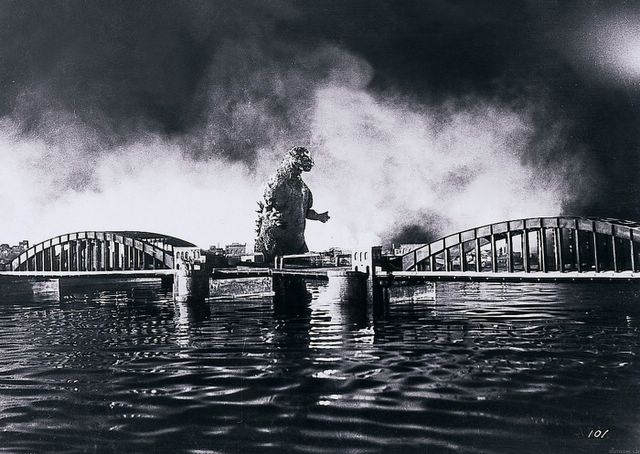
But these evocative scenes (their power not limited to Japanese audiences) also contributed to the central dilemma of the story. Earlier, Dr. Serizawa (a haunted figure, wearing an eyepatch because of war wounds) showed Emiko the accidental results of his research on oxygen: an “oxygen destroyer” weapon, which, released in water, would destroy all the oxygen and kill everything. He swore her to secrecy, because he didn’t want others to take his research and use it to make weapons that would be (he said at some point) as powerful as atomic bombs.
It was the central problem of science in the technological era, especially in the development of the atomic bomb. Many of the scientists who worked on it were absorbed in the thrill of discovery, and even many of those who realized they were in a race to make this weapon before Nazi Germany did, believed that the Bomb should never be used in war. They especially felt this after Germany surrendered, and many signed a letter pleading with the President not to use the Bomb against Japan, not only because of moral issues, but because they feared it would start an international arms race that would become catastrophic for the entire world.
By 1954, much of this was public knowledge, as was the case of Robert Oppenheimer, who managed the Los Alamos atomic bomb project, then made his horror of what they had created public, after which he was accused of being a security risk, and his scientific career was ruined. Even a colleague who refused to testify against him, the distinguished physicist David Bohm (who had worked closely with Einstein), was forced out of his teaching job in the U.S. and spent the rest of his career in exile.
After Gojira’s attack, Emiko betrays the confidence of her betrothed, Dr. Serizawa, because of her compassion for the victims. She and Ogata try to persuade Serizawa to use the oxygen destroyer against Gojira, but he resists, believing that as long as he is alive he could be forced to yield its secrets to those who would use it for warfare.
Then they see on television a broadcast of schoolgirls singing a song pleading for peace—much as schoolchildren have done every year on the anniversary of Hiroshima. This causes Serizawa to relent. We see him burning his notes, but we know (even if Emiko and Ogata haven’t figured it out) that he believes this won’t be enough.
In diving suits, Serizawa and Ogata release the oxygen destroyer weapon, and after Ogata returns to the ship, Dr. Serizawa cuts his line and sacrifices himself—not because it is necessary to kill Gojira, but because it is necessary to keep the world free of a weapon “as powerful as the atom bomb.” That’s the message that isn’t at all clear in the U.S. version.
We also saw earlier how upset Professor Yamane was about the plans to kill Gojira, before it could be scientifically studied. But this wasn’t the usual naïve scientist riff—he wanted to know how Gojira survived all that radiation, and how it changed him. The movie ends with his warning, that other Gojiras were possible, and they still did not know how and why this beast survived the H-Bomb, so if nuclear tests continued, the world was in even greater danger.
It was the central problem of science in the technological era, especially in the development of the atomic bomb. Many of the scientists who worked on it were absorbed in the thrill of discovery, and even many of those who realized they were in a race to make this weapon before Nazi Germany did, believed that the Bomb should never be used in war. They especially felt this after Germany surrendered, and many signed a letter pleading with the President not to use the Bomb against Japan, not only because of moral issues, but because they feared it would start an international arms race that would become catastrophic for the entire world.
By 1954, much of this was public knowledge, as was the case of Robert Oppenheimer, who managed the Los Alamos atomic bomb project, then made his horror of what they had created public, after which he was accused of being a security risk, and his scientific career was ruined. Even a colleague who refused to testify against him, the distinguished physicist David Bohm (who had worked closely with Einstein), was forced out of his teaching job in the U.S. and spent the rest of his career in exile.
After Gojira’s attack, Emiko betrays the confidence of her betrothed, Dr. Serizawa, because of her compassion for the victims. She and Ogata try to persuade Serizawa to use the oxygen destroyer against Gojira, but he resists, believing that as long as he is alive he could be forced to yield its secrets to those who would use it for warfare.
Then they see on television a broadcast of schoolgirls singing a song pleading for peace—much as schoolchildren have done every year on the anniversary of Hiroshima. This causes Serizawa to relent. We see him burning his notes, but we know (even if Emiko and Ogata haven’t figured it out) that he believes this won’t be enough.
In diving suits, Serizawa and Ogata release the oxygen destroyer weapon, and after Ogata returns to the ship, Dr. Serizawa cuts his line and sacrifices himself—not because it is necessary to kill Gojira, but because it is necessary to keep the world free of a weapon “as powerful as the atom bomb.” That’s the message that isn’t at all clear in the U.S. version.
We also saw earlier how upset Professor Yamane was about the plans to kill Gojira, before it could be scientifically studied. But this wasn’t the usual naïve scientist riff—he wanted to know how Gojira survived all that radiation, and how it changed him. The movie ends with his warning, that other Gojiras were possible, and they still did not know how and why this beast survived the H-Bomb, so if nuclear tests continued, the world was in even greater danger.
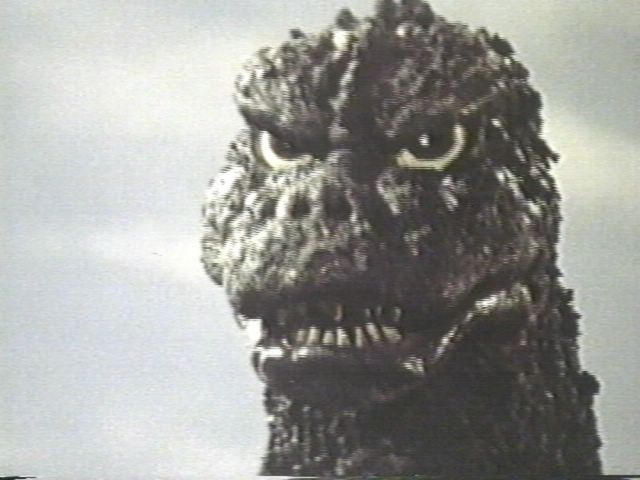
There are other differences in the original—especially the evocative sound of Gojira's footsteps and more use of the Ifkube’s great theme, which has since become the signature Godzilla music. But these are the major ones: the human stories that reveal much about Japanese culture and the postwar period, and especially the theme of the Bomb and the role of science. These are what makes this science fiction of consciousness, which it shares with Star Trek.
Like Trek, it humanized its story with characters' lives. Like Trek, it responded to current issues of great importance, of life and death for civilizations and for the future. It did so both in a science fiction adventure and with metaphor and symbolism. Like Star Trek, it represented the thinking and feeling of its own time. In this case, the complex feelings of postwar Japan, which had depended on military conquest and technology, seen millions of its people killed and its cities destroyed, become the only country so far to suffer nuclear devastation and its long-term effects, only to be victimized by continued nuclear weapons testing.
And after the war, in the years of U.S. occupation, the Japanese saw its governmental institutions, its economy and its relationship to the world all change, largely beyond its control. A recent article I chanced to come across as I wrote this maintains that the Japanese have still not fully come to terms with the transformations of the occupation period.
In a piece in the American Prospect called “Goodbye Godzilla, Hello Kitty,” Norihiro Kato writes about the sorrow and the guilt of World War II destruction unleashed by the images in Gojira. He speculates then on why Godzilla became such a popular figure, leading to so many sequels, and a transformation from destructive monster to defender to a kind of cute superpet. He concludes that it was part of a long process of “sanitizing” the war dead. For him, it seems, the “cutifying” of Japanese popular culture as it creates worldwide symbols such as Hello Kitty, is part of a process of displacement and denial by means of consumer culture rather than really confronting the meanings of the war or the Occupation.
But that is not true of the original Gojira film—it does express the feelings and confronts the issues, using the distancing and symbolisms of science fiction, the mythology of the technological age.
Like Trek, it humanized its story with characters' lives. Like Trek, it responded to current issues of great importance, of life and death for civilizations and for the future. It did so both in a science fiction adventure and with metaphor and symbolism. Like Star Trek, it represented the thinking and feeling of its own time. In this case, the complex feelings of postwar Japan, which had depended on military conquest and technology, seen millions of its people killed and its cities destroyed, become the only country so far to suffer nuclear devastation and its long-term effects, only to be victimized by continued nuclear weapons testing.
And after the war, in the years of U.S. occupation, the Japanese saw its governmental institutions, its economy and its relationship to the world all change, largely beyond its control. A recent article I chanced to come across as I wrote this maintains that the Japanese have still not fully come to terms with the transformations of the occupation period.
In a piece in the American Prospect called “Goodbye Godzilla, Hello Kitty,” Norihiro Kato writes about the sorrow and the guilt of World War II destruction unleashed by the images in Gojira. He speculates then on why Godzilla became such a popular figure, leading to so many sequels, and a transformation from destructive monster to defender to a kind of cute superpet. He concludes that it was part of a long process of “sanitizing” the war dead. For him, it seems, the “cutifying” of Japanese popular culture as it creates worldwide symbols such as Hello Kitty, is part of a process of displacement and denial by means of consumer culture rather than really confronting the meanings of the war or the Occupation.
But that is not true of the original Gojira film—it does express the feelings and confronts the issues, using the distancing and symbolisms of science fiction, the mythology of the technological age.
Subscribe to:
Posts (Atom)