Showing posts with label future Trek. Show all posts

Saturday, February 28, 2026

Coming Soon? Star Trek: In Name Only


 "Could Star Trek be dying?"  Those were the opening words of my New York Times article in 2004.  At that time, as in some previous moments, the threat was that there would be no new Star Trek stories on television or as feature films. (Leonard Nimoy laughed when I asked him that.  Of course he turned out to be right. So far.)

Today, sixty years since it began, Star Trek is endangered again, but in a different way.  There is likely to be a new feature film, and possibly more television beyond the series' now running or ready to resume.  But recent events suggest the distinct possibility that future stories could well be Star Trek in name only.  In essence they may even be anti-Trek: Star Trek without its soul.

The first of these events was the purchase of Paramount by Skydance Media, headed by David Ellison. He is, in the words of Wikipedia, "the son of Oracle Corporation co-founder Larry Ellison, a centibillionaire." It has been widely reported that David Ellison became an ally of President Trump, possibly or probably to help secure federal approval of the deal.  

Paramount is the parent company to the CBS network, and Ellison soon installed a Trump-friendly far right commentator as editor in chief of CBS News.  She engineered firings and layoffs, delayed broadcast of a 60 Minutes segment that cast the Trump administration's war on immigrants in an unfavorable light, and has by numerous accounts turned the network in a far right direction, losing viewership and staining the good name of what was once among the most hallowed in television news.

More recently, Ellison attended the State of the Union address, a day before he made the only offer now existing to purchase Warner Brothers properties, including CNN. He promised Trump he would make sweeping changes to that news network.  Warners had previously signaled it would accept the purchase offer of Netflix, but federal approval was delayed.  

On the day Ellison made a new offer for Warners, Josh Marshall at Talking Points memo reports,  the Netflix CEO was at the White House "apparently trying to see whether Netflix had the thing any company needs for a merger in 2026: the personal approval of Donald Trump. Apparently they didn't have it.  That's the autocracy playbook.  And at the federal level that's the game we're playing right now."  Netflix declined to make a new offer, leaving the field wide open for Ellison.

What this may mean for Star Trek revolves around this administration's evident white supremacist and white nationalist agenda, its wanton cruelty and bad faith, all antithetical to what Star Trek has represented for more than half a century.  


There are other recent events that are suggestive in this regard, both generally and specifically in terms of a current Star Trek streaming series. 

 In January 2026, Secretary of Defense (which he styles as Secretary of War) Hegseth and SpaceX CEO Elon Musk spoke jointly about employing advanced Artificial Intelligence systems in warfare, in events they titled "The Arsenal of Freedom." They both pronounced their goal is to "make Star Trek real."

It's long been known that a lot of tech industry people consider themselves Star Trek fans. Musk was one.  Another was Jeff Bezos, founder of Amazon.  (I watched Bezos receive a Legacy Award at the 40th anniversary Star Trek convention in Seattle.  His mother showed off the cardboard communicator he made as a child.)  Bezos purchased the Washington Post and then, apparently to please Trump, censored it, drove away its top people and gutted its staff, losing subscribers and respect. 

A number of actual Star Trek fans and several publications pointed out that this Musk-Hegseth event's title, "Arsenal of Freedom," was the title of the Next Generation episode which exposed the fatal folly of depending on the same sort of AI systems they were bragging about.  Hegseth also had the temerity to flash Spock's Vulcan salute. 

Remember that Musk went to Washington at the start of this second Trump administration as the first loud voice decrying Diversity, Equity and Inclusion programs (not exactly enacting Infinite Diversity in Infinite Combinations.)  

He had his Department of Government Efficiency minions and thugs bodily throw out staffers of the Institute of Peace and trash the place.  He cut off US funding for medical programs and other aid to poor populations in poor countries--"the richest person in the world killing the world's poorest children," as Bill Gates described it.  He supported false accusations of genocide of whites in South Africa and supported far rightists in Germany, raging against multiculturalism.  At Trump's second inaugural he repeatedly gave what has been described as the Nazi salute.  Not exactly Live Long and Prosper.

For his part, Hegseth presided over firing much of the top brass in the US military who coincidentally included almost all blacks and women, at the same time as he vilified DEI. Recently he announced that the Pentagon will forbid military personnel from taking graduate courses at some of the top universities in the US, because he calls them "woke breeding grounds of toxic indoctrination."

Hegseth is also a proponent of lethal military force first, last and always, and evidently agrees with the aide behind the White House throne, Stephen Miller, that the world "is governed by force."  That's a long way from the time that the US Secretary of State praised Star Trek: The Next Generation as a global model of peaceful mediation.

I could not help but think that a subtext of these "Arsenal of Freedom" events is to re-imagine Star Trek for the Ellison regime. Or perhaps it reflects a triumphant belief that this is going to be the direction that Ellison takes.  I see this also in the tenor of some unusual criticism of the new Star Trek series, Starfleet Academy.


Star Trek fans, especially on line, can be prickly.  Although I enjoy Starfleet Academy a lot more than I thought I would--I think it's very well done, and a breath of fresh air-- I sympathize with those who see its very contemporary slang and "language" as a little problematic.  Other nitpicks don't bother me--and the vitriol is simply unacceptable.  

But the sudden criticism over its "diversity" caught my attention, especially when it came from those who don't usually comment on Star Trek (which included the aforementioned Stephen Miller), and especially in the context of the Ellison takeover and the Musk-Hegseth appropriation of Star Trek.  Some of this critique (including at least some of the vitriol), especially online, even seems a little--shall we say-- organized. 

The timing is suspect, for it's not as if Starfleet Academy is an exception in terms of enacting diversity, of embodying IDIC.  If anything, this was even more pronounced in Star Trek: Discovery, from its inception in 2017.  Why single out Starfleet Academy now?  Well, why do you think?

As I write this, the fate of the team now in charge of Star Trek on television is not settled--contracts reportedly end this year.  There's not even a date set for the resumption of Strange New Worlds, which has seasons 4 and 5 ready to go.  What is known is that all previous Star Trek movies in development were cancelled, including the proposed fourth of the "Abramsverse" features.  Instead, a new movie is being written and developed by people new to Star Trek.

I suppose the tech is what far right fans like about Star Trek, but it's not all about the toys.  Yet that seems to be what they want to make Star Trek represent.

So here is what I fear, and unfortunately what I expect: There will be a new movie with Star Trek in the title, and it will be about high tech warfare, pitting humans against aliens: white far right Christian men conquer the universe! Phasers on overkill!  And the central starship will feature a cast overwhelmingly comprised of white males identifiable as Americans.  By then the current team running Star Trek television will be long gone, and so will Infinite Diversity in Infinite Combinations, and nearly everything that has constituted the soul of Star Trek for sixty years.  

Coming soon: Star Trek: In Name Only. STINO. I hope I'm wrong.  But I will also be surprised if I am.

Update 3/23/26: Paramount announced today that the second season of Starfleet Academy will be its last. Was it done in by disappointing audience share, or to please White House white supremacist, psycho Stephen Miller?  There's no doubt he will be pleased.  In response, the creative team responsible for Starfleet Academy, most of whom helped create all the Star Trek on television for the past decade, issued an unusually long and pointed statement (reproduced in full here at Trekmovie), defending the Gene Roddenberry vision of Infinite Diversity in Infinite Combinations.  In addition to suggesting why they thought they were cancelled, it also seems like a goodbye, not just from Starfleet Academy, but the larger creative team itself, as discussions are supposedly going on about their participation in Star Trek's future.  That they now have no shows to work on tells its own tale.


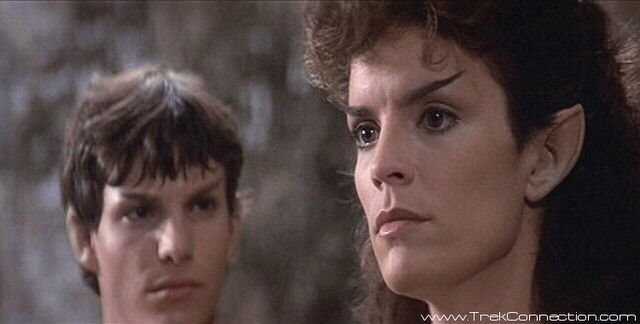
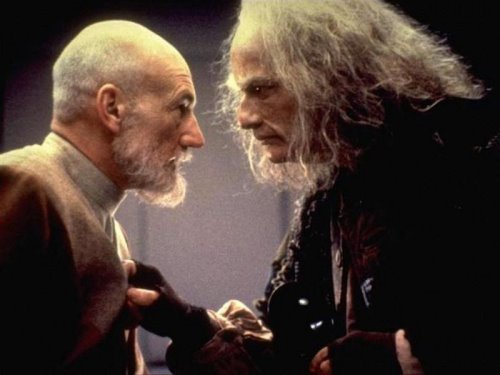
Photos 1 and 2: Screen captures from Star Trek: The Next Generation first season episode "Arsenal of Freedom," from Trekcore.  Photo 3: Star Trek: Starfleet Academy.  Photo 4: Starfleet Academy cast and creative staff at the beginning.

Tuesday, December 19, 2006

TrekCheck: A New Animated Series--I Don't Think So

There's some buzz about a project that seems one step away from getting the green light at CBS for a new Star Trek series, sort of. As described by its producers, I think it would be a big mistake that could haunt the saga for years to come.

There are several good ideas involved. First, it's animated, which I suggested back when Enterprise went off the air might be a good approach. Second, it takes the Star Trek universe farther into the future rather than back to its seen and unseen past. It's also being suggested as a kind of web series, which has possibilities. But that's where the good ideas end, from my perspective, and I think from that of the whole Star Trek enterprise.

One of the producers, David Rossi, has been widely quoted, starting at the Trek Movie Report. His description of the 26th century Trek universe, and his reasons for how that universe is constructed, are the major problems. Rossi and company want to create a 26th century in which the Federation is fractured in the aftermath of galactic war, apparently (but not really) begun by the Romulans, leaving Andoria destroyed, the Klingon Empire occupied and Vulcan no longer a Federation world. The series follows the captain of the 26th century Enterprise, as he tries to return to Star Trek's mission of exploration.

Rossi's reason for creating this premise is that "couching big social issues in allegories so they are more palatable is kind of passé now. Today shows deal with these issues head on, so we decided to make the entire show an allegory. The premise is an allegory for the post-9/11 world we live in. A world of uncertainty and fear."

First of all, Rossi doesn't seem to understand what allegory is, even in the looser sense in which it means a kind of metaphor or symbolic representation. The idea he attacks--"couching big social issues in allegories"--is precisely one of the chief characteristics of Star Trek, and of science fiction as it has been practiced since H.G. Wells. The idea that "today shows deal with these issues head on" and then to say that "the premise is an allegory" is a basic contradiction.

What Rossi likely means by dealing "with these issues head on" is that he is taking the pieces of the known Star Trek universe and using them to make a war movie--an essentially contemporary war movie set in the future, which mirrors his conception of the "post-9/11 world" of "uncertainty and fear." It's hard to conceive of a less imaginative premise, or one that is less in the spirit of Star Trek.

First of all, it is based on the flimsiest of cliches. Parroting the idea that the world changed forever with 9/11 does not make it so, and there is abundant evidence that this is simply platitude, cant, political hogwash, naive history, clueless geopolitical observation, and way too easy. Sure, it makes for the kind of easily understood "concept" that communicates in five minute pitch sessions. And the idea of warfare, terrorism, torture and intrigue certainly makes for easy filmmaking, at least conceptually. The drama is built-in. The action is guaranteed, like a video game, like, well, a cartoon.

"A world of uncertainty and fear" may describe today, but it also describes the 1960s and every decade since, not to mention the 1860s, 1606, etc. It also doesn't fully describe any of these times, including today. It's not a reality, it's a hook.

Not only does this vision set Star Trek back a couple of centuries in perception of the world and the future, it is singularly unimaginative. It certainly saves on the wear and tear of trying to imagine an actual Star Trek future a century and a half or so after the 24th century Gene Roddenberry and his initial TNG group invented. There was real thought behind that, not only in terms of technologies but also in terms of "people" (meaning humans and other similar sentient beings) and societies. This was real science fiction--not a complete transplant of somebody's very limited idea of an early 21st century reality, with cooler weapons and adversaries distinguished by bumpy or non-bumpy foreheads.

In terms of its relation to the world and the future, Star Trek began as an alternative to the limited Us vs. Them, Social Darwinist view, in which a cycle of violence and vengeance is fated. In creative terms, it began as an alternative to the simplistic shoot 'em up school of drama, in which all the easy emotional buttons are pushed.

Star Trek's human adventure was about the struggle to fulfill the human potential, and to explore the mysteries of the universe and our place in it. It was about self-knowledge that helps us to reach for that potential. Granted that in the world of television and entertainment, and given schedules and so on, that ideal was not always realized on the screen. But it was often enough, or clearly enough, that Star Trek became identified with it.

Each story was an inquiry into a piece of that complex puzzle, as the crew perhaps learned something about humanity in contrast to new life and new civilizations they encountered, or through science fiction situations that worked on several levels. Meanwhile, the series explored the characters and evolving relationships of the crew and other familiar figures, to shed more light on the Star Trek enterprise of exploring ourselves and modeling a better future, complete with its difficulties and complexities.

I don't have a lot of confidence that this animated series as described in this way would be that Star Trek (even with the idea that the series hero is trying to get Starfleet back to exploring. It sounds a little too much like Michael Corleone in Godfather III--"I try to get out but they keep pulling me back in!") It sound like it would hijack Star Trek nomenclature and the Star Trek universe for something very different, and much, much less interesting.

In a sense it is unfair to ask an animated series with six minute episodes (!) to bear this responsibility, but the unfortunate reality is that it would be Star Trek's first foray into the future beyond the established 24th century, and as such would be a precedent. Even the Star Trek novels that go beyond the so-called canon of what's been on screen (ending with Star Trek Nemesis) are regarded as the other novels are--as variations, more or less self-contained, or alternate Trek universes (like the Shatnerverse.) But being the first and only post-Nemesis series on screen, even if animated, and even if on computer screens, sets a more serious precedent for the Star Trek universe.

And in doing so, it would taint that Star Trek universe beyond the 24th century, where no Star Trek has yet gone. It would be a damaging mistake, in my view. Rearranging the known elements of the Star Trek 24th century, especially in this melodramatic fashion, seems like exploitation. The premise lacks the imagination that made Star Trek unique and worth following.

Additional Dialogue...

Finally caught up with Jonathan Frakes' The Librarian: Return to King Solomon's Mines on TV, and enjoyed it. But the commercials really fractured it for me. I look forward to really seeing it, on DVD.

Maybe it shouldn't, but it still amazes me how many Star Trek references fly by in newspapers, on TV (MSNBC news host Keith Olbermann mentions that referees are not "issued phasers") and in movies. A couple that jumped out at me recently: a running gag on the new Dr. Who series, begun the first season when Rose tells someone the Doctor's name is Spock (and I did see this season on DVD and it makes a world of difference; it's certainly made me impatient with the second season on TV, but that comes to DVD next month) with a reference or two the second season, culminating in the latest episode to air in the U.S. (the next to last) in which the Doctor tries to get a kid to do the Vulcan hand sign--without ever identifying it-- then more or less mind melds with him.

The very same night (last Friday) on the CBS series Numb3rs, the Peter MacNichol character, Dr. Larry Fleinhardt, is talking about his imminent assignment aboard the Space Shuttle, when he gets a cell phone call--and his ringtone is very clearly the Star Trek communicator sound. And it's not just the brief version we heard on Boston Legal when William Shatner quickly answers his cell, but a couple of long "rings." And the perfect thing about it: nobody mentions it, though Dr. Larry does seem a bit embarrassed. That's what's especially interesting about these references: they never say they are Star Trek references. It's just assumed that if you're cool enough, you'll know.

Update: Another category of Trek references are in the more "intellectual" publications, and I caught this one in the current New York Review of Books--by Margaret Atwood (a globally famous novelist, author of The Handmaiden's Tale set in the future) about Richard Powers. She suggests that he deserves major literary awards but the award-givers may have "...drawn back, as if they've suddenly felt that they might be giving an award to somebody not quite human—to Mr. Spock of Star Trek, for instance. He's got a Vulcan mind-meld on the critics, all right..."

Coming Soon...

Star Trek's fortieth anniversary year gives way to the 20th anniversary year of Star Trek: The Next Generation. I hope to get an early start later this month by continuing my "Trekalog" series of essays on the ten Star Trek feature films, with the first TNG movie, Generations. Meanwhile, check the Trekalog essays on the first six features (with handy links) below.

Though there's a lot of interest in the original series, likely to continue if the rumored premise of the next Star Trek movie as dealing with its time proves true, and I'll continue to write about it, especially in relation to contemporary issues. But I do expect to emphasize TNG more in the coming year. Though the stars of the original series are known around the world, and many of the Star Trek elements begun in that series are part of world mythology now, I believe writer Jeff Greenwald is right--it is Star Trek: The Next Generation as a whole that is best known and best loved around the world. In my own view, it is the continuation and fruition of Star Trek as it began in the original series. So expect more TNG here, and maybe even in the form of more Trek fiction, in the spirit of Datalove, The Cold and Lily (posted under the nom de net of Morgan Dash.)

So keep on Trekkin'--and happy holidays!

The Trekalog (so far)

Star Trek: The Motion Picture

Star Trek II: The Wrath of Khan

Star Trek III: The Search for Spock

Star Trek IV: The Voyage Home

Star Trek V: The Final Frontier

Star Trek VI: The Undiscovered Country

Saturday, August 05, 2006


Marina of Borg
at marinasirtis.tv Posted by Picasa
What about the Future?

The whole idea of a prequel movie doesn’t sit well with several members of the Next Generation cast. In a discussion on her site, Marina Sirtis said "Gene Roddenberry always said that Star Trek should go forward." Michael Dorn echoed this in an interview, and LeVar Burton has said as much in the past.

Invoking Roddenberry in this way reminds me that sadly, these actors (who collectively have also been Trek directors, producer and writers) are the last to have learned Star Trek directly from Roddenberry. You can hear it in their voices and see it in their body language—through individual personal contact, Roddenberry instilled his vision of Star Trek in them at the very beginning, and embodied Star Trek for them.

But it's not just nostalgia-- it does matter that this will be the first Star Trek that isn’t being developed by either GR or someone who worked with him, with his personal guidance. It may even be important in whether Trek ever goes forward rather than just back to the beginning of its future.

For the 23rd and 24th centuries were GR’s creation—with major creative input from others, but with his final say. Even the 22nd century of Enterprise was based on GR’s future, though it may have relied too much on some of its successful components (like introducing the Borg and the Romulans long before they should have shown up.)

It isn't that nobody but GR could come up with Star Trek ideas. New blood can infuse new life, and naturally the new generation wants to separate itself from the old. (Even in small ways---I remember Enterprise showrunner Manny Coto getting into one of those little motorcarts on the Paramount lot, making fun of the old guy, Rick Berman, always saying, 'why when I came to Paramount, none of this was here!') But to take Star Trek into the future requires more than both knowledge of the Trek past and ideas about how to make more exciting contemporary entertainment. GR thought about and cared about the future, both about what it could be and what it must be, if humanity is ever going to get there.

In the last exhausted years of the old Star Trek regime, it seemed that no one involved had the vision and the confidence to invent a farther future, a 25th century or beyond. Does the new regime include people who do? It's a question vital to whether Star Trek's future has a future.

GR may have been just a TV writer, as many of these people are, but he had other lives before that in the military and the police, and when he created Star Trek, he systematically created a workable future (or at least a framework that the creativity of others could work with.) He thought about a plausible future. He consulted scientists, and science fiction writers like Arthur C. Clarke and Issac Asimov, who were scientifically literate futurists as well as imaginative writers. He also consulted writers like Ray Bradbury who imagined the human responses to technological change, as well as knowing how to use science fiction to explore contemporary issues.

Because of what he created and how he created it, GR eventually was asked to speak before scientific groups as well as at places like the Jung Society. The resulting framework and especially how he communicated it to fellow creators, is the basis for why the Star Trek saga constitutes the best known vision of the future on the planet Earth.

Are there people among those thinking about Star Trek for Paramount and CBS who realize this? Who think in these terms, as well as how to wow kids into buying Trek merchandise? Or maybe no one is going where no Trek has gone before because they aren’t up to it.

As for the Next Generation, which never got the respect it deserved, it's not good times. While the original series makes its transition from science fiction (on the Sci-Fi Channel) to nostalgia (on TvLand in the fall), and while Enterprise takes up the Sci-Fi Channel contemporary slack, TNG is marooned in the Spike TV quadrant, light years from civilization. (As for G4, I’m not sure where the line is between “interactive” and “annoying, distracting and deadening” when a story is being told, but it's not available in my neck of the woods anyway.)

Next Gen's movie fate is still something of a mystery to me. TNG was the best of the Star Trek TV series, yet their movies generally speaking didn’t soar as they should have. I’d argue that the opposite happened with the original crew: their movies were better than the TV series, though it’s probably true that the TOS films wouldn’t have been as successful without the history of the TV series.

I’ll have to wrestle with that impression when I finally get back to completing my “Trekalog” essays on the first 10 films. But I do have this modest proposal. Next year (2007) will be TNG’s 20th anniversary. If Paramount isn’t going to give the TNG crew a proper final film on the big screen, why not at least do it for television? A two hour movie with production values good enough to sell on DVD and the Internet. Use the additional history of the movies to inform the story, and give this crew the final adventure they deserve.

Sure, there are financial and logistic problems but they can be overcome. A good enough script will go a long way towards reuniting a group of actors who still love each other. There are all kinds of ways to add to its commercial appeal with cameos and guest appearances. It might even be a way to suggest a future direction, beyond the prequel and the reboot. There are unexplored areas of past Star Trek space that can yield great and provocative stories, and maybe that's where the saga should stay. But if the Star Trek future is to have a future, maybe this is where it should start.

Sunday, April 23, 2006


The Trek future? Posted by Picasa
The Shape of Trek to Come

by William S. Kowinski

Paramount’s announcement that they’ve hired a new production team to create the next Star Trek feature film represents the biggest change in Star Trek history of more than 40 years. With no one involved in the project as announced so far with any prior ties to Star Trek, it amounts to a revolution.

All we have so far are names: J. J. Abrams will produce and direct. Damon Lindelof and Bryan Burk, currently on Abrams’ production team for the TV series, “Lost,” will co-produce. Abrams will write the script together with Alex Kurtzman and Roberto Orci, who wrote the forthcoming Mission Impossible III with Abrams. (This Star Trek announcement seems timed for that film’s publicity.)

We are told as well that the story for the film will be set prior to the original series timeframe, about young Kirk and Spock at the Starfleet Academy and their first space mission. The movie is tentatively scheduled for release in fall of 2008. Startrek.com added rather pointedly that Rick Berman is not associated with this film in any way.

So how different is this Trek film going to be? What kind of a movie is this team likely to make? Will it have the soul of Star Trek as well as the name of the franchise?

[text continues after photo]

A young Spock in Star Trek III: The Search for Spock Posted by Picasa
The Revolution

Except for George Takei (who in fine Takei fashion wonders where Sulu is in this story), no one from Star Trek’s past has yet been quoted responding to this announcement. Nor have any of the new team commented on their plans (and are unlikely to, until after MI3 opens.)

But the first statement or press conference or interview from J.J. Abrams will tell a lot. Will he do or say anything that creates meaningful continuity with Star Trek past, with the Star Trek fan base? Will he hire anyone from past Star Trek productions in any meaningful positions?

He could chose not to, and risk alienating the most activist of fans--an increasingly fractious group—and relate instead to the vague fondness casual fans have for the old Star Trek, with its Tribbles and phasers, its warp speed and beaming up, its Vulcan salute, Klingons and Borg.

There’s one element of this story that perhaps does bode well for the future of this project: it was a complete surprise. There were no rumors preceding it. Arguably the many months of rumors and discussions over every element of Nemesis really harmed the prospects of Star Trek X.

But if this team does not include someone that brings continuity with past Star Trek, it will be the first such complete break in Star Trek’s history. When Star Trek went from a TV series to movies, it had Gene Roddenberry in charge (at least for the first one, and later for guidance) and the original series actors. When Star Trek added an entirely new cast in a new future, GR was the executive producer, and he created a culture of continuity that the Berman regime pretty much followed, enforced by a powerful fan base.

Now so far there’s nobody connecting Star Trek past to Star Trek future. The first press conference or interviews that the new team gives will be crucial in learning whether there will be any continuity of personnel, or how faithfully continuity will be followed, and above all the spirit, the soul of Star Trek.

Scarlett Johansson, slated to star in "Amazon" Posted by Picasa
The New Team

J.J. Abrams---producer, director, co-writer—will have more power over Star Trek’s future than anyone in its past, perhaps even including its creator, Gene Roddenberry. At least for one movie.

Who is Abrams? At 40 years old (in June), he is currently a very hot commodity. He created two hit TV series, “Lost” and “Alias,” when TV dramas are losing audiences to so-called reality shows. Paramount is apparently pleased with his work on Mission Impossible III, even though the film hasn’t yet been released.

MI3 is his first film as a director. It’s a big budget movie, with a high-powered cast. His past work as a writer for film, however, has not been especially distinguished. On the plus side, he’s been versatile: writing action, drama, comedy and romantic movies. But few of these films were successful, or critical favorites.

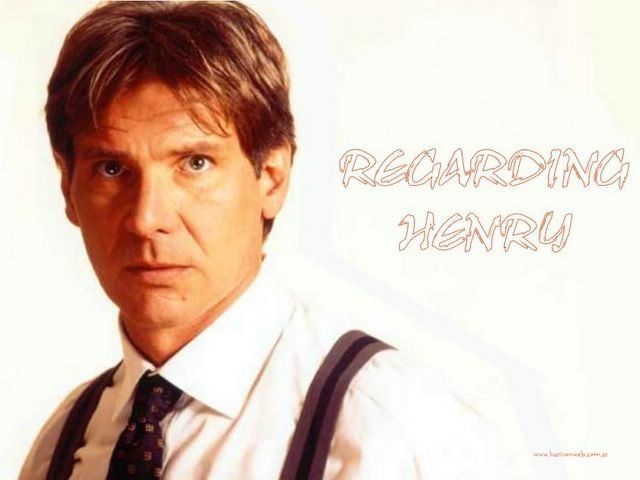
He wrote the screenplay for Armageddon (1998), generally considered the lesser of the two asteroid-threatens-earth movies of that year, starring Bruce Willis. He co-wrote a 2001 drama about a psycho killer (Joy Ride), an obscure comedy (Gone Fishin, 1997) for Danny Glover and Joe Pesci, a romantic drama (Forever Young, 1992) for Mel Gibson. Though it was not particularly successful at the box office, his one gem was Regarding Henry in 1991, which featured one of Harrison Ford’s best performances (and just guessing, I’ll bet one of his favorites.)

Abrams also created the TV series about college students, Felicity, that ran 4 years on the WB cable network, and a 2005 pilot for a series about bounty hunters (The Catch) which was not picked up.

His writing partners for Star Trek XI, Alex Kurtzman and Roberto Orci, who worked with Abrams on MI3, have worked together before. They co-wrote the sequel, The Legend of Zorro (2005), which didn’t measure up critically or at the box office to its predecessor, The Mask of Zorro. They are writing partners on two films slated for release next year, The Transformers: The Movie, and Amazon (Orci is also a producer of this film, to star Scarlett Johansson.) The actual status of these two projects is unknown.

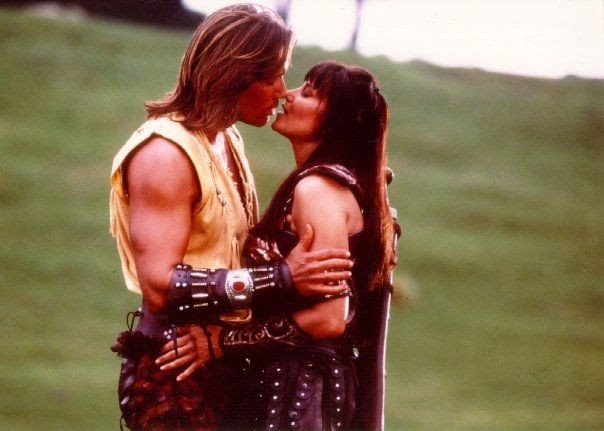
But perhaps most interesting is their early TV work: both wrote for the Kevin Sabo Hercules series, and Orci wrote for its companion series, “Zena, the Warrior Princess.”

All in all, I find more to worry about that to celebrate in the prior work of this team. They certainly are experienced at writing sequels, and working with established characters and fictional worlds. But they’ve never worked with a fictional world as complex, and as dependent on concepts and its internal history, as Star Trek.

If you are concerned about Star Trek continuity, about its history of the future and the key concepts that are crucial to that history, you have to worry about the casual attitude towards history and continuity in the groundbreaking Hercules and Zena series. Their playful use of anachronisms—of very contemporary dialogue and character attitudes in an ancient setting, their casual mixing of periods and places, myth and history in incorporating real historical figures—was a great part of the charm of these shows, and what made them different. But though a vein of knowing humor did work well for the last 3 or 4 TOS cast features, a casual attitude towards Star Trek’s past could play havoc with the Star Trek universe, as created and preserved in 40 years of film, tape and print.

My own perhaps obsessive fear about new Star Trek---that it will use the characters and the Star Trek universe as nothing more than a setting for an action move, a feature film video-game (or video game commercial) —is not exactly assuaged by what I know about this team. Abrams is reputedly a Star Trek fan, but on what level? Treating the Star Trek universe and Trek characters apart from the soul of Star Trek instantly makes it something else. And the revolution becomes an assassination.

Maybe they have the chops to really add to Star Trek not only with good storytelling, with action and adventure, character interplay and development, but by advancing elements of the Star Trek story that articulates its ethos, its view of the future and of the human potential. Or at least, not trashing what Star Trek has come to mean to so many people about a path to a hopeful future. Regarding Henry tells me that’s possible. Armageddon and Zena make me wonder. The idea of Transformers: the Movie makes me cringe.

Harrison Ford in "Regarding Henry" Posted by Picasa
Academy Days

There’s a lot of fan debate over whether Star Trek should be going back to pre-original series days for the next film. The idea for a Starfleet Academy film featuring the young Kirk and Spock goes back to another period in which Trek’s future was in doubt after a perceived box office failure, right after Star Trek V. Harve Bennett’s initial proposal was for a story about racial prejudice against Spock but wrapped in a flashy package: the Star Trek version of Top Gun.

More recently William Shatner has pushed for such a concept, and is apparently writing a series of Star Trek novels with this theme. So far, he does not appear to be involved in this project.

According to one story, the Bennett proposal was revived a few years ago, but when it was sent to Rick Berman, he allowed it to be transformed into the Romulan War prequel that was recently axed. There was at least one other project that at least somebody was actively pursuing, a mixed-cast movie set in the 24th century, led by the Next Generation crew. Patrick Stewart was approached, and there were rumors about Shatner’s involvement in a Mirror Universe story.

I admit to a continuing desire for the 24th century story, though I see Q as the catalyst. Although not a lot of fans agree with me, the Mirror Universe concept worked only in its first original series appearance. (I really despised what Enterprise did with it.) But there’s no indication we’re ever going to see the Next Generation crew again.

So what about this Academy concept?

While fans speculate on who might be the younger Kirk and the new Spock, it’s worth remarking that an academy doesn’t have only students---it has teachers. The teachers in the Harry Potter series, for example, are nearly as important as the students in those stories. I expect that there will be at least one older character, a teacher, a mentor, who will be important, and I expect also it will be a big name star. The Harry Potter films again show this potential.

Looking at who Abrams has worked with before, several older stars could be possibilities: Tom Cruise (star of MI3 and the original Top Gun as well as Speilberg’s War of the Worlds) is an obvious choice, perhaps as a flight instructor. Bruce Willis and Mel Gibson are other stars to consider. They no longer carry movies as they once did, so being part of a Harry Potter-like ensemble, or even being the only box office star in the movie, might be attractive.

But the established actor I’d most like to see would be Harrison Ford. As mentioned above, Abrams wrote one of his best movies, Regarding Henry, though it was utterly outside the action genre. But Ford would be a perfect mentor for a young Kirk, with his borrowed flash from his Star Wars and Indiana Jones characters. There is also Spielberg’s new association with Paramount, and Ford is close to him and his associates.

Regarding Henry is an overlooked but quite good movie, interesting in Trek terms because of its theme: a greedy mover and shaker is shot in a robbery, suffers brain damage, and begins life over again as an apparently mentally impaired person, but he turns out to be more loving and more ethical, tuned into the basic values of life.

I’ve said before that while Star Trek often dealt with the perils of power, Dr. Who often dealt with the perils of greed. Star Trek did deal with greed now and again, especially TNG, but this is an opportunity to deal with it more directly. What if resurgent greed on earth threatens the Federations principles?

Or we could see a good classroom scene, in which a professor argues for the rationale of the prime directive, of reversing the history of exploration always also meaning exploitation.

I've only mentioned male stars, but there's potential for established female stars, not just as cadets but as instructors. It will be hard for any writers to resist creating yet another beautiful woman who is quite hopelessly in love with Spock. On the other hand, it might be fun to see young Kirk as a disaster with women. The series hinted he was a more of a scholar than a young Ulysses.

We might even see as an instructor, perhaps in Federation and space law, the descendent of Denny Crane, as played by William Shatner. What a moment it would be if he watches the young Kirk and observes, I don’t know why I like that kid. And another teacher offers, maybe you see in him something of yourself.

Villains? Klingons perhaps. Though something internal to the Academy would be more imaginative.

Perhaps Abrams experience with the college series, “Felicity,” will help with creating a believable Academy. I’d be surprised if we don’t see young Kirk as a solo pilot of some fast space vehicle. I’m certainly not worried that this team will shirk the action adventure. Abrams seems capable of handling character and basic storytelling. My question for them as for anyone: are they going to make a movie with Star Trek-named characters that deletes the soul of Star Trek? Are they going to keep Star Trek in the science fiction of consciousness, or toss it whole into the easy category of commercialized unconsciousness, a big budget exploitation of 40 years of meaning as well as entertainment?

Obviously we won’t know for awhile. But we may get some clues from what Abrams and company say in the coming months.

There is also a remote possibility to consider: since these guys were so good at keeping this a secret until the recent announcement, could the Starfleet Academy scenario be an elaborate deception to keep this movie a surprise, and not what they’re planning at all?

Monday, April 17, 2006

Trek Who?

by William S. Kowinski

A story at SyFy Portal last week provided a few new details about the Erik Jendresen script for Star Trek XI, and some confirmation of previous stories about its fate, namely that it has been shelved, at least for the moment.

It was indeed a prequel about the Romulan War, which Jendresen reveals was designed as the first of a trilogy, to fill in the century between Enterprise and Captain Kirk.

As much as some fans would like to see a Romulan War film, the idea of a trilogy is daunting. There is only so much you can do in a trilogy: Romulan War followed by The Romulans Strike Back and Return of the Federation? It’s a three act play basically.

Steve Krutzler at TrekWeb wrote about the SyFy Portal story, and added his own comments to the effect that a prequel is a bad idea for re-starting Star Trek, unless perhaps it’s some version of the Starfleet Academy idea with a young Kirk and Spock, first proposed by Harv Bennett, but lately the basis of a William Shatner story.

This ignited a debate at TrekWeb about the future of Star Trek---should it go back to a prequel, or forward past the events of Star Trek Nemesis, in the 24th century or beyond?
Should it involve known characters, and if so, the actors who played them? Could other actors play Kirk and Spock, like several versions of James Bond? Or should Trek be re-imagined, as Batman and Superman have, several times?

It’s a fascinating debate, and I’m not ready to come down at any point on the timeline, but I will offer these thoughts about the re-imagining option, or as some call it, the reboot.

Superman's true origins: comic books. Posted by Picasa
First, in terms of precedent, the superheroes that have been successfully reconceived all began their lives as comic book characters. Sketched and inked figures leave a lot to the imagination, and the Superman or Spiderman in peoples’ heads could vary. Kirk and Spock are Shatner and Nimoy, through almost 40 years. It’s hard to see anyone else playing those characters.

The older characters of successful reboots, Superman and Batman, had several iterations in radio, animated cartoons, movie serials and television series before they became big screen franchises. Superman is a fascinating case to trace. There are elements of the comics that went to radio, elements of the radio shows that were preserved in the animated movie cartoons, and elements of those—including the images and the kind of music in the opening---that became identified with the George Reeves TV series.

Then came the Christopher Reeves movies. The first was one of the great movies of the era. In its first part, the hero/savior myth merged with the American Dream, within the existing sketch of the Superman origin story. Then the Metropolis section brought new visual effects to enchant, a love story, a crisis with big stakes, and the comic panache of Gene Hackman's nevertheless deadly Lex Luthor.

But by the last of this series of films, the audience and the special effects budget had dwindled disastrously. It was some years before the character was revived and redefined for TV, in “Lois and Clark,” the Superboy series and “Smallville.” Another movie was always in the works, and Superman Returns is still slated for this year, with many of the usual characters (including some of the 50s TV cast once again in cameos.) How much the character is reimagined remains to be seen.

The wrinkle in the Batman story was the 1960s TV series, which saw the whole comic book thing as campy, self-consciously played for laughs. The Michael Keaton Batman films had to reestablish Batman as having some serious adventure quality, but there was a residue from the TV series that kept it from taking itself seriously enough to be more than special effects melodrama with laughs. It benefited most from Jack Nicholson’s performance, though I’ve always like Michael Keaton. The movie series, later with Val Kilmer and George Clooney, never got over the distasteful second Tim Burton film, Batman Returns. They seemed to play with combining elements of Superman and James Bond films with TV Batman humor.

So personally I wasn’t expecting much when Batman Begins was announced. I'd heard about the new, darker Batman, and that didn't appeal to me. I didn’t even see it until it was on video, but I must admit I was pretty impressed. It retold the origin story for about the fourth time, but in the most convincing way. (Unlike the first Christopher Reeves’ Superman, the Batman origin had never been told very well or as iconically.) It actually found a way to make Batman impressive and a bit scary, mostly by the “whoosh” effects of his speedy, phantom movements. (And at last, Lian Neesen got to show his physical moves, that he must have gotten all prepared to do in the prequel Star Wars trilogy.)

There was no self-conscious irony or self-parody. An unknown in the lead probably helped. There was some sophistication in the ideas the movie played with---a little confusion, but at least some ambition. It made me rethink the possibilities for a Star Trek reboot. And then something else did as well.

The original Doctor Who: William Hartnell. Posted by Picasa
The idea that Star Trek could be reconceived has pretty much filled me with horror for one basic reason: I don’t see anyone who can do it. There’s a lack of understanding, even a lack of sympathy, for the essence, the soul of Star Trek, even among many of the Trek alums.

While I deeply admire much of the work writer/producer Ron Moore did at Star Trek, and I recognize the creativity and achievement of his re-imagining of Battlestar Galactica, I don’t want to see Star Trek turned into a so-called “realistic” war series with futuristic/sci-fi twists. Especially since what “gritty” and “realistic” seems to mean to that generation of writers is all based on movie versions of World War II. I’ve found it more than a little ironic that they denigrate the view of war and peace in Star Trek, which was created by actual veterans of World War II.

I’m not saying Ron Moore would do that. But I fear a lot of other writer/producers would. The Berman & Braga regime of the past decade seems to have soured people on the idea that the Star Trek universe and ethos can still generate creative ideas. But I sure don’t want to see what seems to be the alternative: some combination of Star Trek aliens and technology with war and espionage video games. I don’t want to see Star Trek as a futuristic “24.”

The post-9-11 emphasis on terrorism and war, while it was never as dangerous to most of us as World War II was to our parents and grandparents, seems to have captivated the imagination of a generation of writers. I don’t even much like the Dominion novels in the Star Trek series, nor was a fan of the Dominion war episodes of DS9, which too often centered on war stories that were clichés that even the Horatio Hornblower novels avoided.

This even makes me fearful of a Romulan War movie, let alone a trilogy. There are possibilities for fascinating untold stories about how earth really got itself together, and how earthlings confronted their history of exploiting along with exploring, as well as how the attitude of peaceful exploration and the Prime Directive came to be such an important tenet of that future. And then how all these ideals were tested and evolved in conflict with Romulus. But I have no confidence that anyone in Hollywood would tell those stories. It would be all visual effects explosions and cliché conflicts and cliché heroics. The drama would be of personalities and not about the consciousness required by the future, in the hearts and minds and actions of people.

So that’s one reason I am all for a waiting period, before Trek begins again, unless it continues with the Next Generation crew at its center. As I’ve said before, I could see a mixed generations movie with the Next Generation in the lead for Star Trek XI. But the time for that may be escaping. We’ll see.

But getting back to the reboot, my confidence in anyone being able to re-imagine Star Trek now is not high, but it has just gotten a bit of a boost, from England.

Like Michelle at Trek Today, I’m quite taken with what I’ve seen of the new Doctor Who---the first season episodes airing on the Sci-Fi Channel. I’ve only seen two, but I must agree that they’re really good, and “Dalek” was really excellent (it even addressed the old joke about the wheeled Daleks being made helpless by stairs.)

But unlike Michelle, I do know the series. Back when I lived in Pittsburgh, there was a new public TV channel on cable and UHF, channel 16. They called themselves “sweet little 16,” because their programming was very modest. They did show a lot of old series’ from England, and their first hit was “Dr. Who.”

It was such a big hit for them, in fact, that they had a Dr. Who convention, and after airing all of the Tom Baker episodes (the Fourth and most famous Doctor, who reigned the longest, 7 years in the 70s and 80s) they started right at the beginning. So I saw at least some of the episodes of the first 7 doctors, (Hartnell, Troughton, Pertwee, Tom Baker, Peter Davidson, Colin Baker and Sylvester McCoy.)

I’ve seen all of the Tom Baker episodes, which remain my favorites. This was also the Douglas Adams era, who was a writer and producer for Dr. Who while he was creating The Hitchhiker’s Guide to the Galaxy. And to show how small a place and yet fascinating a time it was: Lalla Ward was Baker’s costar and also his wife. She divorced him and married Richard Dawkins, the eminent writer on genetics. How is this possible? The connecting link was Douglas Adams, who was friends with them all. He also got one member of Monty Python and a costar in a Beatles movie to appear in an episode of Dr. Who.

The new Doctor Who and companion, Christopher Eccelston
and Billie Piper as Rose. Posted by Picasa
Tom Baker was the quintessential Dr. Who, and everyone who played the part afterwards had to decide how much to be like him and how much to be different. Dr. Who on Channel 16 faded away with Sylvester McCoy, and it soon left the air in England altogether.

It was revived last year with much better visual effects and much less of a direct link to its origin as a childrens’ show. But it is also well acted and especially the writing is better than I could have hoped or even imagined.

The first episode I saw was the second part of “World War III,” and the beginning wasn’t terribly promising. It took a few minutes for me to warm up to Christopher Eccelston’s Doctor--- a working class bloke in a leather jacket, close cropped hair whose dopey manner (though very Doctorish) didn’t seem to fit. But it didn’t take long for him to win me over. And in “Dalek” his portrayal of a Doctor who is deeply angry, even bitter and hardened, was riveting. There already seems to be more of an apocalyptic edge to this edition of Doctor Who, though the sense of hope, if not confidence, is also there.

Eccelston played the Doctor for only the first season. He’s been replaced by David Tennant. But the production team is intact, and they’re planning on returning some old characters (liked the beloved Sarah Jane Smith of the Tom Baker era), deliberately modeled on what The Next Generation did in bringing back elements of original Trek, including some major characters.

In only the two episodes I’ve seen, I’ve been impressed that Doctor Who could be reconceived, including not only effects but lessons learned from plays and television in England that dealt with social history as well as science fiction from elsewhere. But then, Doctor Who always had that tradition of quality drama nearby. Not only did its monsters speak with impeccable stage English accents, but they sometimes were positively Shakespearian.

Does any of this transfer to Star Trek? Admittedly, not a lot. The idea of new Doctors was built into the series since the elderly actor playing the first doctor became too ill to continue. (The Doctor occasionally “regenerates” his form.) So it doesn’t say much about replacing actors who established the characters of Star Trek.

As for whether a similar strength of imagination and quality of writing and production is possible, there are major differences. British TV, with its access to theatre and intelligent television, as well as to the dramatic and comedic traditions of Oxford and Cambridge, is very different from the hermetic hothouse of Los Angeles TV. Of course, that does happen to be where Star Trek started, so it's hardly impossible.

Still, the fact that this imagination and creativity exists anywhere is heartening. Maybe there is a future for a reimagined Star Trek. As long as they don’t forget its soul.

Tuesday, December 13, 2005


The unknown possibilities of existence... Posted by Picasa