Coming Soon
What were things really like when Star Trek started in 1966? And several posts relating to the new War of the Worlds movie, including origins of the novel, the connections between H.G. Wells and Gene Roddenberry, and an essay on the new film.
Generally there are new posts once a week, appearing usually between Sunday and Wednesday.
Tuesday, May 31, 2005


Monday, May 23, 2005


Birth of An Empire
by William S. Kowinski
The political dimensions of "Star Wars III: Revenge of the Sith," currently still breaking box office records, seemed to take many people by surprise. The Washington Post reported on a number of observations, some of them angry, that the transformation of the Republic into the Empire had certain clear similarities to U.S. actions and rhetoric in respect to Iraq. The article was entitled "The Empire Strikes Bush."
Then the New York Times weighed in, with news of conservative blogs attacking Lucas for anti-Bush sentiments, such as Anakin Skywalker--- who'd just been re-named Darth Vader--- saying, "If you're not with me, you're my enemy," (a close echo of Bush's "Either you are with us, or you are with the terrorists.")
The Times also reported that a conservative website it described as "little trafficked" had called for a boycott of Star Wars, along with films starring Jane Fonda, Susan Sarandon and Sean Penn, and the music of the Dixie Chicks. It's either little trafficked, or largely ignored.
Cornered on the question in Cannes, where he opened "Sith," Lucas reinterated that his movie was devised in response to the Vietnam war, but he did allow that"The parallels between what we did in Vietnam and what we're doing in Iraq now are unbelievable."
However, if anyone had paid attention to what Lucas had been saying for several years now, they couldn't be surprised. He's announced over and over that the theme of this film and the prequel trilogy it completes is meant to be "...how a democratic society turns into a dictatorship, and how a good person turns into a bad person."
A pop culture phenomenon like "Star Wars" has an inevitable relationship to other cultural currents in the society of its time. This has been especially true of the Lucas films, since the story within their space opera adventure is partly political: the rise and fall of an Empire.
That first "'>Star Wars" burst onto screens in 1977 when science fiction films were rare and dour. After Vietnam and Watergate, and with the Cold War superpowers still facing off with immense nuclear arsenals, and dire planetary warnings coming from a fledgling environmental movement, the future seemed doubtful, and the anti-hero ruled the screen. Enter Lucas with a simple and revolutionary concept: to consciously inject heroic mythological themes into the fantasy world of the space opera serial: Joseph Campbell directs Flash Gordon.
"Star Wars" edged the old innocent virtues with contemporary knowingness in recognizable new heroes: Hans Solo, the swaggering mercenary with hidden heart, and Princess Leia, the damsel in distress who runs the war room and shoots the bad guys. Soulless technology became personable in the robots, C3po and R2D2. But the true classic hero was Luke Skywalker, all impulse and openness, with buried powers that could be used for anything, depending on who and what he trusted to bring them forth.
(text continues after photos)
by William S. Kowinski
The political dimensions of "Star Wars III: Revenge of the Sith," currently still breaking box office records, seemed to take many people by surprise. The Washington Post reported on a number of observations, some of them angry, that the transformation of the Republic into the Empire had certain clear similarities to U.S. actions and rhetoric in respect to Iraq. The article was entitled "The Empire Strikes Bush."
Then the New York Times weighed in, with news of conservative blogs attacking Lucas for anti-Bush sentiments, such as Anakin Skywalker--- who'd just been re-named Darth Vader--- saying, "If you're not with me, you're my enemy," (a close echo of Bush's "Either you are with us, or you are with the terrorists.")
The Times also reported that a conservative website it described as "little trafficked" had called for a boycott of Star Wars, along with films starring Jane Fonda, Susan Sarandon and Sean Penn, and the music of the Dixie Chicks. It's either little trafficked, or largely ignored.
Cornered on the question in Cannes, where he opened "Sith," Lucas reinterated that his movie was devised in response to the Vietnam war, but he did allow that"The parallels between what we did in Vietnam and what we're doing in Iraq now are unbelievable."
However, if anyone had paid attention to what Lucas had been saying for several years now, they couldn't be surprised. He's announced over and over that the theme of this film and the prequel trilogy it completes is meant to be "...how a democratic society turns into a dictatorship, and how a good person turns into a bad person."
A pop culture phenomenon like "Star Wars" has an inevitable relationship to other cultural currents in the society of its time. This has been especially true of the Lucas films, since the story within their space opera adventure is partly political: the rise and fall of an Empire.
That first "'>Star Wars" burst onto screens in 1977 when science fiction films were rare and dour. After Vietnam and Watergate, and with the Cold War superpowers still facing off with immense nuclear arsenals, and dire planetary warnings coming from a fledgling environmental movement, the future seemed doubtful, and the anti-hero ruled the screen. Enter Lucas with a simple and revolutionary concept: to consciously inject heroic mythological themes into the fantasy world of the space opera serial: Joseph Campbell directs Flash Gordon.
"Star Wars" edged the old innocent virtues with contemporary knowingness in recognizable new heroes: Hans Solo, the swaggering mercenary with hidden heart, and Princess Leia, the damsel in distress who runs the war room and shoots the bad guys. Soulless technology became personable in the robots, C3po and R2D2. But the true classic hero was Luke Skywalker, all impulse and openness, with buried powers that could be used for anything, depending on who and what he trusted to bring them forth.
(text continues after photos)

Lucas captivated audiences on yet another level with one astonishing premise: The Force, which emanates from all life and is both accessible to all and inborn more strongly in some. The Force has a good side, accessed by the Jedi knights, like Obi Wan Kenobe, serving the rebel alliance. It also has the dark side, represented by Darth Vader, serving the Imperial Empire and its powerful hooded emperor. The Force not only added an all-purpose explanation for fantastic accomplishments but a mystical and spiritual dimension largely absent from a 1970s American culture dominated by the rigid and linear materialism of economics and science.
In the third film of this trilogy, "'>Return of the Jedi," the Empire is overthrown by Luke Skywalker and an underdog alliance with more virtue than technology, in a final battle fought partly in space, and partly on a green world that looks very much like Eureka, California. It was a satisfying ending, and everyone identified. Released in 1983, its message inspired New Age advocates and environmentalists, and also President Ronald Reagan, who began referring to the Soviet Union as the Evil Empire, and proposed a missile defense system that was quickly dubbed "Star Wars."
But Lucas had a larger, more complex and perhaps less comfortable story in mind. Darth Vader, the black-clad, half-machine villain skulking in the darkness, turned out to be the evil father of Luke Skywalker and his twin sister, Leia. Even though Vader turns away from the dark side before he dies, the question was raised: how does evil father good? The answer given in the new prequel trilogy is provided by the less literal reversal: how good fathers evil.
Beginning with '>"The Phantom Menace" in 1999, Lucas explores the rise and fall of Anakin Skywalker, who will become Darth Vader in "Revenge of the Sith." (The Sith are revealed as the dark side equivalent of the Jedi.) In the past several years, DVDs of all five prior Star Wars films were released(including "'>Star Wars II: Attack of the Clones" from 2002) with commentary tracks that included George Lucas talking in his low-key Modesto way about the arc of these two trilogies.
In between chat on mechanics of filmmaking (the Bantha is really an elephant in costume) Lucas reveals how deliberate his thematic thinking has been. The evil Empire figures wear black and white, because they represent a black-and-white world view of self-righteous certainties. The rebels are clothed in earth-tones, representing the organic complexities. The same situations and motifs recur purposefully; the difference is in the choices characters make each time.
In "Jedi" we saw Luke reject the temptations of the dark side's power by restraining his anger and hate. The entire prequel trilogy may be seen as a demonstration of how someone makes the opposite choice, and Lucas has clearly tried to make Anakin Skywalker sympathetic as well as strong. To up the ante, Lucas even gives him the equivalent of a virgin birth, born of the mating of a woman and the Force itself. He is "the chosen one."
Anakin is hotblooded but his reactions seem reasonably provoked: he is taken from his mother as a child, and as a young man sees her killed by kidnappers. He is forbidden the woman he loves. His personal descent is mirrored in the politics Lucas spends a lot of time elaborately setting up, with the apparently reasonable and reactive, step-by-step transformation of the democratic Republic into the dictatorial Empire, though it is being manipulated by one of its own.
The society and the hero that think themselves good but transform themselves into evil is a bold theme that resonates in post-9/11 America. Lucas says forthrightly that his point of view was formed during the Vietnam war. Though of course he could not have predicted that this film would open while the U.S. has an army of occupation in Iraq, it inevitably applies, especially considering how officials declared the preemptively virtuous right to attack those they define as the Axis of Evil.
Moreover, Lucas is clear about the paths to the dark side: The hunger for more and more power serving a possessiveness and greed that includes surrender to revenge, and to the emotional demands of what Buddhists call attachment. In other words, the current functional morality of our politics and society.
This prequel trilogy says that hot-blooded righteousness in a hero is not enough, for it is too easily turned. Like all cautionary tales, this is a call to consciousness. Like all tragedies, it tells us that even born heroes have human flaws that mirror their society's faults.
In the third film of this trilogy, "'>Return of the Jedi," the Empire is overthrown by Luke Skywalker and an underdog alliance with more virtue than technology, in a final battle fought partly in space, and partly on a green world that looks very much like Eureka, California. It was a satisfying ending, and everyone identified. Released in 1983, its message inspired New Age advocates and environmentalists, and also President Ronald Reagan, who began referring to the Soviet Union as the Evil Empire, and proposed a missile defense system that was quickly dubbed "Star Wars."
But Lucas had a larger, more complex and perhaps less comfortable story in mind. Darth Vader, the black-clad, half-machine villain skulking in the darkness, turned out to be the evil father of Luke Skywalker and his twin sister, Leia. Even though Vader turns away from the dark side before he dies, the question was raised: how does evil father good? The answer given in the new prequel trilogy is provided by the less literal reversal: how good fathers evil.
Beginning with '>"The Phantom Menace" in 1999, Lucas explores the rise and fall of Anakin Skywalker, who will become Darth Vader in "Revenge of the Sith." (The Sith are revealed as the dark side equivalent of the Jedi.) In the past several years, DVDs of all five prior Star Wars films were released(including "'>Star Wars II: Attack of the Clones" from 2002) with commentary tracks that included George Lucas talking in his low-key Modesto way about the arc of these two trilogies.
In between chat on mechanics of filmmaking (the Bantha is really an elephant in costume) Lucas reveals how deliberate his thematic thinking has been. The evil Empire figures wear black and white, because they represent a black-and-white world view of self-righteous certainties. The rebels are clothed in earth-tones, representing the organic complexities. The same situations and motifs recur purposefully; the difference is in the choices characters make each time.
In "Jedi" we saw Luke reject the temptations of the dark side's power by restraining his anger and hate. The entire prequel trilogy may be seen as a demonstration of how someone makes the opposite choice, and Lucas has clearly tried to make Anakin Skywalker sympathetic as well as strong. To up the ante, Lucas even gives him the equivalent of a virgin birth, born of the mating of a woman and the Force itself. He is "the chosen one."
Anakin is hotblooded but his reactions seem reasonably provoked: he is taken from his mother as a child, and as a young man sees her killed by kidnappers. He is forbidden the woman he loves. His personal descent is mirrored in the politics Lucas spends a lot of time elaborately setting up, with the apparently reasonable and reactive, step-by-step transformation of the democratic Republic into the dictatorial Empire, though it is being manipulated by one of its own.
The society and the hero that think themselves good but transform themselves into evil is a bold theme that resonates in post-9/11 America. Lucas says forthrightly that his point of view was formed during the Vietnam war. Though of course he could not have predicted that this film would open while the U.S. has an army of occupation in Iraq, it inevitably applies, especially considering how officials declared the preemptively virtuous right to attack those they define as the Axis of Evil.
Moreover, Lucas is clear about the paths to the dark side: The hunger for more and more power serving a possessiveness and greed that includes surrender to revenge, and to the emotional demands of what Buddhists call attachment. In other words, the current functional morality of our politics and society.
This prequel trilogy says that hot-blooded righteousness in a hero is not enough, for it is too easily turned. Like all cautionary tales, this is a call to consciousness. Like all tragedies, it tells us that even born heroes have human flaws that mirror their society's faults.

That's a lot for a film series to bear, especially one wrapped up in the animated noise of a tech-crazy age, and partly pitched to children. As Lucas warned, this film is darker than any of its predecessors, showing Anakin Skywalker's descent into hell (almost literally, in the fires of a volcanic planet.)
Revenge of the Sith is packed with space battles and enough fast moving shots per minute to quench the quick-image hunger of the youngest video game-raised fan, although it tends to bludgeon older viewers into sullen impatience. There is likely to be some discomfort with the acting---more Anakin the manikin talk---though there were more effective moments in this film. But the political applicability is inescapable and explicit in the dialogue. "Only the Sith see the universe in black and white." However it's more complex and subtle than an anti-Vietnam or anti-Iraq war screed.
As the chancellor is moving quickly towards becoming emperor, the capital city starts to look less cleanly futuristic and more garish, with lots of neon. Anakin talks to him at a Senate session during what appears to be some sort of stadium light show. It is the manipulation by means of misdirection and imagery (also a Bush administration characteristic, thanks especially to a compliant media)which leads directly to one of the more quoted lines in the film, Queen Amidala as she observes Chancellor/Emperor Palpatine declare the Empire to a palpitating throng in the Senate: "This is how liberty dies---to thunderous applause."
Pretty nervy stuff for a film that is getting thunderous applause at the box office. The film is also likely to offend some self-described Christian fundamentalists, with lines like Yoda's, when he questions whether the prophesies of the Chosen One were misinterpreted. Though the basic moral message of what turns good into bad does jibe with much of what Jesus says in the gospels, and what early Christians believed, it is not the kind of doctrine today's so-called fundamentalists are likely to embrace. Especially when the people who talk like this today are mostly Buddhists. It is actually a pretty subtle philosophy (having really not much to do with religion) about how things work.
It also is conspicuously counter to the motivation of heroes in recent action films, who usually wind up blowing stuff up and killing a lot of people not for king or country or even their religion, but to save their family. That in essence is what Anakin wants to hold onto as his core value, and it leads to his downfall.
Beyond politics and religion as well is this film's function within the six-film cycle of the Star Wars saga. Located at dead center in the myth, this is an authentic tragedy. It concerns a great man with a fatal flaw: the classical Greek formula. We are meant to feel pity and terror, not only for Anakin but for ourselves.
The political complexities within the film will also likely have fans talking about what was really going on for some years more. Were the Jedi Knights just a little past their prime? Was Anakin rightly confused by the Jedi's bending their own rules, or was this a matter of thinking only in black and white?
It's fascinating that it will likely be the real fans who will engage in actual moral and political discussion, with this film as text. Beyond those invested in this story universe, many are too into their ideological identity to allow doubt or argument. In America at least, the audience seems split between angry triumphalism and forlorn, global-cooked dread. It's the Rapture red staters versus the apocalyptic blues. Even Lucas will probably not be surprised if this essentially moral message is lost or, as in the Reagan 80s, co-opted.
It may take seeing these six films in sequence for the moral themes to fully emerge (and the prophesy perhaps to be fulfilled.) Even the enormous gap in movie technology from the first trilogy to the second may emphasize the themes, as grand digital landscapes suddenly become more human, with human virtues regaining their Samurai/Jedi power. It may look like decadence yielding to simplicity and conscious innocence. The implications of the fall should be sobering, but there's both hope and instruction in this humbler resurrection. If Lucas himself succeeds in doing what he's announced, which is to make smaller, more personal films, it may be a prediction of his future as well.
Revenge of the Sith is packed with space battles and enough fast moving shots per minute to quench the quick-image hunger of the youngest video game-raised fan, although it tends to bludgeon older viewers into sullen impatience. There is likely to be some discomfort with the acting---more Anakin the manikin talk---though there were more effective moments in this film. But the political applicability is inescapable and explicit in the dialogue. "Only the Sith see the universe in black and white." However it's more complex and subtle than an anti-Vietnam or anti-Iraq war screed.
As the chancellor is moving quickly towards becoming emperor, the capital city starts to look less cleanly futuristic and more garish, with lots of neon. Anakin talks to him at a Senate session during what appears to be some sort of stadium light show. It is the manipulation by means of misdirection and imagery (also a Bush administration characteristic, thanks especially to a compliant media)which leads directly to one of the more quoted lines in the film, Queen Amidala as she observes Chancellor/Emperor Palpatine declare the Empire to a palpitating throng in the Senate: "This is how liberty dies---to thunderous applause."
Pretty nervy stuff for a film that is getting thunderous applause at the box office. The film is also likely to offend some self-described Christian fundamentalists, with lines like Yoda's, when he questions whether the prophesies of the Chosen One were misinterpreted. Though the basic moral message of what turns good into bad does jibe with much of what Jesus says in the gospels, and what early Christians believed, it is not the kind of doctrine today's so-called fundamentalists are likely to embrace. Especially when the people who talk like this today are mostly Buddhists. It is actually a pretty subtle philosophy (having really not much to do with religion) about how things work.
It also is conspicuously counter to the motivation of heroes in recent action films, who usually wind up blowing stuff up and killing a lot of people not for king or country or even their religion, but to save their family. That in essence is what Anakin wants to hold onto as his core value, and it leads to his downfall.
Beyond politics and religion as well is this film's function within the six-film cycle of the Star Wars saga. Located at dead center in the myth, this is an authentic tragedy. It concerns a great man with a fatal flaw: the classical Greek formula. We are meant to feel pity and terror, not only for Anakin but for ourselves.
The political complexities within the film will also likely have fans talking about what was really going on for some years more. Were the Jedi Knights just a little past their prime? Was Anakin rightly confused by the Jedi's bending their own rules, or was this a matter of thinking only in black and white?
It's fascinating that it will likely be the real fans who will engage in actual moral and political discussion, with this film as text. Beyond those invested in this story universe, many are too into their ideological identity to allow doubt or argument. In America at least, the audience seems split between angry triumphalism and forlorn, global-cooked dread. It's the Rapture red staters versus the apocalyptic blues. Even Lucas will probably not be surprised if this essentially moral message is lost or, as in the Reagan 80s, co-opted.
It may take seeing these six films in sequence for the moral themes to fully emerge (and the prophesy perhaps to be fulfilled.) Even the enormous gap in movie technology from the first trilogy to the second may emphasize the themes, as grand digital landscapes suddenly become more human, with human virtues regaining their Samurai/Jedi power. It may look like decadence yielding to simplicity and conscious innocence. The implications of the fall should be sobering, but there's both hope and instruction in this humbler resurrection. If Lucas himself succeeds in doing what he's announced, which is to make smaller, more personal films, it may be a prediction of his future as well.
Monday, May 16, 2005
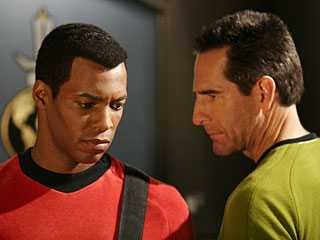
All Bad Things, Part II
Are we maybe actually in the Mirror Universe?
I get no pleasure from bashing anything about Star Trek. I don't like being in the company of writers who have used the demise of Trek to show off their superior disdain. I wish I could say that those who talk about fatigue were proven wrong by the last episodes of Enterprise. But they seemed to me to be evidence of fatigue, though not necessarily in the audience.
Because unless it's just me, the last six episodes were a mélange of bad ideas, good ideas badly executed, not well-thought out stories and no real direction to characterization. So many plot threads never tied, so many themes never matched or explored very far; so many anomalies unexplained; so much pointless motion as a substitute for real story action... Put them together and you have an unpalatable menu of ways that a series can go wrong: a flatfooted joke with a flatfooted twist ("Bound"), giddy obsession with nostalgic production values for two hours of pointless violence and histrionics (the Mirror Twins), two hours of a decent idea with another excellent guest star, but slack and undramatic storytelling (Demons, Terra Prime) and a finale with no center, no edge and no thanks.
The best that anyone has said for "Bound" and the mirror episodes is that they were "entertained," whatever that means. Personally I'd like some solid storytelling with intriguing themes and characterization with my 23rd and 24th century aliens, starships and uniforms. (Oddly enough, the originals are all readily available in several different media of TOS and TNG episodes.)
The mirror universe episodes began by trashing one of the most important moments in Star Trek history (and certainly one of the most memorable during the tenure of Berman and Braga): the first contact in First Contact. If Star Trek represents hope to many people, then this moment embodied that hope.
But instead of a handshake, the inventor of the warp drive whips out a machine gun, kills an unarmed alien, and leads his fellow earthlings to pillage the Vulcan science ship. It is shocking and heart-breaking, and as I watched it the first time I thought: it's going to be hard to see this moment in First Contact now without thinking of this version, so this had better be worth it.
For two hours I waited for it to be worth it, and it never was. I don't blame fans who managed to see this as an illustration of how the Star Trek future could go bad, because they really want Star Trek to mean something. But for the people responsible for this episode, this excuse can only be classified as cynical rationalization. These episodes were execrable exercises in pointless game-playing, laden with relentless violence and cheap villainy.
Was the premise of this mirror universe even credible? War-ravaged 21st century earthlings pillage one small ship of its technology and rule the galaxy, turning the Vulcans into slaves? That leaves a lot up to the imagination, especially considering what we see of the Enterprise earthlings. Empress Sato indeed. That great twist of the apparently subservient sex slave being the real master was so brilliant, why not use it twice in a row?
Peter Weller's presence and subtle acting, and Levar Burton's direction, made "Demons" the best of a bad lot, but as reviewers have pointed out, not a whole lot makes sense (Trip and T'Pol going "undercover" etc.). Both this and "Terra Prime" failed to either explore or explicate the worthy theme of xenophobia.
For example, the Terra Prime earth-firsters were of various races and nationalities. Wasn't that an opportunity for an Enterprise character to point out the analogy? Why else have a mixed race set of xenophobes? But with nothing said, the image sends a mixed message: like, these people can't really be serious. What is so threatening about the half-alien baby? We're supposed to know. Nobody shows us why they feel threatened. (Maybe Weller's performance here was too subtle.)
Michelle Erica Green makes a similar point about the series, that too much was told and not enough happened. This is bad storytelling, from people who have been involved in good storytelling in the past. I can't say I understand it.
Are we maybe actually in the Mirror Universe?
I get no pleasure from bashing anything about Star Trek. I don't like being in the company of writers who have used the demise of Trek to show off their superior disdain. I wish I could say that those who talk about fatigue were proven wrong by the last episodes of Enterprise. But they seemed to me to be evidence of fatigue, though not necessarily in the audience.
Because unless it's just me, the last six episodes were a mélange of bad ideas, good ideas badly executed, not well-thought out stories and no real direction to characterization. So many plot threads never tied, so many themes never matched or explored very far; so many anomalies unexplained; so much pointless motion as a substitute for real story action... Put them together and you have an unpalatable menu of ways that a series can go wrong: a flatfooted joke with a flatfooted twist ("Bound"), giddy obsession with nostalgic production values for two hours of pointless violence and histrionics (the Mirror Twins), two hours of a decent idea with another excellent guest star, but slack and undramatic storytelling (Demons, Terra Prime) and a finale with no center, no edge and no thanks.
The best that anyone has said for "Bound" and the mirror episodes is that they were "entertained," whatever that means. Personally I'd like some solid storytelling with intriguing themes and characterization with my 23rd and 24th century aliens, starships and uniforms. (Oddly enough, the originals are all readily available in several different media of TOS and TNG episodes.)
The mirror universe episodes began by trashing one of the most important moments in Star Trek history (and certainly one of the most memorable during the tenure of Berman and Braga): the first contact in First Contact. If Star Trek represents hope to many people, then this moment embodied that hope.
But instead of a handshake, the inventor of the warp drive whips out a machine gun, kills an unarmed alien, and leads his fellow earthlings to pillage the Vulcan science ship. It is shocking and heart-breaking, and as I watched it the first time I thought: it's going to be hard to see this moment in First Contact now without thinking of this version, so this had better be worth it.
For two hours I waited for it to be worth it, and it never was. I don't blame fans who managed to see this as an illustration of how the Star Trek future could go bad, because they really want Star Trek to mean something. But for the people responsible for this episode, this excuse can only be classified as cynical rationalization. These episodes were execrable exercises in pointless game-playing, laden with relentless violence and cheap villainy.
Was the premise of this mirror universe even credible? War-ravaged 21st century earthlings pillage one small ship of its technology and rule the galaxy, turning the Vulcans into slaves? That leaves a lot up to the imagination, especially considering what we see of the Enterprise earthlings. Empress Sato indeed. That great twist of the apparently subservient sex slave being the real master was so brilliant, why not use it twice in a row?
Peter Weller's presence and subtle acting, and Levar Burton's direction, made "Demons" the best of a bad lot, but as reviewers have pointed out, not a whole lot makes sense (Trip and T'Pol going "undercover" etc.). Both this and "Terra Prime" failed to either explore or explicate the worthy theme of xenophobia.
For example, the Terra Prime earth-firsters were of various races and nationalities. Wasn't that an opportunity for an Enterprise character to point out the analogy? Why else have a mixed race set of xenophobes? But with nothing said, the image sends a mixed message: like, these people can't really be serious. What is so threatening about the half-alien baby? We're supposed to know. Nobody shows us why they feel threatened. (Maybe Weller's performance here was too subtle.)
Michelle Erica Green makes a similar point about the series, that too much was told and not enough happened. This is bad storytelling, from people who have been involved in good storytelling in the past. I can't say I understand it.

"These are the Voyages" was fitting in its aspiration and sentiment as the apparent finale for Star Trek As We Know It, and in its chaotic attempt to tell at least 3 stories in 42 minutes, with the inexplicable rubbing up against the brilliant, and isolated moments of real feeling following the cringe-worthy, an unfortunately fitting finale, if not for this series, then for this part of the season.
As Steve Krutzler pointed out, the central event is very weak: Enterprise must rush back to earth so that Archer can...save the planet from an alien probe? Battle the Borg for earth's future? No, no, nothing that...well, dramatic. It's to give a speech. Which he hasn't written. But which he absolutely can't be late for---why, getting him to the podium on time is worth dying for! I don't know about audience fatigue, but this is a prime illustration of creative fatigue.
I pretty much expected to enjoy the TNG parts, but even though Jonathan Frakes and Marina Sirtis gave fine performances, it was a jarring and unconvincing element. Riker hanging around watching like a ghost took the reality out of the Enterprise crew scenes, which otherwise were well acted, befitting a finale. Riker interacting with the crew was much better---in talking about each other, we got some sense of how they'd changed over the years and became a crew--- but it was never clear to me exactly what he was looking for, or in fact, what he found that enabled him to make his decision.
I'm afraid I don't see the relevance of Trip's self-sacrifice to Riker's choosing to violate one of two pledges, to his old captain and to his current captain. Riker had plenty of instances in his own experience concerning following or not following orders. Data disobeyed an order in his first command in TNG's Redemption II, and Picard commended him for his initiative, saying "Starfleet doesn't want officers who follow orders blindly." As far as that goes, Kirk and his crew disobeyed orders to search for Spock---why wouldn't he view that simulation? I would---it's a much better movie.
The TNG actors were badly served by the premise. They were clearly older than their TV TNG selves. The writers could have made this credible if they had been on the Enterprise E just before Nemesis or on the Titan; if they had come up with a good thread connecting the two eras, these actors---of both casts--- would have given them a truly memorable episode. Sirtis and especially Frakes were excellent, but having them masquerade as their younger selves was infuriating: please honor who they have become. The lines under Riker's eyes mean something, and there are stories there.
The Shran subplot is a rushed, undramatic excuse for action sequences. T'Pol has a nice moment sniffing Trip's clothes, but then how many times have we seen this move since E.T.? Soon she gets to deliver one of the lamest lines in memory, telling Archer "You look very heroic." Which is immediately followed by perhaps the best moment of the entire episode, when Archer/Bacula turns and embraces T'Pol/Blalock---it's one of those moments that seems to be simultaneously about the characters and the actors, and it even looks spontaneous. This is followed by another nice moment, a Phlox grin reminiscent of the computer-enhanced exaggerated alien grin of the very first episode.
As Steve Krutzler pointed out, the central event is very weak: Enterprise must rush back to earth so that Archer can...save the planet from an alien probe? Battle the Borg for earth's future? No, no, nothing that...well, dramatic. It's to give a speech. Which he hasn't written. But which he absolutely can't be late for---why, getting him to the podium on time is worth dying for! I don't know about audience fatigue, but this is a prime illustration of creative fatigue.
I pretty much expected to enjoy the TNG parts, but even though Jonathan Frakes and Marina Sirtis gave fine performances, it was a jarring and unconvincing element. Riker hanging around watching like a ghost took the reality out of the Enterprise crew scenes, which otherwise were well acted, befitting a finale. Riker interacting with the crew was much better---in talking about each other, we got some sense of how they'd changed over the years and became a crew--- but it was never clear to me exactly what he was looking for, or in fact, what he found that enabled him to make his decision.
I'm afraid I don't see the relevance of Trip's self-sacrifice to Riker's choosing to violate one of two pledges, to his old captain and to his current captain. Riker had plenty of instances in his own experience concerning following or not following orders. Data disobeyed an order in his first command in TNG's Redemption II, and Picard commended him for his initiative, saying "Starfleet doesn't want officers who follow orders blindly." As far as that goes, Kirk and his crew disobeyed orders to search for Spock---why wouldn't he view that simulation? I would---it's a much better movie.
The TNG actors were badly served by the premise. They were clearly older than their TV TNG selves. The writers could have made this credible if they had been on the Enterprise E just before Nemesis or on the Titan; if they had come up with a good thread connecting the two eras, these actors---of both casts--- would have given them a truly memorable episode. Sirtis and especially Frakes were excellent, but having them masquerade as their younger selves was infuriating: please honor who they have become. The lines under Riker's eyes mean something, and there are stories there.
The Shran subplot is a rushed, undramatic excuse for action sequences. T'Pol has a nice moment sniffing Trip's clothes, but then how many times have we seen this move since E.T.? Soon she gets to deliver one of the lamest lines in memory, telling Archer "You look very heroic." Which is immediately followed by perhaps the best moment of the entire episode, when Archer/Bacula turns and embraces T'Pol/Blalock---it's one of those moments that seems to be simultaneously about the characters and the actors, and it even looks spontaneous. This is followed by another nice moment, a Phlox grin reminiscent of the computer-enhanced exaggerated alien grin of the very first episode.
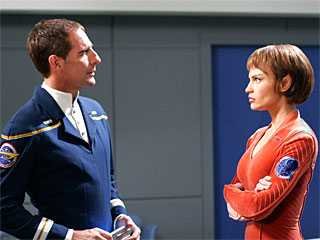
This fourth season started strong. The three-episode arc looked like a solution to the problem of the decreased amount of time available to tell a story dramatically. Enterprise episodes are close to ten minutes shorter than TOS. Many of the first nine episodes were strong, the others were promising.
Coming back from the first break, there was a stumble (Daedalus), then a triumph (Observer Effect). The Andorian arc was solid, " The Aenar" had moments of beauty. On balance, the Klingon arc worked: it made clever and meaningful connections both to the Arik Soong arc earlier in the season, and to the TOS-to-feature film Klingon forehead conundrum. Things were looking promising for what we knew, by the time the next set were in production, would be the last episodes.
But these last six exposed all of the weaknesses even in the better episodes: the loose ends and inexplicable events that could have been easily been tied up but weren't, the story threads that dangled, and especially the lack of character definition in the most important characters: T'Pol and especially Archer.
I could give you a character arc for each of them, much as the characters themselves did in their discussions with Riker the Chef in "Voyages." But within episodes, and from one episode to another, I couldn't tell you what motivated Archer, why he did what he did, what he thought: basically, who was he?
There were times I thought I was starting to understand T'Pol and her "journey" but it turns out, not really. By the end, I have no idea, except that she's still a scold with emotional problems. Blalock gave her an endearing vulnerabilty, but in the end this wasn't a satisfying character.
I could be wrong, but this was my experience. I don't blame the actors, either: they both had moments that displayed their skills, and they seemed fully committed to their roles. (Although there is a ring of rueful truth in Zeke Hyman's description of Archer's range "from slightly pissed off to very pissed off.") I just don't think they were given what they needed---or maybe just what I needed, to feel that I know who these characters are. Or were.
Linda Park, Anthony Montgomery and Dominic Keating got the best out of the moments they were given, and as the kind of midpoint between minor and major characters, John Billingsley as Dr. Phlox was the solid anchor of the series, with never a false moment or bad performance, and adding colors and meaning when given the opportunity.
But for me the revelation was Connor Trinneer as the character I was all set to despise, the cracker buddy of the Cap'n, "Trip" Tucker. Written as a throwback to World War II movie clichés, Tucker was the first indication of questionable choices for this series. Yet Trinneer took this character through a discernable journey, and came out a more complex person, pretty close to an enlightened being. The lightness and sweetness he brought to Trip in that last scene with Riker was terrific. His tears over his infant daughter in Terra Prime, though hardly prepared for in this rushed story, were effective and moving anyway. That's acting.
Trinneer was also generous in his scenes with other actors. There was no internal logic to the Trip-T'Pol relationship, though again, the actors seized what moments they were given by writers/producers/executives who couldn't make up their minds, or didn't care all that much about it.
Except for one unconvincing shot of the assembly on earth in "These are the voyages," visual effects maintained their high quality through these episodes, with the comet in "Terra Prime" and of course the final parade of Enterprises as the very last images of the series being especially memorable. I really admired and enjoyed the music in "Voyages" as well, with all the quotes of themes from past series, including Voyager and DS9.
Enterprise had the opportunity to really explore how earth got from the scarred remnants of World War III to the stars, and from there to the Federation. There were so many possibilities for thoughtful drama. But Enterprise wound up being neither very thoughtful nor very dramatic. These last episodes suggest that even given another few years, that potential likely would have remained unrealized.
So where does Star Trek go from here? Let's talk about that a little later.
Coming back from the first break, there was a stumble (Daedalus), then a triumph (Observer Effect). The Andorian arc was solid, " The Aenar" had moments of beauty. On balance, the Klingon arc worked: it made clever and meaningful connections both to the Arik Soong arc earlier in the season, and to the TOS-to-feature film Klingon forehead conundrum. Things were looking promising for what we knew, by the time the next set were in production, would be the last episodes.
But these last six exposed all of the weaknesses even in the better episodes: the loose ends and inexplicable events that could have been easily been tied up but weren't, the story threads that dangled, and especially the lack of character definition in the most important characters: T'Pol and especially Archer.
I could give you a character arc for each of them, much as the characters themselves did in their discussions with Riker the Chef in "Voyages." But within episodes, and from one episode to another, I couldn't tell you what motivated Archer, why he did what he did, what he thought: basically, who was he?
There were times I thought I was starting to understand T'Pol and her "journey" but it turns out, not really. By the end, I have no idea, except that she's still a scold with emotional problems. Blalock gave her an endearing vulnerabilty, but in the end this wasn't a satisfying character.
I could be wrong, but this was my experience. I don't blame the actors, either: they both had moments that displayed their skills, and they seemed fully committed to their roles. (Although there is a ring of rueful truth in Zeke Hyman's description of Archer's range "from slightly pissed off to very pissed off.") I just don't think they were given what they needed---or maybe just what I needed, to feel that I know who these characters are. Or were.
Linda Park, Anthony Montgomery and Dominic Keating got the best out of the moments they were given, and as the kind of midpoint between minor and major characters, John Billingsley as Dr. Phlox was the solid anchor of the series, with never a false moment or bad performance, and adding colors and meaning when given the opportunity.
But for me the revelation was Connor Trinneer as the character I was all set to despise, the cracker buddy of the Cap'n, "Trip" Tucker. Written as a throwback to World War II movie clichés, Tucker was the first indication of questionable choices for this series. Yet Trinneer took this character through a discernable journey, and came out a more complex person, pretty close to an enlightened being. The lightness and sweetness he brought to Trip in that last scene with Riker was terrific. His tears over his infant daughter in Terra Prime, though hardly prepared for in this rushed story, were effective and moving anyway. That's acting.
Trinneer was also generous in his scenes with other actors. There was no internal logic to the Trip-T'Pol relationship, though again, the actors seized what moments they were given by writers/producers/executives who couldn't make up their minds, or didn't care all that much about it.
Except for one unconvincing shot of the assembly on earth in "These are the voyages," visual effects maintained their high quality through these episodes, with the comet in "Terra Prime" and of course the final parade of Enterprises as the very last images of the series being especially memorable. I really admired and enjoyed the music in "Voyages" as well, with all the quotes of themes from past series, including Voyager and DS9.
Enterprise had the opportunity to really explore how earth got from the scarred remnants of World War III to the stars, and from there to the Federation. There were so many possibilities for thoughtful drama. But Enterprise wound up being neither very thoughtful nor very dramatic. These last episodes suggest that even given another few years, that potential likely would have remained unrealized.
So where does Star Trek go from here? Let's talk about that a little later.
Tuesday, May 10, 2005

Douglas Adams Doesn't Panic
by William S. Kowinski
Pretty much as expected, on its second weekend The Hitchhiker's Guide to the Galaxy feature dropped from #1 to #3 in U.S. box office, behind Paris Hilton's R rated "House of Wax" (talk about typecasting) and the opening of Ridley Scott's "Kingdom of Heaven." However, total attendance was weak, the 11th straight week of decline.
But the feature film business is changing quickly, and longevity on DVD is slowly becoming more important than big box office in the theatres, though that opening weekend remains the Holy Grail, with or without Monty Python. Just as I predicted a fall-off in theatres, I'll predict a long and prosperous future for Hitchhiker on DVD. The question will be whether there's enough interest for sequels, and I expect there will be. The economics of moviemaking are also shifting, with cheaper visual effects, so as long as you don't have a lot of high priced stars, you can afford to aim for the DVD market. I expect audiences are already getting bored with clashes of huge digital armies, so good acting, good stories and good filmmaking will also determine long-term success. I haven't seen Hitchhiker again since my first look last weekend, but I'll bet there's more to appreciate on multiple viewings. I'll see it again just for the dolphins.
This week I'd like to concentrate on Douglas Adams and the array of influences that came together in his stories. Much of the biographical information comes from "'>Hitchhiker: A Biography of Douglas Adams"'> by M.J. Simpson (Justin Charles & Co., Boston, 2003).
text continues after photos...
by William S. Kowinski
Pretty much as expected, on its second weekend The Hitchhiker's Guide to the Galaxy feature dropped from #1 to #3 in U.S. box office, behind Paris Hilton's R rated "House of Wax" (talk about typecasting) and the opening of Ridley Scott's "Kingdom of Heaven." However, total attendance was weak, the 11th straight week of decline.
But the feature film business is changing quickly, and longevity on DVD is slowly becoming more important than big box office in the theatres, though that opening weekend remains the Holy Grail, with or without Monty Python. Just as I predicted a fall-off in theatres, I'll predict a long and prosperous future for Hitchhiker on DVD. The question will be whether there's enough interest for sequels, and I expect there will be. The economics of moviemaking are also shifting, with cheaper visual effects, so as long as you don't have a lot of high priced stars, you can afford to aim for the DVD market. I expect audiences are already getting bored with clashes of huge digital armies, so good acting, good stories and good filmmaking will also determine long-term success. I haven't seen Hitchhiker again since my first look last weekend, but I'll bet there's more to appreciate on multiple viewings. I'll see it again just for the dolphins.
This week I'd like to concentrate on Douglas Adams and the array of influences that came together in his stories. Much of the biographical information comes from "'>Hitchhiker: A Biography of Douglas Adams"'> by M.J. Simpson (Justin Charles & Co., Boston, 2003).
text continues after photos...

As far as I know, Leonard Nimoy was the first to make the connection between feeling alienated as a child, and playing a space alien effectively in a TV drama. Douglas Adams wrote about a lot of space aliens effectively, and though "alienated" may not conjure up the exactly right images, as a child he certainly must have felt like an alien. He was tall. Really tall. You just won't believe how vastly hugely mind-bogglingly tall he was.
He towered. He lived in a different universe from his classmates scurrying like little mice below him. He was Gulliver at the Lilliputian Preparatory, which the wee ordinary people called the Brentwood School.
Also his large human selfness took an unusually long time to develop. Born in 1952, he didn't speak until the age of four (or so he said as an adult, when it became difficult for people to stop him from speaking, or to correct his stories which may or may not correspond more or less exactly to the facts, or at all) and in Prep school he was still uncoordinated. (Another comparatively tall and large person who was physically unstable as a youth was Gene Roddenberry.)
Though he was living on a higher plane, young Douglas was affable and cheerful, and if he had been a bit more working class, he would have been called "a clever lad." He was reproached for inserting jokes in his history essays. But his English teacher once gave him a ten out of ten for an adventure story he wrote, the only time in that teacher's thirty year tenure he gave a student full marks. It was recognition at a crucial time, and remained enormously important to Adams for the rest of his life.
Young Douglas Adams was also involved in photography and in acting. He performed in several school plays, including an historical drama. No word on whether he inserted jokes. He was also learning to play piano and left-handed guitar. The Beatles were his major enthusiasm in 1964. He later would say his chief influences had been the Beatles and Monty Python: "Both were messages out of the void saying there are people out there who know what it's like to be you." And if you've read the previous Hitchhiker post here (or continue down the page when you finish this one) you'll see that Adams-among others-- performed that exact function for me. And I suspect, for many others.
By 1964 '>Doctor Who was on the air in England, and the first Douglas Adams script for that long-running series was that Christmas, when it was dramatized to entertain his fellow boarders at school. He was eleven at the time.
He later did write episodes of Doctor Who and edited a season's worth of others, at the prime of that series' life. This was one way in which he lived out a baby boomer's dream: he became part of a TV world as an adult that he wanted to be part of as a child.
He was born at the end of the first third of the baby boom generation, and TV as a storytelling medium had existed for only a few years. But boomer children also got their stories from movies, books, comic books and magazines, and especially in England, from radio (in the U.S. most commercial radio serials faded away in the early 1950s.) With the Hitchhiker saga alone, Adams became a storyteller in all of those media---another boomer dream fulfilled. His storytelling also extended to video games and the Internet, which weren't even science fiction in his childhood.
In 1966 a weekly TV program of satirical news called '>The Frost Report began, starring David Frost and featuring a young writer-performer named John Cleese. Adams would later say that seeing Cleese on this show gave him the ambition to be a comedy writer and performer, confirmed in 1969 when '>Monty Python's Flying Circus began broadcasting weekly.
Adams left Brentwood School in 1970, having been accepted into Cambridge University for 1971. So in the interim, Douglas took off for Europe, and stuck out his thumb. He used a copy of The Hitchhiker's Guide to Europe, and one starry night he thought how interesting it would be to travel up there, and that somebody ought to write '>The Hitchhiker's Guide to the Galaxy. (But Adams told this story so many times that he eventually confessed he no longer remembered the actual events, just the story.)
He towered. He lived in a different universe from his classmates scurrying like little mice below him. He was Gulliver at the Lilliputian Preparatory, which the wee ordinary people called the Brentwood School.
Also his large human selfness took an unusually long time to develop. Born in 1952, he didn't speak until the age of four (or so he said as an adult, when it became difficult for people to stop him from speaking, or to correct his stories which may or may not correspond more or less exactly to the facts, or at all) and in Prep school he was still uncoordinated. (Another comparatively tall and large person who was physically unstable as a youth was Gene Roddenberry.)
Though he was living on a higher plane, young Douglas was affable and cheerful, and if he had been a bit more working class, he would have been called "a clever lad." He was reproached for inserting jokes in his history essays. But his English teacher once gave him a ten out of ten for an adventure story he wrote, the only time in that teacher's thirty year tenure he gave a student full marks. It was recognition at a crucial time, and remained enormously important to Adams for the rest of his life.
Young Douglas Adams was also involved in photography and in acting. He performed in several school plays, including an historical drama. No word on whether he inserted jokes. He was also learning to play piano and left-handed guitar. The Beatles were his major enthusiasm in 1964. He later would say his chief influences had been the Beatles and Monty Python: "Both were messages out of the void saying there are people out there who know what it's like to be you." And if you've read the previous Hitchhiker post here (or continue down the page when you finish this one) you'll see that Adams-among others-- performed that exact function for me. And I suspect, for many others.
By 1964 '>Doctor Who was on the air in England, and the first Douglas Adams script for that long-running series was that Christmas, when it was dramatized to entertain his fellow boarders at school. He was eleven at the time.
He later did write episodes of Doctor Who and edited a season's worth of others, at the prime of that series' life. This was one way in which he lived out a baby boomer's dream: he became part of a TV world as an adult that he wanted to be part of as a child.
He was born at the end of the first third of the baby boom generation, and TV as a storytelling medium had existed for only a few years. But boomer children also got their stories from movies, books, comic books and magazines, and especially in England, from radio (in the U.S. most commercial radio serials faded away in the early 1950s.) With the Hitchhiker saga alone, Adams became a storyteller in all of those media---another boomer dream fulfilled. His storytelling also extended to video games and the Internet, which weren't even science fiction in his childhood.
In 1966 a weekly TV program of satirical news called '>The Frost Report began, starring David Frost and featuring a young writer-performer named John Cleese. Adams would later say that seeing Cleese on this show gave him the ambition to be a comedy writer and performer, confirmed in 1969 when '>Monty Python's Flying Circus began broadcasting weekly.
Adams left Brentwood School in 1970, having been accepted into Cambridge University for 1971. So in the interim, Douglas took off for Europe, and stuck out his thumb. He used a copy of The Hitchhiker's Guide to Europe, and one starry night he thought how interesting it would be to travel up there, and that somebody ought to write '>The Hitchhiker's Guide to the Galaxy. (But Adams told this story so many times that he eventually confessed he no longer remembered the actual events, just the story.)
The choice of Cambridge was deliberate and fateful. He knew what apparently the British still know (since Simpson seems to assume this knowledge in his book), that a certain kind of British comedy developed there in the 1950s through the seventies, which combined with other influences to create the feverishly intelligent satire and outrageous comedy that has captivated the smarter people of the world for 40 years or so.
The "first generation" of Cambridge wits, who honed their skills in the famous Footlights performing society made their impact in England and then the U.S. in the early to mid 1960s. The aforementioned David Frost was a Footlighter (he was its secretary) as was John Cleese. Frost brought topical satire to the U.S. with a colonial version of the TV series "'>That Was the Week That Was," which pioneered "fake news" long before John Stewart, and sketch comedy on news of the week. Baby boomers in particular remember this as an early inkling that TV didn't have to be a vast wasteland all the time.
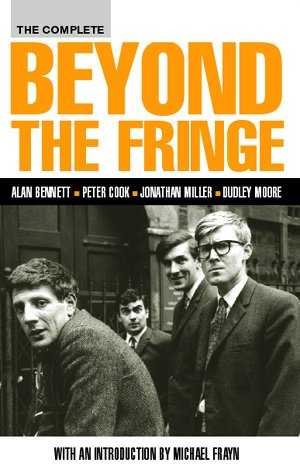
Yet another couple of Cambridge writer-performers called Peter Cook and Jonathan Miller teamed up with two from Oxford, Dudley Moore and Alan Bennett, for a fringe festival show that was so out there that it was beyond the fringe. '>Beyond the Fringe eventually became a theatrical sensation on Broadway in the early 60s; President John F. Kennedy attended a performance.
Nothing like this had ever been seen or heard in America---and most of us, not in New York, only heard it: there immediately was a best-selling LP record, which contained bits we learned by heart. (We did see the quartet perform some of the sketches on various TV shows and specials.) A typical World War II epic and all its patriotic solemnity is totally sent up, as a soldier panting for a suicide mission pleads with his officer, "sir, I want to be one of the few." "I'm sorry," his officer replies, "there are far too many."
The show included probably the best Shakespearian satire of all time, complete with an Olivier parody ("and now is dagger twixt gut and bladder intertwined," "O saucy Worchester!")
Though they were a one-hit wonder as a quartet, the members of Beyond the Fringe became enormous influences for many years, although only two of them in comedy. Jonathan Miller, who had a medical degree, first became an author and then a director of dramatic theatre and opera throughout the world. He is now Sir Jonathan Miller. Alan Bennett became a celebrated playwright; his best-known work in the U.S. is probably "'>The Madness of King George," owing to the movie version. Though both produced outstanding and influential work, neither particularly emphasized being funny.
Of the four, the one generally considered the most brilliant at comedy was '>Peter Cook. Eventually he re-teamed with Dudley Moore in a series of Fringe-like theatre productions, then legendary British TV shows and several feature films, particularly the original version of '>"'>Bedazzled." When Cook's drinking got the better of him, Dudley Moore began a successful acting career using his considerable comedic skills in Hollywood films such as "'>10" and "'>Arthur'>." But when Peter Cook died, Dudley Moore was so devastated that he took to calling Cook's phone just to hear his voice on the answering machine.
The "first generation" of Cambridge wits, who honed their skills in the famous Footlights performing society made their impact in England and then the U.S. in the early to mid 1960s. The aforementioned David Frost was a Footlighter (he was its secretary) as was John Cleese. Frost brought topical satire to the U.S. with a colonial version of the TV series "'>That Was the Week That Was," which pioneered "fake news" long before John Stewart, and sketch comedy on news of the week. Baby boomers in particular remember this as an early inkling that TV didn't have to be a vast wasteland all the time.
Yet another couple of Cambridge writer-performers called Peter Cook and Jonathan Miller teamed up with two from Oxford, Dudley Moore and Alan Bennett, for a fringe festival show that was so out there that it was beyond the fringe. '>Beyond the Fringe eventually became a theatrical sensation on Broadway in the early 60s; President John F. Kennedy attended a performance.
Nothing like this had ever been seen or heard in America---and most of us, not in New York, only heard it: there immediately was a best-selling LP record, which contained bits we learned by heart. (We did see the quartet perform some of the sketches on various TV shows and specials.) A typical World War II epic and all its patriotic solemnity is totally sent up, as a soldier panting for a suicide mission pleads with his officer, "sir, I want to be one of the few." "I'm sorry," his officer replies, "there are far too many."
The show included probably the best Shakespearian satire of all time, complete with an Olivier parody ("and now is dagger twixt gut and bladder intertwined," "O saucy Worchester!")
Though they were a one-hit wonder as a quartet, the members of Beyond the Fringe became enormous influences for many years, although only two of them in comedy. Jonathan Miller, who had a medical degree, first became an author and then a director of dramatic theatre and opera throughout the world. He is now Sir Jonathan Miller. Alan Bennett became a celebrated playwright; his best-known work in the U.S. is probably "'>The Madness of King George," owing to the movie version. Though both produced outstanding and influential work, neither particularly emphasized being funny.
Of the four, the one generally considered the most brilliant at comedy was '>Peter Cook. Eventually he re-teamed with Dudley Moore in a series of Fringe-like theatre productions, then legendary British TV shows and several feature films, particularly the original version of '>"'>Bedazzled." When Cook's drinking got the better of him, Dudley Moore began a successful acting career using his considerable comedic skills in Hollywood films such as "'>10" and "'>Arthur'>." But when Peter Cook died, Dudley Moore was so devastated that he took to calling Cook's phone just to hear his voice on the answering machine.
One key to Peter Cook's comedy in particular, and to what makes the Cambridge-bred comedy different, is words. Cambridge also happens to be where one of the more famous and influential 20th century styles of philosophy was centered, called "analytic philosophy" or "language analysis." Its most famous proponents at Cambridge were '>Bertrand Russell and '>Ludwig Wittgenstein, but probably the most influential on students in the 50s was '>G.E. Moore, who died in 1958 and was buried in the town of Cambridge. Moore had been a towering intellect at Cambridge for a half century. He was known for testing philosophical assumptions disguised in philosophical language with logical analysis of what the words actually meant. He was a philosophical champion of ordinary language and common sense, and particularly effective in applying language analysis to ethical reasoning.
In his rigorous analysis, Moore and his followers revealed paradoxes in how we use language, and like the paradoxes at the heart of Buddhism, these can actually be quite funny. Beyond the Fringe included possibly the only satire on the Cambridge School of philosophy to make it to Broadway, in a conversation supposedly between Bertrand Russell and G.E. Moore, including their inflections.
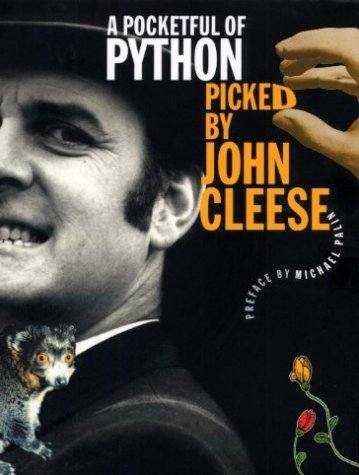
How people talk and what their words say about them, as well as how people use language to obfuscate, cheat and lie to others and themselves, is a common feature of the Cambridge comedians. Think of the Monty Python debate in the famous Pet Shop sequence over whether the bird is dead. Language is central to even the craziest Python sight gags.
Monty Python was on British TV when Adams attended Cambridge, and was a powerful impetus to be funny. Graham Chapman, Eric Idle and John Cleese had all been Cambridge students, while Michael Palin and Terry Jones were Oxford, so the Beyond the Fringe Oxbridge connection was replicated.
So in a sense Douglas Adams was "third generation" in contemporary British comedy to come out of Cambridge. And just as the Python group were in awe of Peter Cook (Michael Palin presented the recent BBS four part retrospective of his work), Adams took the first opportunity he got to meet John Cleese, by interviewing him for the Cambridge paper. He subsequently got to fulfill yet another fantasy, this time of interviewers---he not only worked with Cleese but hired him to work on his programs on several occasions, including the celebrated Doctor Who cameo with Eleanor Bron. Shoe on the other foot sort of thing.
Of course Adams' shoes were huge anyway. They were titanic, as big as a starship. If you thought the Starship Titanic was immense, you could easily fit it into one of those shoes with plenty of room left over for the Heart of Gold. If you know what I mean.
In his rigorous analysis, Moore and his followers revealed paradoxes in how we use language, and like the paradoxes at the heart of Buddhism, these can actually be quite funny. Beyond the Fringe included possibly the only satire on the Cambridge School of philosophy to make it to Broadway, in a conversation supposedly between Bertrand Russell and G.E. Moore, including their inflections.
How people talk and what their words say about them, as well as how people use language to obfuscate, cheat and lie to others and themselves, is a common feature of the Cambridge comedians. Think of the Monty Python debate in the famous Pet Shop sequence over whether the bird is dead. Language is central to even the craziest Python sight gags.
Monty Python was on British TV when Adams attended Cambridge, and was a powerful impetus to be funny. Graham Chapman, Eric Idle and John Cleese had all been Cambridge students, while Michael Palin and Terry Jones were Oxford, so the Beyond the Fringe Oxbridge connection was replicated.
So in a sense Douglas Adams was "third generation" in contemporary British comedy to come out of Cambridge. And just as the Python group were in awe of Peter Cook (Michael Palin presented the recent BBS four part retrospective of his work), Adams took the first opportunity he got to meet John Cleese, by interviewing him for the Cambridge paper. He subsequently got to fulfill yet another fantasy, this time of interviewers---he not only worked with Cleese but hired him to work on his programs on several occasions, including the celebrated Doctor Who cameo with Eleanor Bron. Shoe on the other foot sort of thing.
Of course Adams' shoes were huge anyway. They were titanic, as big as a starship. If you thought the Starship Titanic was immense, you could easily fit it into one of those shoes with plenty of room left over for the Heart of Gold. If you know what I mean.
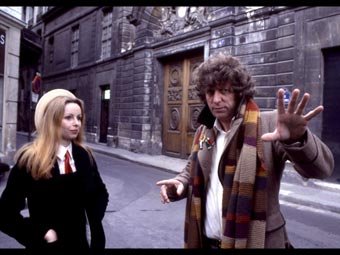
Douglas Adams eventually got into Footlights, made an impression, met the Monty Python group, wrote for them in their final Cleese-less season (even appeared in backgrounds), and did his first professional writing as Graham Chapman's partner. After working on several failed or aborted projects (one for Ringo Starr, another for Paul McCartney), Adams was contributing comedy bits to ongoing BBC programs when producer Simon Brett asked him if he had any program ideas.
Adams had just spent considerable time on several comedy science fiction scripts that never got made, including a film version of the Guinness Book of World Records involving some very competitive space aliens. That one was dropped because the producers felt there was no market for comedy science fiction. So Adams offered a number of conventional ideas, none of which seemed to interest Brett. Finally Brett said, "Do you know what I'd like to do? Comedy science fiction."
The rest is history. But it wasn't then.
It was a shot in the dark, and some feel it might have been Adams' last. He was fed up with being an unsuccessful writer. Like almost everything that does become successful, the Hitchhiker radio project benefited from the good fortune of the right people, and some very good timing. The timing included Star Wars, which had just come out, and revived interest in space fiction. The good people included not only the cast but Simon Brett, who guided Hitchhiker through the shoals of BBC bureaucracy. He blocked the idea of a studio audience (standard for comedy) and supervised production in the same studio where the legendary Goon Show with Peter Sellers was recorded. When BBC executives listened to the completed programs in complete silence, one of them asked Brett, "Simon, is it funny?" "It is," he replied. And so it was approved.
In the midst of all this, Adams was offered a job. Not knowing the fate of Hitchhiker, he took it. It wasn't a bad job. He was writing for Doctor Who, and became the script supervisor for one of its best seasons.
Though that season was abruptly ended by a strike that stopped production on Douglas' own script ("'>Shada"), he transformed it into his first '>Dirk Gently book. He also became good friends with the Fourth Doctor, Tom Baker, and his costar and then-wife, Lalla Ward, and managed to remain friends with both after their acrimonious split, and even after he introduced Ward to the man she married next, evolutionary biologist Richard Dawkins, also a close Adams friend.
'>The Hitchhiker's Guide to the Galaxy on BBC radio became a cult hit, based at first on word of mouth. Few people knew about the first episode before it aired but the talk about it was so strong, the BBC had to rebroadcast it along with the second episode. Eventually the Hitchhiker books happened the same way---some initial excitement for the first book, then craziness for the second. In a few years time, Douglas Adams was famous and well on the way to being rich.
Adams had just spent considerable time on several comedy science fiction scripts that never got made, including a film version of the Guinness Book of World Records involving some very competitive space aliens. That one was dropped because the producers felt there was no market for comedy science fiction. So Adams offered a number of conventional ideas, none of which seemed to interest Brett. Finally Brett said, "Do you know what I'd like to do? Comedy science fiction."
The rest is history. But it wasn't then.
It was a shot in the dark, and some feel it might have been Adams' last. He was fed up with being an unsuccessful writer. Like almost everything that does become successful, the Hitchhiker radio project benefited from the good fortune of the right people, and some very good timing. The timing included Star Wars, which had just come out, and revived interest in space fiction. The good people included not only the cast but Simon Brett, who guided Hitchhiker through the shoals of BBC bureaucracy. He blocked the idea of a studio audience (standard for comedy) and supervised production in the same studio where the legendary Goon Show with Peter Sellers was recorded. When BBC executives listened to the completed programs in complete silence, one of them asked Brett, "Simon, is it funny?" "It is," he replied. And so it was approved.
In the midst of all this, Adams was offered a job. Not knowing the fate of Hitchhiker, he took it. It wasn't a bad job. He was writing for Doctor Who, and became the script supervisor for one of its best seasons.
Though that season was abruptly ended by a strike that stopped production on Douglas' own script ("'>Shada"), he transformed it into his first '>Dirk Gently book. He also became good friends with the Fourth Doctor, Tom Baker, and his costar and then-wife, Lalla Ward, and managed to remain friends with both after their acrimonious split, and even after he introduced Ward to the man she married next, evolutionary biologist Richard Dawkins, also a close Adams friend.
'>The Hitchhiker's Guide to the Galaxy on BBC radio became a cult hit, based at first on word of mouth. Few people knew about the first episode before it aired but the talk about it was so strong, the BBC had to rebroadcast it along with the second episode. Eventually the Hitchhiker books happened the same way---some initial excitement for the first book, then craziness for the second. In a few years time, Douglas Adams was famous and well on the way to being rich.

To examine influences on Hitchhiker is to examine influences on the audience as well as the creators. There were specific and conscious influences on the way the Hitchhiker tales were told. For example, at several levels it harks back to '>Gulliver's Travels (but then, quite a lot of successful science fiction, from H.G. Wells to Star Trek, also does). The ordinary person on a journey into weirdness is the basic plot of '>Pilgrim's Progress to '>Alice in Wonderland. But the type of comedy it applied had a context that was just as important in how it was received as how it was created. People had to find it funny, after all, and there were precedents that helped make a receptive environment.
The Beyond the Fringe/Monty Python Oxbridge impact has already been duly described. They in turn influenced others who influenced the public. Douglas Adams' fascination with the Beatles has also been noted, but they also shaped humor in this period, through their music, their personalities and John Lennon's writings, as well as their films, "'>A Hard Day's Night" (1964) and'> Help!" (1965). The whole spirit of the Beatles---which was partly a working class Liverpool expression and understanding reflected in Alan Sillitoe's novels, the Liverpool poets, etc.--- permeated the 1960s and well beyond it. It's there in transmuted form not only in Douglas Adams but more recently in J. K. Rowling's Harry Potter books.
They all influenced one another in the heady 1960s of England Swings. Richard Lester worked with the Goon Show players and directed the Beatles films. John Lennon's only solo film work was in Lester's "'>How I Won the War" (1967) which was an extended Beyond the Fringe sketch, a visual "Aftermyth of War." Lester's "'>The Bed-Sitting Room," (1969) written by The Goon Show's Spike Milligan, with Peter Cook and Dudley Moore in the cast, was Oxbridge crossed with Samuel Beckett and Dr. Strangelove. Later, the Monty Python film, "'>Life of Brian" was financed by George Harrison, and they returned the favor by making "'>The Rutles," a Beatles parody that Harrison loved but Douglas Adams felt was too mean-spirited.
There was at least one American influence, and possibly another. Intelligent science fiction comedy in print had been pioneered by novelist and short story writer Kurt Vonnegut, Jr. (who Adams acknowledged as a major influence.) Novels such as '>Cat's Cradle, '>God Bless You, Mr. Rosewater and '>Slaughterhouse Five demonstrate a similar teeming inventiveness and pointed sense of humor. Vonnegut's alter ego, fictional science fiction writer Kilgore Trout, came up with imaginative ideas very congenial to the improbability drive, the restaurant at the end of the universe and other Adams inventions in Hitchhiker.
The other possible influence was the West Coast gang of four known as Firesign Theatre, who started out in radio but achieved fame with a series of 1960s comedy albums that staked out new ground between the surrealistic and the psychedelic. Their 1971 album, '>"I Think We're All Bozos on This Bus," portrayed a Disney-style park with a theme of the future, set in the future. It is an extraordinary piece of aural comedy, probably the best and most unified lengthy piece that Firesign did. It seems unlikely that Adams hadn't heard it, or at least heard of it. But it is very American, and resembles Hitchhiker only in the general tenor of the comedy.
In fact, without an assist from the improbability drive, it's unlikely that Hitchhiker would have been made in America, unless of course it could be made badly. For intelligent humor about a subject, the subject itself has to be taken seriously, and that's generally not the case in America regarding science fiction. Science fiction was introduced in the U.S. essentially through pulp magazines in the 1930s, with their lurid covers and often bad writing. Despite excellent exceptions in prose and on screen, cheesy 1950s movies and Saturday morning space hero shows for children added to the image of science fiction as already ridiculous to begin with.
But science fiction was introduced to England in the 19th century by works of recognized literary quality: chiefly by Mary Shelley's Frankenstein and The Time Machine by H.G. Wells. Wells' early "scientific romances" were praised by literary contemporaries like Henry James, Joseph Conrad and Ford Maddox Ford. His work was taken seriously as an innovation in the literary novel.
Many distinguished English authors, from C.S. Lewis to Kingsley Amis, and of course George Orwell and Aldous Huxley (and more recently, South African-born Doris Lessing and Canadian English author Margaret Atwood) wrote works in the science fiction vein. All this helped make the gentle and literate humor of Douglas Adams, not only in Hitchhiker but in his Dirk Gently books, congenial to the English public.
That makes the Hitchhiker movie all the more impressive. Created in Hollywood for Disney, it still managed to maintain the spirit of Adams' humor, when it could have been turned into an American parody with all the subtly of '>Mars Attacks!
The Beyond the Fringe/Monty Python Oxbridge impact has already been duly described. They in turn influenced others who influenced the public. Douglas Adams' fascination with the Beatles has also been noted, but they also shaped humor in this period, through their music, their personalities and John Lennon's writings, as well as their films, "'>A Hard Day's Night" (1964) and'> Help!" (1965). The whole spirit of the Beatles---which was partly a working class Liverpool expression and understanding reflected in Alan Sillitoe's novels, the Liverpool poets, etc.--- permeated the 1960s and well beyond it. It's there in transmuted form not only in Douglas Adams but more recently in J. K. Rowling's Harry Potter books.
They all influenced one another in the heady 1960s of England Swings. Richard Lester worked with the Goon Show players and directed the Beatles films. John Lennon's only solo film work was in Lester's "'>How I Won the War" (1967) which was an extended Beyond the Fringe sketch, a visual "Aftermyth of War." Lester's "'>The Bed-Sitting Room," (1969) written by The Goon Show's Spike Milligan, with Peter Cook and Dudley Moore in the cast, was Oxbridge crossed with Samuel Beckett and Dr. Strangelove. Later, the Monty Python film, "'>Life of Brian" was financed by George Harrison, and they returned the favor by making "'>The Rutles," a Beatles parody that Harrison loved but Douglas Adams felt was too mean-spirited.
There was at least one American influence, and possibly another. Intelligent science fiction comedy in print had been pioneered by novelist and short story writer Kurt Vonnegut, Jr. (who Adams acknowledged as a major influence.) Novels such as '>Cat's Cradle, '>God Bless You, Mr. Rosewater and '>Slaughterhouse Five demonstrate a similar teeming inventiveness and pointed sense of humor. Vonnegut's alter ego, fictional science fiction writer Kilgore Trout, came up with imaginative ideas very congenial to the improbability drive, the restaurant at the end of the universe and other Adams inventions in Hitchhiker.
The other possible influence was the West Coast gang of four known as Firesign Theatre, who started out in radio but achieved fame with a series of 1960s comedy albums that staked out new ground between the surrealistic and the psychedelic. Their 1971 album, '>"I Think We're All Bozos on This Bus," portrayed a Disney-style park with a theme of the future, set in the future. It is an extraordinary piece of aural comedy, probably the best and most unified lengthy piece that Firesign did. It seems unlikely that Adams hadn't heard it, or at least heard of it. But it is very American, and resembles Hitchhiker only in the general tenor of the comedy.
In fact, without an assist from the improbability drive, it's unlikely that Hitchhiker would have been made in America, unless of course it could be made badly. For intelligent humor about a subject, the subject itself has to be taken seriously, and that's generally not the case in America regarding science fiction. Science fiction was introduced in the U.S. essentially through pulp magazines in the 1930s, with their lurid covers and often bad writing. Despite excellent exceptions in prose and on screen, cheesy 1950s movies and Saturday morning space hero shows for children added to the image of science fiction as already ridiculous to begin with.
But science fiction was introduced to England in the 19th century by works of recognized literary quality: chiefly by Mary Shelley's Frankenstein and The Time Machine by H.G. Wells. Wells' early "scientific romances" were praised by literary contemporaries like Henry James, Joseph Conrad and Ford Maddox Ford. His work was taken seriously as an innovation in the literary novel.
Many distinguished English authors, from C.S. Lewis to Kingsley Amis, and of course George Orwell and Aldous Huxley (and more recently, South African-born Doris Lessing and Canadian English author Margaret Atwood) wrote works in the science fiction vein. All this helped make the gentle and literate humor of Douglas Adams, not only in Hitchhiker but in his Dirk Gently books, congenial to the English public.
That makes the Hitchhiker movie all the more impressive. Created in Hollywood for Disney, it still managed to maintain the spirit of Adams' humor, when it could have been turned into an American parody with all the subtly of '>Mars Attacks!
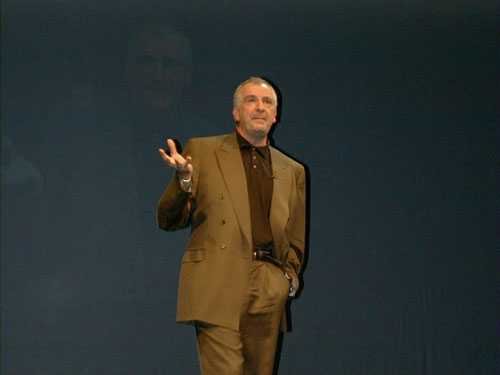
Though he wrote other things and got involved in many other projects, Hitchhiker dominated the rest of Douglas Adams' life. It stretched to a trilogy of four and then five volumes, in many different editions, and the BBC TV series, a video game, and even an ongoing attempt to create an Internet Hitchhiker's Guide.
Then there was the movie, which Adams tried to get made for the last 20 years of his life. He'd even moved his family to southern California for that purpose. M.J. Simpson's book is interesting on this point, in that he nearly comes out and says that the frustrations involved in trying to get the movie made, contributed to Adams death. But Simpson also implies that Adams was his own worst enemy in getting the movie made. The project was stymied once again--Adams couldn't complete a script---or at least one short enough to film---and he didn't like the scripts that others did.
Though not known to have a heart condition except a flutter diagnosed days before as not serious, Adams had one heart attack while working out in the gym, and it was fatal. Adams' close friend and business partner, Robbie Stamp was producing the film by then, and after Adams' death, with the encouragement of Douglas' widow, Jane, he went ahead. Director Jay Roach got screenwriter Karey Kirkpatrick involved. Kirkpatrick had never met Adams and hadn't read the Hitchhiker books. But he got access to Adams' notes and previous scripts (which included characters and other elements not found in the books), and he soon learned about the vast army of fans that the film needed to please, just to begin with.
So Kirkpatrick tried to change as little as possible, and only add what would make Hitchhiker work as a movie. Apart from coming up with a Hollywood ending, he concentrated on making a relationship out of the Arthur Dent and Trillian encounters. He decided to give each what the other needed and was looking for. Arthur needs the spirit of adventure of a hitchhiker, and Trillian needs to be understood. In the film, Arthur blows their first meeting on earth by not being spontaneous. His "journey" (which has become a film school cliché) is to free himself so he doesn't make that mistake again, so he can get the girl, because he is the guy who does understand her.
I'm not sure it actually makes all that much difference, but it does give this film another element of needed symmetry, and perhaps something for people to relate to who aren't getting the humor. As for the new stuff, much has been made of the new villain played by John Malkovich, but he actually has a pretty small-although striking---and innocuous part. His chief function is as an excuse for our intrepid band to get the empathy gun, which when turned on someone, causes them to feel exactly what the person pointing the gun at them is feeling. I don't know if that's Adams or Kirkpatrick, but it's inspired. Having Trillian kidnapped by the Vogons and rescued when our heroes---just in the nick of time-- fill out the proper form, is also inspired, and very much in the Adams spirit, though it seems to be a plot point Kirkpatrick added.
The funeral service for Douglas Adams in 2002 began with Bach's Schubler Chorales (in his first Dirk Gently novel, Adams had a time traveler bring back one element from an alien culture that hadn't existed on earth before: the music of Bach) and ended with the Beatles' "Paperback Writer."
Then there was the movie, which Adams tried to get made for the last 20 years of his life. He'd even moved his family to southern California for that purpose. M.J. Simpson's book is interesting on this point, in that he nearly comes out and says that the frustrations involved in trying to get the movie made, contributed to Adams death. But Simpson also implies that Adams was his own worst enemy in getting the movie made. The project was stymied once again--Adams couldn't complete a script---or at least one short enough to film---and he didn't like the scripts that others did.
Though not known to have a heart condition except a flutter diagnosed days before as not serious, Adams had one heart attack while working out in the gym, and it was fatal. Adams' close friend and business partner, Robbie Stamp was producing the film by then, and after Adams' death, with the encouragement of Douglas' widow, Jane, he went ahead. Director Jay Roach got screenwriter Karey Kirkpatrick involved. Kirkpatrick had never met Adams and hadn't read the Hitchhiker books. But he got access to Adams' notes and previous scripts (which included characters and other elements not found in the books), and he soon learned about the vast army of fans that the film needed to please, just to begin with.
So Kirkpatrick tried to change as little as possible, and only add what would make Hitchhiker work as a movie. Apart from coming up with a Hollywood ending, he concentrated on making a relationship out of the Arthur Dent and Trillian encounters. He decided to give each what the other needed and was looking for. Arthur needs the spirit of adventure of a hitchhiker, and Trillian needs to be understood. In the film, Arthur blows their first meeting on earth by not being spontaneous. His "journey" (which has become a film school cliché) is to free himself so he doesn't make that mistake again, so he can get the girl, because he is the guy who does understand her.
I'm not sure it actually makes all that much difference, but it does give this film another element of needed symmetry, and perhaps something for people to relate to who aren't getting the humor. As for the new stuff, much has been made of the new villain played by John Malkovich, but he actually has a pretty small-although striking---and innocuous part. His chief function is as an excuse for our intrepid band to get the empathy gun, which when turned on someone, causes them to feel exactly what the person pointing the gun at them is feeling. I don't know if that's Adams or Kirkpatrick, but it's inspired. Having Trillian kidnapped by the Vogons and rescued when our heroes---just in the nick of time-- fill out the proper form, is also inspired, and very much in the Adams spirit, though it seems to be a plot point Kirkpatrick added.
The funeral service for Douglas Adams in 2002 began with Bach's Schubler Chorales (in his first Dirk Gently novel, Adams had a time traveler bring back one element from an alien culture that hadn't existed on earth before: the music of Bach) and ended with the Beatles' "Paperback Writer."
Sunday, May 08, 2005
Elsewhere in the Universe...
My preview essay on "Star Wars III: Revenge of the Sith" was published today in the San Francisco Chronicle, and can be found here.
I'll have more on the subject on this site later.
My preview essay on "Star Wars III: Revenge of the Sith" was published today in the San Francisco Chronicle, and can be found here.
I'll have more on the subject on this site later.
Monday, May 02, 2005

"Hitchhiker's Guide To the Galaxy" Opens in the U.S.
by William S. Kowinski
What can I tell you about "The Hitchhiker's Guide to the Galaxy" feature film that won't spoil it for those who haven't seen it yet? It opened the last weekend of April/first of May in the U.S. The look of it, beginning with the opening sequence, is glorious. Fans of the books and BBC TV series, etc. will find many of their favorite bits, and fantasize about how such lavish production will bring the other famous scenes to life in a possible sequel. And yes, you will be unable to get the dolphin's tune out of your head.
Fans of the TV series will be happy to know that there are generous excerpts from the Hitchhikers Guide, narrated by Stephen Fry who sounds very much like the TV (and radio) voice of Peter Jones. Simon Jones, who played Arthur Dent on TV and radio, has a funny cameo in the film. And the signature TV theme is also used at least once.
The film opened at #1 in its first weekend in the U.S., although the total audience was down from the same weekend last year. This is remarkable enough for a story that was at the height of its popularity some twenty years ago. Whether the film continues to draw big audience remains to be seen. At the Sunday matinee where I saw it, there were hardcore fans who stood outside the theatre afterwards and talked about it. There were lots of children with parents at this showing, as there would be on a Sunday afternoon. There were a few general laughs during the show, a scattering of individual laughs at different things, and one person who laughed a lot (me.)
I suspect the movie won't be a runaway hit here. (I'll be pleasantly surprised if it is.) U.S. moviegoers aren't used to this English verbal humor, which hasn't been heard in films here for awhile, probably not since Monty Python, and then sparingly. References to a series of books culminating in "Who is this God Person Anyway?" early in the movie is oddly shocking now, suggesting how much we've reverted to a kind of 1950s phony public reverence. The Guide excerpts, so important to the TV version, slow the film down in terms of what young audiences are used to.
But I suspect that some of those kids in the audience, too young to have read the books or seen the TV series, will be taken in by the wonder of the imagery and perhaps dazzled by the odd take on things. They will know that the movie they've experienced is not Star Wars or like any other space opera, and that will turn off some and stimulate others. It's the others I think about.
Text continues after photos
by William S. Kowinski
What can I tell you about "The Hitchhiker's Guide to the Galaxy" feature film that won't spoil it for those who haven't seen it yet? It opened the last weekend of April/first of May in the U.S. The look of it, beginning with the opening sequence, is glorious. Fans of the books and BBC TV series, etc. will find many of their favorite bits, and fantasize about how such lavish production will bring the other famous scenes to life in a possible sequel. And yes, you will be unable to get the dolphin's tune out of your head.
Fans of the TV series will be happy to know that there are generous excerpts from the Hitchhikers Guide, narrated by Stephen Fry who sounds very much like the TV (and radio) voice of Peter Jones. Simon Jones, who played Arthur Dent on TV and radio, has a funny cameo in the film. And the signature TV theme is also used at least once.
The film opened at #1 in its first weekend in the U.S., although the total audience was down from the same weekend last year. This is remarkable enough for a story that was at the height of its popularity some twenty years ago. Whether the film continues to draw big audience remains to be seen. At the Sunday matinee where I saw it, there were hardcore fans who stood outside the theatre afterwards and talked about it. There were lots of children with parents at this showing, as there would be on a Sunday afternoon. There were a few general laughs during the show, a scattering of individual laughs at different things, and one person who laughed a lot (me.)
I suspect the movie won't be a runaway hit here. (I'll be pleasantly surprised if it is.) U.S. moviegoers aren't used to this English verbal humor, which hasn't been heard in films here for awhile, probably not since Monty Python, and then sparingly. References to a series of books culminating in "Who is this God Person Anyway?" early in the movie is oddly shocking now, suggesting how much we've reverted to a kind of 1950s phony public reverence. The Guide excerpts, so important to the TV version, slow the film down in terms of what young audiences are used to.
But I suspect that some of those kids in the audience, too young to have read the books or seen the TV series, will be taken in by the wonder of the imagery and perhaps dazzled by the odd take on things. They will know that the movie they've experienced is not Star Wars or like any other space opera, and that will turn off some and stimulate others. It's the others I think about.
Text continues after photos
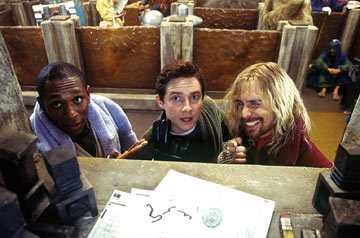
Imagination feeds on imagination. It also feeds on frustration, absurdity and stupidity---that's pretty apparent in "Hitchhiker." But our imaginations need stimulus to get engaged, and there needs to be some friendly stimulus in the mix. Having creativity around you, and people receptive to it, open new possibilities of being creative, seeing the world more creatively, and giving you permission to see it differently. To see it perhaps as you really do see it, but can't admit to anyone, including yourself.
For example, I recall the bleakness of the early 1980s. I was back living in my small hometown, working on a book. I wanted the quiet but the isolation went far beyond that. The house where I was living had a large television set that didn't work, and a small one that did. One night around midnight I chanced to find on a public television station the opening episode of "The Hitchhiker's Guide to the Galaxy." They ran one episode a week, only late at night.
I may have read the title in the TV listings, but I knew nothing else about it; nothing about Douglas Adams or even Doctor Who (another BBC production, where Adams was story editor for a season.) But I was utterly transfixed. There were two things I found delightfully unbelievable: first, that someone had such imagination, and second, that he was allowed to use it, publicly. Watching the Guide every week, even on that tiny screen, utterly in suspense as to what Deep Thought would discover as the answer to Life, the Universe and Everything, was quite important to me.
I felt that again seeing the movie: the adrenalin of imagination, the giddy liberation, and the smirky delight that he'd gotten away with it.
For example, I recall the bleakness of the early 1980s. I was back living in my small hometown, working on a book. I wanted the quiet but the isolation went far beyond that. The house where I was living had a large television set that didn't work, and a small one that did. One night around midnight I chanced to find on a public television station the opening episode of "The Hitchhiker's Guide to the Galaxy." They ran one episode a week, only late at night.
I may have read the title in the TV listings, but I knew nothing else about it; nothing about Douglas Adams or even Doctor Who (another BBC production, where Adams was story editor for a season.) But I was utterly transfixed. There were two things I found delightfully unbelievable: first, that someone had such imagination, and second, that he was allowed to use it, publicly. Watching the Guide every week, even on that tiny screen, utterly in suspense as to what Deep Thought would discover as the answer to Life, the Universe and Everything, was quite important to me.
I felt that again seeing the movie: the adrenalin of imagination, the giddy liberation, and the smirky delight that he'd gotten away with it.

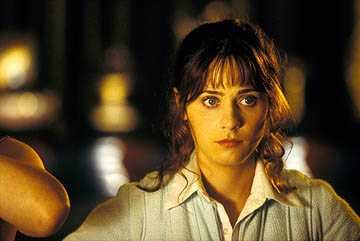
The movie is different, of course. There isn't that extended suspense, that sense of new discoveries each episode. In giving this a movie shape, the role of Ford Prefect (Mos Def in the movie) is diminished considerably. Alan Rickman is a terrific actor, so his voice for Marvin the paranoid android (more of depressed robot here) gets the requisite laughs, but I missed the machine-like gloomy moan of the TV voice. The creatures look much better, naturally (some done by Jim Henson, with whom Douglas Adams worked on a Muppets project that was never made) and the Vogons get off a Borg joke. I didn't care for the way they did the two heads of Zaphod, but it was certainly better than the goofy TV version. And the mice, I thought, came up short.
As for the other casting, I'm sure there will debate on the new Arthur (Martin Freeman) and the new Trillian (Zooey Deshanel), but they are very good in the roles as created for this movie. I loved Bill Nighy as Shartibarfast. Sam Rockwell plays galactic president Zaphod Beeblebrox as a cross between G.W. Bush and Elvis, an interesting choice. The 60s origins of this character dated it even in the 1980s, and the hippie drug lord qualities surface here and there, but it must work, or I'd be able to get rid of the image of his insidious smile.
As for the other casting, I'm sure there will debate on the new Arthur (Martin Freeman) and the new Trillian (Zooey Deshanel), but they are very good in the roles as created for this movie. I loved Bill Nighy as Shartibarfast. Sam Rockwell plays galactic president Zaphod Beeblebrox as a cross between G.W. Bush and Elvis, an interesting choice. The 60s origins of this character dated it even in the 1980s, and the hippie drug lord qualities surface here and there, but it must work, or I'd be able to get rid of the image of his insidious smile.
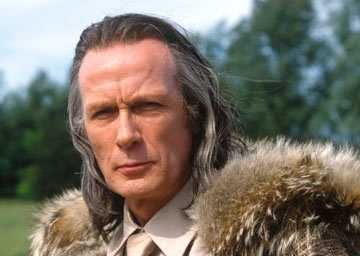
There are some fine additions: a new character, a new device (both technological and plot), possibly a new Question to the ultimate answer, and a rescue in the nick of time effected by turning in the proper request form. There is even a solution to the problem that bedeviled Douglas Adams from his first attempts to construct a film from this material: after you've destroyed the earth in the first act, what do you do for a climax? All this, plus the wonders that only a feature film can produce---the tour of earth under construction was amazing---are reasonable compensations. They stimulate the imagination in other ways.
Though Douglas Adams wrote several versions of the screenplay, this was twice removed from the original Hitchhiker---Adams always liked the radio version best. We get his voice in the books certainly. But I felt the Douglas Adams connection come alive in the film, too, so for me that's one thing that makes it a success. Even despite the Hollywood/Disney ending, which is quite different from the morose sort of acceptance and affirmation of life that ends the other versions.
The first "Hitchhiker" series was broadcast on the BBC in 1978. Douglas Adams was working on the screenplay in Los Angeles in 2001 when he died suddenly of a heart attack at age 49. The filmmakers (including director Garth Jennings and scriptwriter Karey Kirkpatrick) had to keep in mind the considerable existing fan base (as do all story "franchises" since Star Trek fans). But they also seemed to have a sincere affection and fascination for the Adams universe. The film dedication, to "Douglas" seemed true.
Though Douglas Adams wrote several versions of the screenplay, this was twice removed from the original Hitchhiker---Adams always liked the radio version best. We get his voice in the books certainly. But I felt the Douglas Adams connection come alive in the film, too, so for me that's one thing that makes it a success. Even despite the Hollywood/Disney ending, which is quite different from the morose sort of acceptance and affirmation of life that ends the other versions.
The first "Hitchhiker" series was broadcast on the BBC in 1978. Douglas Adams was working on the screenplay in Los Angeles in 2001 when he died suddenly of a heart attack at age 49. The filmmakers (including director Garth Jennings and scriptwriter Karey Kirkpatrick) had to keep in mind the considerable existing fan base (as do all story "franchises" since Star Trek fans). But they also seemed to have a sincere affection and fascination for the Adams universe. The film dedication, to "Douglas" seemed true.
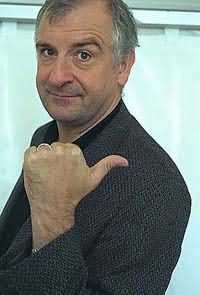
Sunday, May 01, 2005
Tuesday, April 26, 2005
The Trekalog (so far): essays on all ten Star Trek feature films
Star Trek: The Motion Picture
Star Trek II: The Wrath of Khan
Star Trek: The Motion Picture
Star Trek II: The Wrath of Khan
TrekCheck: Mirrors
After its last hiatus from broadcasting, and well after it's last day of shooting, and near the last days that visual effects and post-production staff would be putting the finishing touches on the final episodes, Star Trek: Enterprise returned with its final set of new stories.
While some viewers had recently been alerted to the show's demise and therefore its existence, those of us who had followed the corporate drama that climaxed in its cancellation, were preparing to savor these last hours. It was looking more and more that they would be the last hours of new Star Trek for quite awhile-variously estimated at 3, 5, 10, 20 years for a new TV series---and considering how some were talking, and the fact that the production staff was disbanding for the first time in 18 years, these could very well be the last new episodes of Star Trek As We Know It, ever.
There are four episodes left as I write this, and I hope to write about all six a group after I've had the chance to see them together on tape. But the experience of seeing the first two on their initial broadcast was jarring. "Bound" may have been Manny Coto's attempt to do a comedy episode; when I visited the Star Trek set last August, he mentioned that Enterprise hadn't done one yet and he seemed to want to try it. If this was that attempt, it wasn't funny. If it was not, it was worse.
Still, I was prepared to think of it as an aberration, another back-from-hiatus back luck failure, like "Daedalus", hopefully to be followed by a memorable success, like "Observer Effect." So again I had high hopes for "In A Mirror, Darkly, Part I." And personally, on first viewing, I found it an even greater and more depressing disappointment.
Rather than analyze it now, before the second part and before I've seen it again, I'll offer one comment on my first experience, and some thoughts about how Mirror Universe stories work.
The comment is that there was so much gratuitous violence, particularly torture, that I would recommend that children be kept away from this episode, and I personally was offended by it. My first impression of the episode was that it did not justify its excesses, not just in the violence on screen, but the violence it did to itself and to Star Trek.
The idea of a Mirror Universe (or MU in Internet shorthand) first appeared in the original series episode, "Mirror, Mirror." There were three episodes of DS9 that visited later versions of this universe. Apparently we are seeing earlier days of this universe. The basic difference is that the Federation of the Star Trek universe is the Empire in the MU; what was good is evil.
The difference between this story and all the other MU episodes is that we are entirely in the company of people who belong in the MU. That presents a difficulty that this Enterprise episode didn't transcend.
In the original series "Mirror, Mirror," the device that made it work dramatically, was the point of view. Kirk, McCoy, Uhura and Scotty found themselves in this MU, and they had to figure out how it worked. We saw what the mirror showed, through their eyes. We saw our Captain Kirk discover each element of this opposite place; we saw him learn its rules, and go along with them at times in order to survive, yet he risks bending or opposing them when he can.
But in the Enterprise MU we see only the characters that belong in that universe. We have no point of view to help us sort things out, and the script doesn't help much. At times, certain characters seem to feel trapped by circumstances. But others seem to revel in evil to a cartoonish degree.
If the intention was to create a nightmare world, it succeeded. But it also looked as if all the money for this episode was spent on the opening scene and opening credits, leaving the rest of the hour to a string of violent shipboard scenes. The initial effect on me was to produce disgust and impatience rather than horror. These characters aren't actually scary, as the cardboard evil characters of the original series episode still managed to be, because we have no "normal" characters to be scared for or to identify with.
I'm tempted to see this on an entirely different level. Back when he was a writer instead of a TV game show host and pitchman, Ben Stein hypothesized that at some level every Hollywood movie is about Hollywood. Maybe I'm reading too much into this, but there seemed a lot of subtext on view in this episode. The hostilities expressed so fulsomely make more sense if you consider them expressions of a cast and writing staff that has been under the gun for at least a year, and is finding out that they've been cancelled. Short of being able to get a few UPN and Paramount executives into the agonizer, they have to make do by pretending to torture each other. Maybe the cries of pain are liberating for them, since it seemed one or another of them was emitting them for most of the hour.
Maybe it was therapy. Some of the actors appear to be relishing these reversals---there were a couple of times that I was sure several of the actors were on the verge of breaking up. And maybe this was Manny Coto's audition for "24."
As Star Trek, it was troubling. Although I thought "Mirror, Mirror" worked well, I'm not a fan of the Mirror Universe concept. Breaking us into all good and all evil works if you use the allegory for insight on our own universe, where we are both. But the temptations of the MU are often too strong: everybody gets to play against type, and it's easy to get carried away.
We'll see if it makes better sense in Part II, which is the episode many fans are waiting for, when the Enterprise crew is on the bridge of a Kirk era starship, wearing those Kirk era uniforms. In the first part, some fans apparently learned more about what the pre-Federation Trek universe would have been like had humans been ruled by fear and violence, as arguably we are now. Others are satisfied with action and seeing bits of Trek lore. While critical reaction to "Bound" was almost uniformly negative, the fan reaction to this episode on the Trek Today bbs was generally either an A or a D. Apart from an intriguing title sequence, on first viewing I felt the episode was implausible, incoherent, and laced with unjustified brutality. I hope that somehow Part II will change my conclusion, but I'm less enthusiastic about watching it than I was a week ago.
After its last hiatus from broadcasting, and well after it's last day of shooting, and near the last days that visual effects and post-production staff would be putting the finishing touches on the final episodes, Star Trek: Enterprise returned with its final set of new stories.
While some viewers had recently been alerted to the show's demise and therefore its existence, those of us who had followed the corporate drama that climaxed in its cancellation, were preparing to savor these last hours. It was looking more and more that they would be the last hours of new Star Trek for quite awhile-variously estimated at 3, 5, 10, 20 years for a new TV series---and considering how some were talking, and the fact that the production staff was disbanding for the first time in 18 years, these could very well be the last new episodes of Star Trek As We Know It, ever.
There are four episodes left as I write this, and I hope to write about all six a group after I've had the chance to see them together on tape. But the experience of seeing the first two on their initial broadcast was jarring. "Bound" may have been Manny Coto's attempt to do a comedy episode; when I visited the Star Trek set last August, he mentioned that Enterprise hadn't done one yet and he seemed to want to try it. If this was that attempt, it wasn't funny. If it was not, it was worse.
Still, I was prepared to think of it as an aberration, another back-from-hiatus back luck failure, like "Daedalus", hopefully to be followed by a memorable success, like "Observer Effect." So again I had high hopes for "In A Mirror, Darkly, Part I." And personally, on first viewing, I found it an even greater and more depressing disappointment.
Rather than analyze it now, before the second part and before I've seen it again, I'll offer one comment on my first experience, and some thoughts about how Mirror Universe stories work.
The comment is that there was so much gratuitous violence, particularly torture, that I would recommend that children be kept away from this episode, and I personally was offended by it. My first impression of the episode was that it did not justify its excesses, not just in the violence on screen, but the violence it did to itself and to Star Trek.
The idea of a Mirror Universe (or MU in Internet shorthand) first appeared in the original series episode, "Mirror, Mirror." There were three episodes of DS9 that visited later versions of this universe. Apparently we are seeing earlier days of this universe. The basic difference is that the Federation of the Star Trek universe is the Empire in the MU; what was good is evil.
The difference between this story and all the other MU episodes is that we are entirely in the company of people who belong in the MU. That presents a difficulty that this Enterprise episode didn't transcend.
In the original series "Mirror, Mirror," the device that made it work dramatically, was the point of view. Kirk, McCoy, Uhura and Scotty found themselves in this MU, and they had to figure out how it worked. We saw what the mirror showed, through their eyes. We saw our Captain Kirk discover each element of this opposite place; we saw him learn its rules, and go along with them at times in order to survive, yet he risks bending or opposing them when he can.
But in the Enterprise MU we see only the characters that belong in that universe. We have no point of view to help us sort things out, and the script doesn't help much. At times, certain characters seem to feel trapped by circumstances. But others seem to revel in evil to a cartoonish degree.
If the intention was to create a nightmare world, it succeeded. But it also looked as if all the money for this episode was spent on the opening scene and opening credits, leaving the rest of the hour to a string of violent shipboard scenes. The initial effect on me was to produce disgust and impatience rather than horror. These characters aren't actually scary, as the cardboard evil characters of the original series episode still managed to be, because we have no "normal" characters to be scared for or to identify with.
I'm tempted to see this on an entirely different level. Back when he was a writer instead of a TV game show host and pitchman, Ben Stein hypothesized that at some level every Hollywood movie is about Hollywood. Maybe I'm reading too much into this, but there seemed a lot of subtext on view in this episode. The hostilities expressed so fulsomely make more sense if you consider them expressions of a cast and writing staff that has been under the gun for at least a year, and is finding out that they've been cancelled. Short of being able to get a few UPN and Paramount executives into the agonizer, they have to make do by pretending to torture each other. Maybe the cries of pain are liberating for them, since it seemed one or another of them was emitting them for most of the hour.
Maybe it was therapy. Some of the actors appear to be relishing these reversals---there were a couple of times that I was sure several of the actors were on the verge of breaking up. And maybe this was Manny Coto's audition for "24."
As Star Trek, it was troubling. Although I thought "Mirror, Mirror" worked well, I'm not a fan of the Mirror Universe concept. Breaking us into all good and all evil works if you use the allegory for insight on our own universe, where we are both. But the temptations of the MU are often too strong: everybody gets to play against type, and it's easy to get carried away.
We'll see if it makes better sense in Part II, which is the episode many fans are waiting for, when the Enterprise crew is on the bridge of a Kirk era starship, wearing those Kirk era uniforms. In the first part, some fans apparently learned more about what the pre-Federation Trek universe would have been like had humans been ruled by fear and violence, as arguably we are now. Others are satisfied with action and seeing bits of Trek lore. While critical reaction to "Bound" was almost uniformly negative, the fan reaction to this episode on the Trek Today bbs was generally either an A or a D. Apart from an intriguing title sequence, on first viewing I felt the episode was implausible, incoherent, and laced with unjustified brutality. I hope that somehow Part II will change my conclusion, but I'm less enthusiastic about watching it than I was a week ago.
Monday, April 18, 2005
Not for Boys Only
by William S. Kowinski
Apart from raw numbers, one of the reasons given for why UPN cancelled Star Trek: Enterprise was the network's desire to attract female viewers, while the audience for Enterprise was chiefly male. (This of course is after near-nudity and a new T'pol catsuit were added to attract young male viewers.) That Star Trek is a boy fan (or fanboy) thing seems to be the conventional wisdom. It's clearly the assumption made by the former Nashville Network reborn with Star Trek: The Next Generation reruns as TNN, but morphed into Spike TV, with a lineup heavy on wrestling and wrecking. Recently TNG episodes (as well as DS9) have been sliced and diced with commercials for shows featuring mayhem to satisfy the supposed need of young males for mindless violence. "We destroy, you enjoy," being the tagline. This is the latest agenda of TV: now that dumbing down everybody in general has been accomplished, the idea is to further dumb down specific demographics, until they're putty in the hands of advertisers.
Like many marketing conceits, this male-oriented Trek image is more copycat cant than science. The demographic breakdown for Enterprise was close to 60-40 male to female. Even if these numbers are vaguely accurate, that's a difference of about 10% short of equality. It hardly qualifies as a male- only dominion. Moreover the idea of a boys-only or male dominant fan base runs counter to the overall Star Trek viewership, and worst of all, it obscures how revolutionary Star Trek has been for nearly 40 years in attracting women.
The gender difference for the various Star Trek series at various times very probably amount to a wash: about as many females as males watched Star Trek. In many ways it was women fans and the original show's female audience that saved Star Trek in the first place. Star Trek was the first science fiction that attracted a sizeable female audience, and maintained it through TNG, DS9 and of course, Voyager, with Captain Kathryn Janeway.
In the beginning...
There's a great little book that's been published under several titles, one of which was "Star Trek Lives!," the "personal notes and anecdotes" of Jacqueline Lichtenberg, Sondra Marshak and Joan Winston. These three female authors never really make a point of women viewers or fans, which makes their reporting all that more convincing, for it's clear how involved women were in early Trek fandom.
It was three women (Joan Winston, Devra Langsam and Elyse Pines) who organized the first major Star Trek convention in New York City. They did it, Winston wrote, because they felt Star Trek fans were only tolerated at science fiction conventions, and if they met separately they would be no one else around to "sneer." What she doesn't say, but which is likely, is that part of the sneering might well have been because science fiction was at that point largely a male domain. Star Trek might have seemed silly to hardcore hard sci-fi fans partly because of the show, but partly because it seemed to attract girls.
But for years after those first conventions in the early 70s, Star Trek gatherings attracted more attendees than science fiction conventions. At least until Star Wars took off, Star Trek had more fans that all other science fiction combined.
Women were attracted to Star Trek, right from the start. Women may be interested in Star Trek for any or all of the same reasons that men are, and a science fiction drama series appearing on primetime TV every week made it that much more accessible. That it had continuing characters made other attractions possible, such as the sex appeal of its stars.
That this was science fiction on television with the same characters every week placed it in a more familiar TV mode than the sci-fi world. William Shatner was a classic Hollywood heartthrob, and he had his legions of female fans. But the apparent anomaly that said more about how Star Trek was different, was Spock. Women were enormously attracted to Spock. To Leonard Nimoy certainly, as he embodied Spock, but also to the character of Mr. Spock. The alien quality, the innocence of logic, the strength of principle and character, the redefinition of the classic gentleman that Nimoy consciously made essential to Spock, all redefined the masculine model, for males to emulate, and females to desire. (And vice versa, as the case may be.)
It was Star Trek's female fans that created the first fanzines and largely began the still thriving tradition of fan fiction, including homoerotic fantasies of Kirk and Spock. But sex appeal was only part of the attraction. Something else that's striking about the "Star Trek Lives!" book is how many of the most articulate fans it quotes were adult women in their 20s and 30s, educated, some in professional positions (and there weren't as many women in positions like that as there are now. For example, there were very few women television news reporters anywhere until the mid 70s.) Their interests were related to what they found attractive in Star Trek's male characters, but it went beyond that, to the essence of Star Trek's stories and universe.
The stories dealt with human emotions and behavior beyond the usual space opera or tech-heavy science fiction, while challenging conventional ideas and stimulating imagination. Star Trek portrayed a future made hopeful not only by new technologies but by new attitudes and commitments: the commitment to reason and communication, to equal opportunities, to empathetic understanding of even the weirdest-looking alien, and courage when it counted, but not reflexively expressed by violence. The presence of women on the 23rd century Enterprise bridge also provided some entry into this universe of stories that (quoting the book) "give us the experience of what it would be like to live in a world as it should and could be, among human beings as they should and could be."
These elements were even stronger in Star Trek: The Next Generation. "The continuing mission of the starship Enterprise has been to take us out of the smog of fear and hate into an open space where difference is opportunity, and justice matters, and you can still see the stars," wrote Ursula LeGuin. "Violence on the Next Generation is shown as a problem, or the failure to solve a problem, never as the true solution."
There was an even stronger female presence in the cast, reflecting in the portrayed future some changes made here since the 60s. It was with TNG that Star Trek really began establishing female role models for girls. Uhura inspired girls, especially African-American and minority girls, but it was the TNG first season presence of Denise Crosby as the security chief Tasha Yar, and especially the long-term presence of Gates McFadden as Dr. Beverly Crusher and Marina Sirtis as Counselor Deanna Troi that were so widely influential. Gates McFadden testifies to the enormous response she got from girls who wanted to be doctors and yet still be mothers, as well as women struggling with being single mothers.
DS9 provided two strong women characters with executive and otherwise equal responsibilities, and Voyager several more, including the first female engineer and female captain in the lead of a Star Trek series. TNG was criticized for its two main women characters both being in the "helping" or presumably female professions, but Marina Sirtis said something particularly interesting and apropos about that on the 7th TNG seventh season DVD. Girls get a lot of role models who are strong and aggressive, she said (and by now that's certainly true.) With Troi, she wanted to model a woman who is "strong and not aggressive," a kind of female Picard, who uses "diplomacy and tact." This is important not only for girls to see, but for boys. It was unfortunate that while women got more traditionally male roles on subsequent series, there was no male counselor on DS9 or Voyager. Psychology as an aid to self-awareness is more crucial to the Star Trek future than photon torpedoes.
Though Star Trek was largely produced, written and directed by men, several women, from Dorothy Fontana through Jeri Taylor, played key roles in each of those areas, and others. Many past and present Trek novelists are women; the novelizations of all the Trek films have been written by Vondra McIntyre and J. M. Dillard. Today two of the longest-running and best-known writers on the subject of Star Trek are Michelle Erica Green and Julia Houston. There have been and still are arguments about sexism and so on (which certain episodes, like the most recent Enterprise "Bound" especially invite) but in Trekdom there are arguments about everything. It's certainly hypocritical of UPN etc. to heavily promote Enterprise as male-oriented and even demand that the program do certain things to appeal to males, and then cancel the series because it succeeded. But what's worse about this reputation, this new conventional wisdom, and particularly the way that TNG is being positioned and promoted, is that it tends to make female viewers feel unwelcome. It distorts the nature of the saga, and devalues those qualities within all of us that are associated with the female archetype. When that happens, Star Trek loses part of its soul.
by William S. Kowinski
Apart from raw numbers, one of the reasons given for why UPN cancelled Star Trek: Enterprise was the network's desire to attract female viewers, while the audience for Enterprise was chiefly male. (This of course is after near-nudity and a new T'pol catsuit were added to attract young male viewers.) That Star Trek is a boy fan (or fanboy) thing seems to be the conventional wisdom. It's clearly the assumption made by the former Nashville Network reborn with Star Trek: The Next Generation reruns as TNN, but morphed into Spike TV, with a lineup heavy on wrestling and wrecking. Recently TNG episodes (as well as DS9) have been sliced and diced with commercials for shows featuring mayhem to satisfy the supposed need of young males for mindless violence. "We destroy, you enjoy," being the tagline. This is the latest agenda of TV: now that dumbing down everybody in general has been accomplished, the idea is to further dumb down specific demographics, until they're putty in the hands of advertisers.
Like many marketing conceits, this male-oriented Trek image is more copycat cant than science. The demographic breakdown for Enterprise was close to 60-40 male to female. Even if these numbers are vaguely accurate, that's a difference of about 10% short of equality. It hardly qualifies as a male- only dominion. Moreover the idea of a boys-only or male dominant fan base runs counter to the overall Star Trek viewership, and worst of all, it obscures how revolutionary Star Trek has been for nearly 40 years in attracting women.
The gender difference for the various Star Trek series at various times very probably amount to a wash: about as many females as males watched Star Trek. In many ways it was women fans and the original show's female audience that saved Star Trek in the first place. Star Trek was the first science fiction that attracted a sizeable female audience, and maintained it through TNG, DS9 and of course, Voyager, with Captain Kathryn Janeway.
In the beginning...
There's a great little book that's been published under several titles, one of which was "Star Trek Lives!," the "personal notes and anecdotes" of Jacqueline Lichtenberg, Sondra Marshak and Joan Winston. These three female authors never really make a point of women viewers or fans, which makes their reporting all that more convincing, for it's clear how involved women were in early Trek fandom.
It was three women (Joan Winston, Devra Langsam and Elyse Pines) who organized the first major Star Trek convention in New York City. They did it, Winston wrote, because they felt Star Trek fans were only tolerated at science fiction conventions, and if they met separately they would be no one else around to "sneer." What she doesn't say, but which is likely, is that part of the sneering might well have been because science fiction was at that point largely a male domain. Star Trek might have seemed silly to hardcore hard sci-fi fans partly because of the show, but partly because it seemed to attract girls.
But for years after those first conventions in the early 70s, Star Trek gatherings attracted more attendees than science fiction conventions. At least until Star Wars took off, Star Trek had more fans that all other science fiction combined.
Women were attracted to Star Trek, right from the start. Women may be interested in Star Trek for any or all of the same reasons that men are, and a science fiction drama series appearing on primetime TV every week made it that much more accessible. That it had continuing characters made other attractions possible, such as the sex appeal of its stars.
That this was science fiction on television with the same characters every week placed it in a more familiar TV mode than the sci-fi world. William Shatner was a classic Hollywood heartthrob, and he had his legions of female fans. But the apparent anomaly that said more about how Star Trek was different, was Spock. Women were enormously attracted to Spock. To Leonard Nimoy certainly, as he embodied Spock, but also to the character of Mr. Spock. The alien quality, the innocence of logic, the strength of principle and character, the redefinition of the classic gentleman that Nimoy consciously made essential to Spock, all redefined the masculine model, for males to emulate, and females to desire. (And vice versa, as the case may be.)
It was Star Trek's female fans that created the first fanzines and largely began the still thriving tradition of fan fiction, including homoerotic fantasies of Kirk and Spock. But sex appeal was only part of the attraction. Something else that's striking about the "Star Trek Lives!" book is how many of the most articulate fans it quotes were adult women in their 20s and 30s, educated, some in professional positions (and there weren't as many women in positions like that as there are now. For example, there were very few women television news reporters anywhere until the mid 70s.) Their interests were related to what they found attractive in Star Trek's male characters, but it went beyond that, to the essence of Star Trek's stories and universe.
The stories dealt with human emotions and behavior beyond the usual space opera or tech-heavy science fiction, while challenging conventional ideas and stimulating imagination. Star Trek portrayed a future made hopeful not only by new technologies but by new attitudes and commitments: the commitment to reason and communication, to equal opportunities, to empathetic understanding of even the weirdest-looking alien, and courage when it counted, but not reflexively expressed by violence. The presence of women on the 23rd century Enterprise bridge also provided some entry into this universe of stories that (quoting the book) "give us the experience of what it would be like to live in a world as it should and could be, among human beings as they should and could be."
These elements were even stronger in Star Trek: The Next Generation. "The continuing mission of the starship Enterprise has been to take us out of the smog of fear and hate into an open space where difference is opportunity, and justice matters, and you can still see the stars," wrote Ursula LeGuin. "Violence on the Next Generation is shown as a problem, or the failure to solve a problem, never as the true solution."
There was an even stronger female presence in the cast, reflecting in the portrayed future some changes made here since the 60s. It was with TNG that Star Trek really began establishing female role models for girls. Uhura inspired girls, especially African-American and minority girls, but it was the TNG first season presence of Denise Crosby as the security chief Tasha Yar, and especially the long-term presence of Gates McFadden as Dr. Beverly Crusher and Marina Sirtis as Counselor Deanna Troi that were so widely influential. Gates McFadden testifies to the enormous response she got from girls who wanted to be doctors and yet still be mothers, as well as women struggling with being single mothers.
DS9 provided two strong women characters with executive and otherwise equal responsibilities, and Voyager several more, including the first female engineer and female captain in the lead of a Star Trek series. TNG was criticized for its two main women characters both being in the "helping" or presumably female professions, but Marina Sirtis said something particularly interesting and apropos about that on the 7th TNG seventh season DVD. Girls get a lot of role models who are strong and aggressive, she said (and by now that's certainly true.) With Troi, she wanted to model a woman who is "strong and not aggressive," a kind of female Picard, who uses "diplomacy and tact." This is important not only for girls to see, but for boys. It was unfortunate that while women got more traditionally male roles on subsequent series, there was no male counselor on DS9 or Voyager. Psychology as an aid to self-awareness is more crucial to the Star Trek future than photon torpedoes.
Though Star Trek was largely produced, written and directed by men, several women, from Dorothy Fontana through Jeri Taylor, played key roles in each of those areas, and others. Many past and present Trek novelists are women; the novelizations of all the Trek films have been written by Vondra McIntyre and J. M. Dillard. Today two of the longest-running and best-known writers on the subject of Star Trek are Michelle Erica Green and Julia Houston. There have been and still are arguments about sexism and so on (which certain episodes, like the most recent Enterprise "Bound" especially invite) but in Trekdom there are arguments about everything. It's certainly hypocritical of UPN etc. to heavily promote Enterprise as male-oriented and even demand that the program do certain things to appeal to males, and then cancel the series because it succeeded. But what's worse about this reputation, this new conventional wisdom, and particularly the way that TNG is being positioned and promoted, is that it tends to make female viewers feel unwelcome. It distorts the nature of the saga, and devalues those qualities within all of us that are associated with the female archetype. When that happens, Star Trek loses part of its soul.
Subscribe to:
Posts (Atom)