Thursday, June 15, 2006


Everybody lives! A transcendent Chris Eccleston moment
in the revived Doctor Who. Posted by Picasa
Who's First--What's in it for Trek?

by William S. Kowinski

The first season of the revived BBC series Doctor Who has recently finished its first run in the U.S., on the SCI FI channel (and will be on DVD here this month.) In the last episode, the ninth Doctor, played by Christopher Eccleston, transformed into the tenth, played by David Tennant. So how did this revival do, and are there any lessons in it for Star Trek's return?

After an absence of about 15 years, the new Doctor Who was an immediate smash hit in England. With several related series and at least one spin-off, plus a pretty sophisticated web site (at least in terms of marketing), Doctor Who has quickly become a major part of the BBC TV presence. In the U.S., Doctor Who boosted Sci Fi Channel’s Friday night ratings by about 50%.

How did they do it? It appears that its creators recognized that over the years, Doctor Who has become an icon transcending its roots as a children’s show, despite its children’s-prime-time 7pm Saturday slot in England, and it could find a niche in the broad international science fiction and fantasy television market. But as an icon, it couldn’t stray too far from its known nature, nor the mythology it built over a quarter century on the air, plus another 15 years of re-runs, novels, conventions and so on.

So the new series uses digital technology for better visual effects, though at times they seem to be a bit childish and tongue-in-cheek, like the aliens with big blue doll-like eyes who take over Downing Street. (They're concealed inside the bodies of large people—perhaps suggesting that, as in the U.S. the average person in England has doubled in size.)

But the updated Daleks were meant to be menacing in today's terms (and were revealed more than ever as a direct ancestor of Star Trek's Borg Collective). Though in appearance the Dalek itself has not changed much from its essentially silly original, the Dalek armada was played for awe. By now, so many generations of British children have been delightfully frightened by Daleks that they qualify as the modern bogeyman.

That each episode is now 50 minutes or so allows for more complex stories, and principal writer Russell T. Davis has taken advantage of those possibilities. The strong individual episodes and deft two-parters also fed the forward momentum of a season that seemed designed as a unit.

Another essential achievement of this first season was to maintain the mood, the élan, of the best Doctor Who seasons (such as the Tom Baker/Douglas Adams period) while adding greater depth and dimension. A lot of the credit for that has to go to Christopher Eccelston as the ninth Doctor.

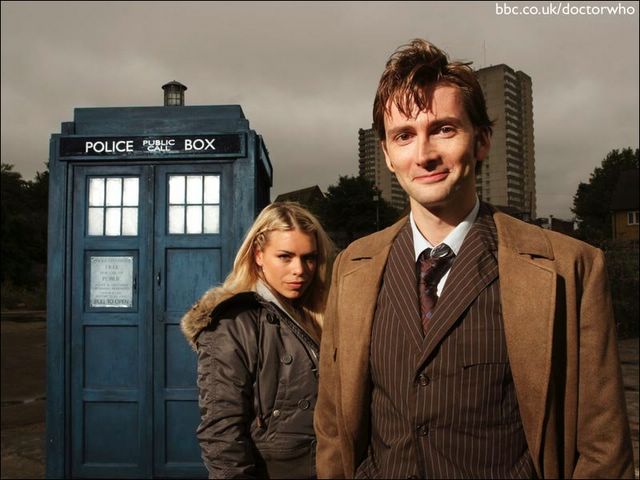
Billie Piper returns as Rose with David Tennant as the tenth
Doctor. No word yet on when his episodes will air in the U.S. Posted by Picasa
Eccelston is a skilled contemporary actor, who played the Doctor as emotionally present. His Doctor was quirky, moving from morose and moody to larky and a bit daft in an instant. We saw his anger and glimpsed internal conflicts and violence, and we saw him paralyzed with grief. There was a manic-depressive quality that got very edgy at times, and it was riveting to watch. But besides Eccelston’s masterful acting,what made all this work was portraying this Doctor as "northern" (from northern UK industrial areas like Liverpool and Birmingham and working class. ( These apparently were Eccelston’s own roots.)

The BBC code for this is “real,” but for Americans, it’s a blow to the stereotype of the aristocratic or high middle class Britisher. This Doctor seems the son of the 1950’s playwright John Osborne “Angry Young Men” era, a close cousin to the 1980s punks, the Joe Orton/Sex Pistols era. He had the look, the attitude, the edge of darkness. He still had the old Time Lord arrogance (plus a hint of a Time Lord's torment), but in his first encounter with a Dalek, you could see his panic, and his vengefulness. And a bit of the working class inferiority feeling that often gets expressed as aggression and machismo, but can change instantly to a glowering self-doubt.

But the working class element wasn't all Eccleston did: he played the alienness of the Doctor and his sense of power and authority, as other actors have in the part, but in his own way. He was especially mesmerizing in the decisive moments when the Doctor's confidence seems total. When he tells the Daleks that he’s going to rescue Rose, save the earth and destroy them, it may be tactical but it’s also exuberant.

The working class theme was extended in Rose, his companion (played by Billie Piper.) She escaped her working class life and by the season's final episode, found she couldn’t go back. (After leaving the Tardis, she’s seen eating with her mother and boyfriend, who are talking about a new pizza place. “What do they have?” “Pizza.”) It wasn’t going to all the amazing places in the universe, she said, but that the Doctor did things that meant something, and he never gave up. This extra layer of social context and character refreshed the Doctor Who ethos. Yet the Doctor was still the Doctor, with the same values. He was for justice, for life, and in the end, could not kill the innocent for an arguably greater good (reminding us perhaps that an earlier Doctor had the chance to destroy the Dalek race but couldn’t bring himself to commit genocide. Some standards have apparently changed.)

The working class affect, the emotional complexity, wouldn’t be enough to make this a convincing Doctor Who. It needed the his excitement, his love of life and love of lives. What really made this Doctor work was Eccleston’s otherworldly smile, his joy. “Everybody lives! Just this once, everybody lives!” he exulted, with his whole body, and you suddenly got another window into the mind and heart of a time traveler who sees so much death and destruction.

Thanks largely to Eccleston (though Billie Piper and the other actors were generally first rate as well), the producers and writers were able to establish the character of the new Doctor Who series. They wrote some subtle social commentary and fairly outrageous satire (especially in the game shows and reality programs as a Dalek plot to keep the earth in bondage), that the impatience of Eccleston’s Doctor helped to sell. But they could also experiment with various emotional colors (and sexual tensions), which Eccleston could play convincingly.

Fearing being typecast, Eccleston apparently insisted on a one-year only deal from the start, which the BBC erroneously announced just as the series started airing. We only had a moment of David Tennant so far, but judging from publicity stills and his own statements, he’s going to be closer to the Oxbridge-madcap Tom Baker mold. I can imagine that working, too. In the midst of its second season in England, Doctor Who has already begun work on a third.

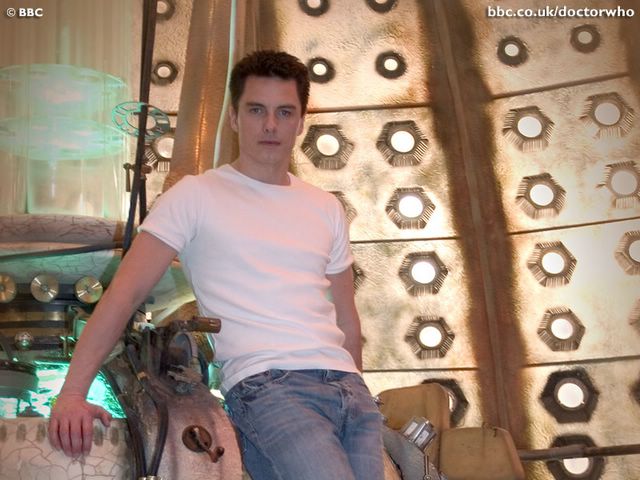
Kirk candidate? John Barrowman as Captain Jack. Posted by Picasa
So what lessons might there be in this for Trek? Some may be tempted to do the “more like Galactica” mantra about a grittier series. But there’s really very little that’s transferable from this Doctor Who in terms of the Doctor’s character: the U.S. class system is too different, and the established Star Trek universe provides different opportunities, and different constraints. The sense of commitment to something larger is very Star Trek, though, and characters coming to realize it might be worth pursuing in a prequel. In any case, Eccleston does open some eyes to what a single actor can do, in conjunction with superior and sympathetic writing. But again, there are substantial differences: there were eight Doctors before him, but there has been only one Kirk, one Spock (at least with lines)-- one of all Trek's iconic characters. Everyone expects each Doctor to be different.

The actual lessons for a Star Trek revival, on the big screen or small, might be more like this: do it right. Give it the resources it needs, both for the show itself and for its marketing. If Paramount and whoever else is involved (like a TV network) isn’t fully committed, and is just trying to test the waters a bit, it probably won’t work.

In fact this Doctor Who revival’s success owes more than a little to the example of Star Trek: The Next Generation. They established the new people, in a new ship (the new Tardis), and then re-connected to the established universe (first, with the Daleks, and next season with other old heroes and villains.)

In terms of Star Trek XI, if indeed it is to be a prequel featuring younger versions of original series characters, this Doctor Who series may have provided an actor to play a young Kirk: John Barrowman, whose Captain Jack became a Kirkian hero. Captain Jack has his own BBC series now, but Barrowman could probably find the time.

Monday, May 29, 2006


Leonard Nimoy joined the Mission Impossible cast for a year after Star Trek's demise. Posted by Picasa
Trekcheck: Another Impossible Mission?

by William S. Kowinski

Forty years ago a fledging “studio” formed mostly to do something with the gobs of money flowing from the most successful sitcom in television history to that point, was preparing two new drama TV series, both decidedly offbeat. One was called Star Trek (which, legend has it, Lucille Ball believed would be about the travels of celebrities) and the other was Mission Impossible.

One of them became a hit, and then was forgotten for decades. The other failed, and became a legend. The hit was Mission Impossible, and as it prospered, Star Trek’s budgets faded. The two series were filmed next door to each other, and by Star Trek’s third season, its staff was scavenging the Mission Impossible dumpster for props and material to glue together to make alien cities and starship technology. When Star Trek was finally cancelled, one of its stars got a new job immediately—on Mission Impossible.

Forty years later, the fates of the story universes these two shows spawned are again strangely related. (That actually may have begun with the second Mission Impossible movie, its story written by Ronald Moore and Brian Braga, veteran writers and producers for Star Trek: The Next Generation and subsequent series’, and writers for a couple of Trek features.)

For when it was announced that the man in charge of the next Star Trek movie was J.J. Abrams, whose first feature as a director was the as yet to be released Mission Impossible III, the fate of Star Trek became linked directly to the fate of the latest Mission Impossible sequel.

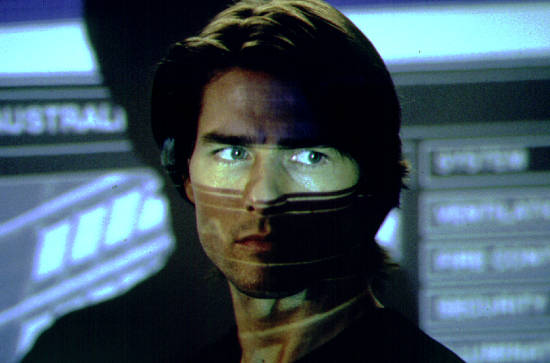
Tom Cruise in Mission Impossible 2. Was 3 not the charm? Posted by Picasa
Now MI3 has been in theatres for several weeks, and the buzz has been that it did not live up to box office expectations. Some stories, such as this one at Fox News, suggest the failure to match opening weekend expectations, and its subsequent fall-off, has induced nothing less than panic at Paramount, leading perhaps to people losing their jobs.

Other stories suggest it’s not that bad---that Paramount came close enough, and that overseas ticket sales were strong enough. Moreover, so far nobody seems to be blaming Abrams. Most fault the off-screen antics and perhaps fading box office appeal of Tom Cruise, star of all three MI features. Reviewers tended to praise the story and storytelling.

But Star Trek fans will recall the rationalizations of the disappointing opening weekend of Star Trek Nemesis, while by now the film is firmly reputed a commercial failure. While MI3 managed to stay #1 against the release of the woeful “Poisedon,” it is currently being blown out of the water by the release of X-Men 3, featuring the star of the failed previous Trek film, Patrick Stewart.

Outside of Washington, Hollywood is the prime place where perception becomes reality, however unjustified by the facts. If MI3 comes to be viewed as a commercial failure, especially within Paramount, how much money it actually makes won’t matter.

The fate of MI3 can influence the fate of Star Trek XI in several ways, but most of them wind up involving budget. Will Paramount express its confidence in Abrams and his team with the budget to do a bigger Trek film than any so far, except perhaps the first? Or is it so bad that Paramount now can’t afford such a gamble?

So did they hire a hot producer-director to do the kind of very calculated, limited budget Trek movies that previous Trek directors and producers had to make? Are they hoping he’s used to television budgets, and hasn’t been spoiled by the major money spent on MI3?

Patrick Stewart in X-Men3 Posted by Picasa
However this goes, it seems likely that the reception for MI3 has made Paramount execs a little more nervous, a little less confident, a little shakier than they might have been if it had been an unqualified hit. They can’t fail to notice that a box office record was set by a film released two weeks later ( The Da Vinci Code), a record itself broken by X-Men3. (Was there a lack of confidence already, since Paramount chose not to release MI3 on a holiday weekend, when it might go head to head with one of these blockbusters?) Even before X-Men3, MI3 had fallen behind an animated feature (with a character voiced by William Shatner---will the ironies never stop?)

It would be natural under the circumstances for Paramount to be reluctant to take chances they might have otherwise taken. While it’s pretty certain that we won’t see Tom Cruise in Star Trek XI, the perceived weakness of MI3 may have also done in Ben Affleck, if indeed he was ever in the running for a role. It’s unlikely they’ll take a chance on an actor whose previous action role (as Daredevil) was itself a perceived flop. Tobey McGuire, on the other hand, they might die for. (Star Trek does have this advantage: a lot of actors are fans.)

Casting is a big part of budgets these days, and how this film is cast may signal what Paramount is willing to spend. Assuming this is still a young Kirk and Spock at Starfleet Academy story (and recent shying away from the first press release by Abrams and others haven’t really denied this), then the star power is likely to come from actors playing the older parts: officers, teachers, mentors, etc. Though Abrams might like to field a cast of young unknowns, TV-style, this rarely works in movies, especially of this kind.

A lot will unfold in the coming months, but for now it seems like an odd kind of déjà vu in Star Trek’s 40th anniversary year: once again, Mission Impossible may be affecting Star Trek budgets, in a downward direction.

Monday, May 15, 2006


Nick Sagan's new novel concludes his triology. Posted by Picasa
Nick Sagan's new novel, everfree, has just been published--the third in a trilogy that began with idlewild and continued with edenborn. (Star Trek fans will remember Nick as a writer on TNG and Voyager.)

Nick has agreed to do an interview on this site in the near future. In the meantime, here's my review of his new novel.

Sunday, April 23, 2006


The Trek future? Posted by Picasa
The Shape of Trek to Come

by William S. Kowinski

Paramount’s announcement that they’ve hired a new production team to create the next Star Trek feature film represents the biggest change in Star Trek history of more than 40 years. With no one involved in the project as announced so far with any prior ties to Star Trek, it amounts to a revolution.

All we have so far are names: J. J. Abrams will produce and direct. Damon Lindelof and Bryan Burk, currently on Abrams’ production team for the TV series, “Lost,” will co-produce. Abrams will write the script together with Alex Kurtzman and Roberto Orci, who wrote the forthcoming Mission Impossible III with Abrams. (This Star Trek announcement seems timed for that film’s publicity.)

We are told as well that the story for the film will be set prior to the original series timeframe, about young Kirk and Spock at the Starfleet Academy and their first space mission. The movie is tentatively scheduled for release in fall of 2008. Startrek.com added rather pointedly that Rick Berman is not associated with this film in any way.

So how different is this Trek film going to be? What kind of a movie is this team likely to make? Will it have the soul of Star Trek as well as the name of the franchise?

[text continues after photo]

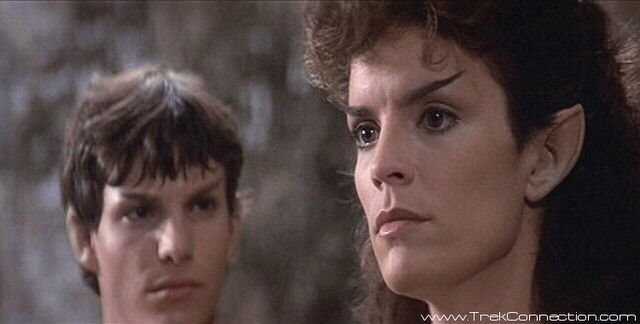
A young Spock in Star Trek III: The Search for Spock Posted by Picasa
The Revolution

Except for George Takei (who in fine Takei fashion wonders where Sulu is in this story), no one from Star Trek’s past has yet been quoted responding to this announcement. Nor have any of the new team commented on their plans (and are unlikely to, until after MI3 opens.)

But the first statement or press conference or interview from J.J. Abrams will tell a lot. Will he do or say anything that creates meaningful continuity with Star Trek past, with the Star Trek fan base? Will he hire anyone from past Star Trek productions in any meaningful positions?

He could chose not to, and risk alienating the most activist of fans--an increasingly fractious group—and relate instead to the vague fondness casual fans have for the old Star Trek, with its Tribbles and phasers, its warp speed and beaming up, its Vulcan salute, Klingons and Borg.

There’s one element of this story that perhaps does bode well for the future of this project: it was a complete surprise. There were no rumors preceding it. Arguably the many months of rumors and discussions over every element of Nemesis really harmed the prospects of Star Trek X.

But if this team does not include someone that brings continuity with past Star Trek, it will be the first such complete break in Star Trek’s history. When Star Trek went from a TV series to movies, it had Gene Roddenberry in charge (at least for the first one, and later for guidance) and the original series actors. When Star Trek added an entirely new cast in a new future, GR was the executive producer, and he created a culture of continuity that the Berman regime pretty much followed, enforced by a powerful fan base.

Now so far there’s nobody connecting Star Trek past to Star Trek future. The first press conference or interviews that the new team gives will be crucial in learning whether there will be any continuity of personnel, or how faithfully continuity will be followed, and above all the spirit, the soul of Star Trek.

Scarlett Johansson, slated to star in "Amazon" Posted by Picasa
The New Team

J.J. Abrams---producer, director, co-writer—will have more power over Star Trek’s future than anyone in its past, perhaps even including its creator, Gene Roddenberry. At least for one movie.

Who is Abrams? At 40 years old (in June), he is currently a very hot commodity. He created two hit TV series, “Lost” and “Alias,” when TV dramas are losing audiences to so-called reality shows. Paramount is apparently pleased with his work on Mission Impossible III, even though the film hasn’t yet been released.

MI3 is his first film as a director. It’s a big budget movie, with a high-powered cast. His past work as a writer for film, however, has not been especially distinguished. On the plus side, he’s been versatile: writing action, drama, comedy and romantic movies. But few of these films were successful, or critical favorites.

He wrote the screenplay for Armageddon (1998), generally considered the lesser of the two asteroid-threatens-earth movies of that year, starring Bruce Willis. He co-wrote a 2001 drama about a psycho killer (Joy Ride), an obscure comedy (Gone Fishin, 1997) for Danny Glover and Joe Pesci, a romantic drama (Forever Young, 1992) for Mel Gibson. Though it was not particularly successful at the box office, his one gem was Regarding Henry in 1991, which featured one of Harrison Ford’s best performances (and just guessing, I’ll bet one of his favorites.)

Abrams also created the TV series about college students, Felicity, that ran 4 years on the WB cable network, and a 2005 pilot for a series about bounty hunters (The Catch) which was not picked up.

His writing partners for Star Trek XI, Alex Kurtzman and Roberto Orci, who worked with Abrams on MI3, have worked together before. They co-wrote the sequel, The Legend of Zorro (2005), which didn’t measure up critically or at the box office to its predecessor, The Mask of Zorro. They are writing partners on two films slated for release next year, The Transformers: The Movie, and Amazon (Orci is also a producer of this film, to star Scarlett Johansson.) The actual status of these two projects is unknown.

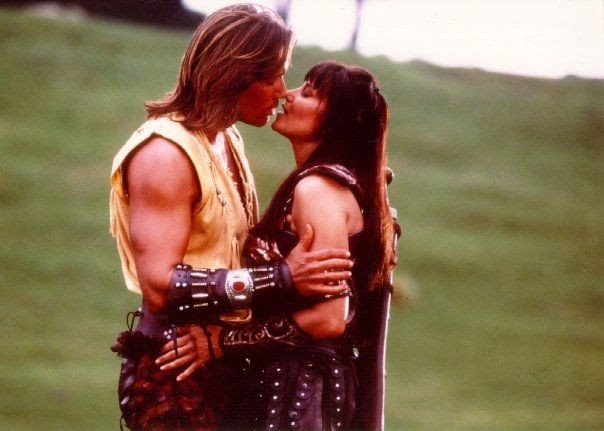
But perhaps most interesting is their early TV work: both wrote for the Kevin Sabo Hercules series, and Orci wrote for its companion series, “Zena, the Warrior Princess.”

All in all, I find more to worry about that to celebrate in the prior work of this team. They certainly are experienced at writing sequels, and working with established characters and fictional worlds. But they’ve never worked with a fictional world as complex, and as dependent on concepts and its internal history, as Star Trek.

If you are concerned about Star Trek continuity, about its history of the future and the key concepts that are crucial to that history, you have to worry about the casual attitude towards history and continuity in the groundbreaking Hercules and Zena series. Their playful use of anachronisms—of very contemporary dialogue and character attitudes in an ancient setting, their casual mixing of periods and places, myth and history in incorporating real historical figures—was a great part of the charm of these shows, and what made them different. But though a vein of knowing humor did work well for the last 3 or 4 TOS cast features, a casual attitude towards Star Trek’s past could play havoc with the Star Trek universe, as created and preserved in 40 years of film, tape and print.

My own perhaps obsessive fear about new Star Trek---that it will use the characters and the Star Trek universe as nothing more than a setting for an action move, a feature film video-game (or video game commercial) —is not exactly assuaged by what I know about this team. Abrams is reputedly a Star Trek fan, but on what level? Treating the Star Trek universe and Trek characters apart from the soul of Star Trek instantly makes it something else. And the revolution becomes an assassination.

Maybe they have the chops to really add to Star Trek not only with good storytelling, with action and adventure, character interplay and development, but by advancing elements of the Star Trek story that articulates its ethos, its view of the future and of the human potential. Or at least, not trashing what Star Trek has come to mean to so many people about a path to a hopeful future. Regarding Henry tells me that’s possible. Armageddon and Zena make me wonder. The idea of Transformers: the Movie makes me cringe.