How he got started
"My last year at HSU, my fellow students were kind enough to grant me a one man exhibition of painting, and during that time by a remarkable coincidence, Marcia Lucas, who was George Lucas' wife at the time, was visiting to give a series of talks on film editing. She happened to stroll by the little gallery and saw some of my paintings, and came and talked to me about them, and told me I should look into doing matte paintings.
So I was invited down to ILM, got a lot of advice and pointers on doing matte paintings, and they set up some meetings for me, so after school I went to Universal Studios and started on Buck Rogers and the original Battlestar Galactica"...
Then [many] features later working for various facilities, I was invited by Paramount Pictures to work on Star Trek. It sounded like a good idea, I thought it would be a four month project to help this little pilot get off the ground, and 18 years later I'm working on the final episode of Star Trek."
On the importance of the Peace Corps and his education in his work for Star Trek
After obtaining his undergraduate degree in art, Curry went into the Peace Corps. "It had a profound effect on my life. I learned something very important. In this country we say there's the First World and the Third World. But I really discovered that there is no Third World---there is only one world and we all live in it together. And that we should start making our international policies based on that fact."
"I had the rare opportunity to live in rural Thailand building small dams and bridges, but what I contributed to the people there was a small part of what they contributed to me. Since then I've become aware that everything you experience in life becomes part of your career, whether directly from the educational system or from some stuff that happens by surprise, and much of what I encountered in Thailand became part of Star Trek, especially the Klingons. They were much influenced by people in the Himalayas and Southeast Asia, and the protracted period of my misspent youth that I spent in sword schools."
After the Peace Corps and a few years teaching art at a community college on Cape Cod, Curry entered the graduate program at Humboldt State University, and "another profoundly influential period of my life." He thanked the faculty members by name (several of whom were present for his talk) and added that his relationship with fellow students were "just as influential in shaping my opinions about things, because of their dedication to the art of theatre and film, and their dedication to integrity."
Sunday, February 27, 2005


Evolution of Visual Effects
"The evolution of visual effects over my 18 years at Star Trek is really the evolution of visual effects. Because we worked in television we were able to use lower resolutions, so we pioneered a lot of things that became standard techniques in features. We were the very first visual effects show to have video tape as our final product rather than film. We started out doing 1 inch analogue and progressed to digital and now we're doing high definition digital technologies....My job has gone from director of photography and compositing supervisor, to sort of an orchestra conductor of a team of virtuoso digital artists."
Even today, Curry said, an average feature may have 200 to 500 visual effects shots, that take a year to produce. "We have 2 1/2 to 3 weeks [to do each show], and in the average television season we do 3500 visual effects shots."
Curry also explained the difference between visual and special effects.
"Visual effects basically are making a synthetic reality out of pieces that were photographed at different times and recombining them into something new, while special effects happen on the set, like making the doors open and close on the Enterprise." They often work together-for example, visual effects will enhance explosions created on the set by special effects. Visual effects also works with what the makeup and other departments do. "It's a very interactive process."
Working with Models
At first most visual effects were done with minatures. The Enterprise-D, Deep Space 9 and Voyager were 4-to-6 foot models. "Sometimes it took 60 to 80 hours a week trying to keep up with the miniature photography for the ships. Now most of it is done in the computer."
But Curry doesn't think that miniatures will completely disappear even in the digital age. He pointed out that the 2004 film "The Aviator" used airplane models. "There are certain things computers don't do very well, so I think that models will never completely go away...and with models, like with computer graphics and with actors, it's all about lighting. If you light it well it will look great. If you don't light it well, it will look artificial.
"Practical elements"
"In those [old]days, we had to use a lot of practical elements--- and I'd like to introduce you to the force field that was used on the Enterprise." Curry holds up a ball of silver tinsel.
"Sometimes we'd bounce laser beams off beer cans onto white cardboard, and depending on how we bent the beer can it would influence how the image would appear. We used these for force fields and tractor beams. It was fun--- a form of medieval alchemy."
The key to creating visual effects: "Teamwork, and the ability to perceive things not for what they are, but for what they might be."
Motion Control
"Doug Trumbull [special photographic effects pioneer on 2001,Close Encounters of the Third Kind and Star Trek: The Motion Picture among others) was visiting an airplane plant in the LA area and he saw these huge milling machines doing the same motions over and over again. [Before then] spaceship models were filmed on wires against blue screen, and with 'overcranking' (moving the ships at faster than 24 frames per second, the speed of the film).... you couldn't get any lights inside for windows or [vapor coming out]... When Doug saw the milling machines he had the inspiration that if you mounted a model in one place, and you had roll, pitch and yaw, he could build lights into it and photograph it slowly, one [frame] at a time, giving perfect exposure for each element of the shot. So Doug's great inspiration was the contribution that made visual effects possible not only for Star Trek but Blade Runner, Star Wars, all those early films---the value of his influence cannot be overstated."
Each time a motion control pass is made, new elements are added. "For the [TNG] Enterprise and Voyager fly-bys we had to do the same thing seven times. [It looks great when it's done, but] watching a motion control shot has all the visceral thrills of watching cattle graze."
Sometimes motion control is shot against an orange screen "for matte passes or silhouette passes, lighting with ultraviolet light. Orange screen gave us a very even field of light---it made it easier to pull out an accurate silhouette of a ship."
Computer Graphics
Then came computer graphic design. Curry demonstrated how computer animation shots evolve, from "a wire frame [of the object] to adjust motion, then a smooth shape that gives us a sense of the volume, then the final render[ing]. The wire frame and smooth shape are used because the final render can take a long time. For one series of shots, it was 17 hours per frame."
"The evolution of visual effects over my 18 years at Star Trek is really the evolution of visual effects. Because we worked in television we were able to use lower resolutions, so we pioneered a lot of things that became standard techniques in features. We were the very first visual effects show to have video tape as our final product rather than film. We started out doing 1 inch analogue and progressed to digital and now we're doing high definition digital technologies....My job has gone from director of photography and compositing supervisor, to sort of an orchestra conductor of a team of virtuoso digital artists."
Even today, Curry said, an average feature may have 200 to 500 visual effects shots, that take a year to produce. "We have 2 1/2 to 3 weeks [to do each show], and in the average television season we do 3500 visual effects shots."
Curry also explained the difference between visual and special effects.
"Visual effects basically are making a synthetic reality out of pieces that were photographed at different times and recombining them into something new, while special effects happen on the set, like making the doors open and close on the Enterprise." They often work together-for example, visual effects will enhance explosions created on the set by special effects. Visual effects also works with what the makeup and other departments do. "It's a very interactive process."
Working with Models
At first most visual effects were done with minatures. The Enterprise-D, Deep Space 9 and Voyager were 4-to-6 foot models. "Sometimes it took 60 to 80 hours a week trying to keep up with the miniature photography for the ships. Now most of it is done in the computer."
But Curry doesn't think that miniatures will completely disappear even in the digital age. He pointed out that the 2004 film "The Aviator" used airplane models. "There are certain things computers don't do very well, so I think that models will never completely go away...and with models, like with computer graphics and with actors, it's all about lighting. If you light it well it will look great. If you don't light it well, it will look artificial.
"Practical elements"
"In those [old]days, we had to use a lot of practical elements--- and I'd like to introduce you to the force field that was used on the Enterprise." Curry holds up a ball of silver tinsel.
"Sometimes we'd bounce laser beams off beer cans onto white cardboard, and depending on how we bent the beer can it would influence how the image would appear. We used these for force fields and tractor beams. It was fun--- a form of medieval alchemy."
The key to creating visual effects: "Teamwork, and the ability to perceive things not for what they are, but for what they might be."
Motion Control
"Doug Trumbull [special photographic effects pioneer on 2001,Close Encounters of the Third Kind and Star Trek: The Motion Picture among others) was visiting an airplane plant in the LA area and he saw these huge milling machines doing the same motions over and over again. [Before then] spaceship models were filmed on wires against blue screen, and with 'overcranking' (moving the ships at faster than 24 frames per second, the speed of the film).... you couldn't get any lights inside for windows or [vapor coming out]... When Doug saw the milling machines he had the inspiration that if you mounted a model in one place, and you had roll, pitch and yaw, he could build lights into it and photograph it slowly, one [frame] at a time, giving perfect exposure for each element of the shot. So Doug's great inspiration was the contribution that made visual effects possible not only for Star Trek but Blade Runner, Star Wars, all those early films---the value of his influence cannot be overstated."
Each time a motion control pass is made, new elements are added. "For the [TNG] Enterprise and Voyager fly-bys we had to do the same thing seven times. [It looks great when it's done, but] watching a motion control shot has all the visceral thrills of watching cattle graze."
Sometimes motion control is shot against an orange screen "for matte passes or silhouette passes, lighting with ultraviolet light. Orange screen gave us a very even field of light---it made it easier to pull out an accurate silhouette of a ship."
Computer Graphics
Then came computer graphic design. Curry demonstrated how computer animation shots evolve, from "a wire frame [of the object] to adjust motion, then a smooth shape that gives us a sense of the volume, then the final render[ing]. The wire frame and smooth shape are used because the final render can take a long time. For one series of shots, it was 17 hours per frame."


Xindi
As the audience watched his Emmy-winning reel from the Enterprise 3rd season episode, "Countdown," Curry mentioned that he had designed the Xindi acquatic species based on "a little known dinosaur, the Mososaurus." (For the uninitiated, the Xindi were aliens at the center of the year-long Enterprise 3rd season arc.)
He based the insectoid species on the fly. For the insectoid, an actor in a smooth bodysuit was photographed performing the actions, to guide the animator.
Will Actors Be Animated?
An audience question: Will there be a time that actors will be animated?
I think the technological possibility of doing that exists now, but I think audiences want to be told a story by live, living human beings. If you look at something like Final Fantasy---it looked very real , a wonderful art form, but ultimately people want to see living actors, whether on stage or on the screen.
What about bringing dead actors to life, like Humphrey Bogart?
That was done in France. Unfortunately, the Bogart estate prevented that from happening. But say you take a death mask from Abraham Lincoln and get an actor so you can do motion capture and, like Lord of the Rings or what we did with the Xindi, you have a character that's acted by an actor, [and you can use the Lincoln face.].. Ultimately it will be virtually indistinguishable, from having a computer generate an actor or having a real actor---it's probably happening in Washington now."
Effects and Story
"In Star Trek we try to recognize that story is king and that the visual effects only exist to serve the story, so when we create the shot we try to use the philosophy that if this were a real event---assuming that all Star Trek stories are based on true historical events--how would a great cinematographer photograph this event in a way that would delight and viscerally involve the audience? We try to help the audience share the experience that the characters are going through."
Curry also mentioned that "one of the most valuable courses I had here [at HSU] was a script analysis course... it enlightened me to find the medium layer in a story, because even if we're doing a space shot, it has to drive the story. Script analysis reinforces the value of interpretation of story."
As the audience watched his Emmy-winning reel from the Enterprise 3rd season episode, "Countdown," Curry mentioned that he had designed the Xindi acquatic species based on "a little known dinosaur, the Mososaurus." (For the uninitiated, the Xindi were aliens at the center of the year-long Enterprise 3rd season arc.)
He based the insectoid species on the fly. For the insectoid, an actor in a smooth bodysuit was photographed performing the actions, to guide the animator.
Will Actors Be Animated?
An audience question: Will there be a time that actors will be animated?
I think the technological possibility of doing that exists now, but I think audiences want to be told a story by live, living human beings. If you look at something like Final Fantasy---it looked very real , a wonderful art form, but ultimately people want to see living actors, whether on stage or on the screen.
What about bringing dead actors to life, like Humphrey Bogart?
That was done in France. Unfortunately, the Bogart estate prevented that from happening. But say you take a death mask from Abraham Lincoln and get an actor so you can do motion capture and, like Lord of the Rings or what we did with the Xindi, you have a character that's acted by an actor, [and you can use the Lincoln face.].. Ultimately it will be virtually indistinguishable, from having a computer generate an actor or having a real actor---it's probably happening in Washington now."
Effects and Story
"In Star Trek we try to recognize that story is king and that the visual effects only exist to serve the story, so when we create the shot we try to use the philosophy that if this were a real event---assuming that all Star Trek stories are based on true historical events--how would a great cinematographer photograph this event in a way that would delight and viscerally involve the audience? We try to help the audience share the experience that the characters are going through."
Curry also mentioned that "one of the most valuable courses I had here [at HSU] was a script analysis course... it enlightened me to find the medium layer in a story, because even if we're doing a space shot, it has to drive the story. Script analysis reinforces the value of interpretation of story."

Voyager
"Sometimes computer-generated [effects] don't look convincing." In a shot of Voyager crash-landing on an icy planet, he felt that the ship skidding through the snow didn't work. The solution: "The snow was baking soda. We painted a toy model of Voyager black, and we had a guy take the model and run as fast as he could, running it through the baking soda" on a series of long tables.
Another case was lava. "Synthetic lava never looks convincing. Normally they use Metrocil-the stuff that McDonald's uses to thicken milkshakes. Or it's computer generated, but it never looks real." His solution for a scene in Voyager: "We found some 16mm footage of actual lava" from a volcanic eruption in Hawaii, "we digitally stabilized it, and I was able to use Inferno---all the visual effects boxes have really cool names---and twist it into perspective." The shot showed lava flowing down a channel that was a real dry streambed on location, photographed with live actors in the shot.
Effects Tech
Asked what software he uses now, Curry said: "For 3-D animation we use Lightwave, sometimes we use Maya. For 2-D compositing, such as green screen, we use Inferno." "For phaser animation and frame by frame animation, we do that on a Flame. A lot of people use Studio Macs, we don't. For matte paintings that don't move much, I do those in Photoshop."
The 3-D effects on Enterprise are done by two teams at Eden Effects, while the 2-D (greenscreen, etc.) is handled mostly by two teams at Creative Services. Curry himself still does some hands-on work as needed: "...some matte painting, a lot of the conceptual design, like designing the cg creatures, or else [makeup chief] Michael Westmore does that. It depends where the greatest needs are. I like to design the bladed weapons for the show. In visual effects, the supervisors will be hands on when they can best contribute."
The two sides of Teamwork
Curry stressed several times that TV and movies require the creative teamwork of hundreds of people. When I spoke with him later, I asked him how he had gotten so involved in areas outside his job description, like designing Klingon weapons and the tai chi-like exercises. He said it was one of the great things about working at Star Trek was that your job description didn't matter as much as what you could do. "If you could do it, you did it." Because they worked so closely and across departmental lines, they learned each others' interests, and so, for example, producers knew about his fascination with martial arts and t'ai chi.
Curry has also directed some second unit dramatic scenes, as one he showed from Voyager, a bit of comic byplay between the holographic doctor and Seven-of-Nine.
"Sometimes computer-generated [effects] don't look convincing." In a shot of Voyager crash-landing on an icy planet, he felt that the ship skidding through the snow didn't work. The solution: "The snow was baking soda. We painted a toy model of Voyager black, and we had a guy take the model and run as fast as he could, running it through the baking soda" on a series of long tables.
Another case was lava. "Synthetic lava never looks convincing. Normally they use Metrocil-the stuff that McDonald's uses to thicken milkshakes. Or it's computer generated, but it never looks real." His solution for a scene in Voyager: "We found some 16mm footage of actual lava" from a volcanic eruption in Hawaii, "we digitally stabilized it, and I was able to use Inferno---all the visual effects boxes have really cool names---and twist it into perspective." The shot showed lava flowing down a channel that was a real dry streambed on location, photographed with live actors in the shot.
Effects Tech
Asked what software he uses now, Curry said: "For 3-D animation we use Lightwave, sometimes we use Maya. For 2-D compositing, such as green screen, we use Inferno." "For phaser animation and frame by frame animation, we do that on a Flame. A lot of people use Studio Macs, we don't. For matte paintings that don't move much, I do those in Photoshop."
The 3-D effects on Enterprise are done by two teams at Eden Effects, while the 2-D (greenscreen, etc.) is handled mostly by two teams at Creative Services. Curry himself still does some hands-on work as needed: "...some matte painting, a lot of the conceptual design, like designing the cg creatures, or else [makeup chief] Michael Westmore does that. It depends where the greatest needs are. I like to design the bladed weapons for the show. In visual effects, the supervisors will be hands on when they can best contribute."
The two sides of Teamwork
Curry stressed several times that TV and movies require the creative teamwork of hundreds of people. When I spoke with him later, I asked him how he had gotten so involved in areas outside his job description, like designing Klingon weapons and the tai chi-like exercises. He said it was one of the great things about working at Star Trek was that your job description didn't matter as much as what you could do. "If you could do it, you did it." Because they worked so closely and across departmental lines, they learned each others' interests, and so, for example, producers knew about his fascination with martial arts and t'ai chi.
Curry has also directed some second unit dramatic scenes, as one he showed from Voyager, a bit of comic byplay between the holographic doctor and Seven-of-Nine.
Voyager and Other Title Sequences
Dan Curry has done the title sequences for several feature films. For the Rodney Dangerfield comedy, "Back to School," Curry's task was to tell the backstory of the main character's past. He was able to blend photographs from his own family's album because, coincidentally, the character Dangerfield was playing grew up in the same New York neighborhood as Curry did.
In "Top Gun" the specific task was to create mood. Working with the music score is part of the process, and on this film Curry had the music before he started, so he could edit the images to move more slowly at first, and then with increasing speed, to both match the music's tempo and the pace of preparations for the jets' flight, and the adrenelin rush the rest of the movie would be.
For "Back to School," the music wasn't recorded, and Curry saw only the sheet music. But he used it to decide where the cuts in the film should be, and the first time that score and title sequence were played together, they matched perfectly. The credits of Indiana Jones and the Temple of Doom were a musical number, and required unusual visual effects--more glinting of the dancers' sequins.
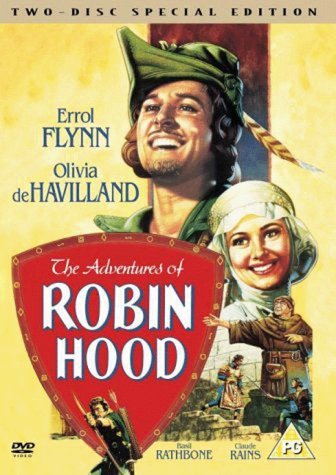
"Credits are like an overture to an opera---its purpose is to give the credit information, but also to give a promise of what the show is going to be about." As examples of great title sequences, Curry cited "Spartacus" and the 1938 "Robin Hood," which he also called "probably one of the best crafted adventure films."
One of the proudest ones for me," he added," was the title sequence for Voyager. I had the opportunity to create what my dream of space travel would be."
On Working With TV Budgets---and TV time
"Every week we go to a pre-production meeting, where everybody gets a handle on what the scope of the production is, then we [the department heads] go back and do a budget, and then each department meets with the producer and presents its budget. When the producers recover from cardiac arrest, we go back and say, we can trim this, instead of six ship shots here we can tell that story with 3, maybe we don't have to blow up a fifteen story building, we can blow up a five story building, and basically get it down to doabilty. The problem with television is that it's a sprint-we have to work really really fast, the greatest challenge we had was the finale of ds9 when we had 354 major visual effect shots, including a space battle with over 200 ships in a shot --and they gave us 3 weeks. It's about making rapid decisions. ..
So then we have a final budget meeting, and the budget is finalized. You all know that film is an uncomfortable marriage between art and business, and the business side always rules."
On politics
A faculty member asked if "you Hollywood types are like us, [faculty who are]feeling besieged by those who want to limit our freedom and install censorship."
First of all, I don't consider myself a Hollywood type," Curry said. " I just work there." But he went on to say: "If you exploit your power to demean and manipulate the other point of view rather than make an honest depiction of it, then people from another persuasion will look at you as less than honorable. There are many points of view in Hollywood. People from every part of the political spectrum work on our show, they talk about their views." The idea, he said, is to "disagree without being disagreeable."
Dan Curry has done the title sequences for several feature films. For the Rodney Dangerfield comedy, "Back to School," Curry's task was to tell the backstory of the main character's past. He was able to blend photographs from his own family's album because, coincidentally, the character Dangerfield was playing grew up in the same New York neighborhood as Curry did.
In "Top Gun" the specific task was to create mood. Working with the music score is part of the process, and on this film Curry had the music before he started, so he could edit the images to move more slowly at first, and then with increasing speed, to both match the music's tempo and the pace of preparations for the jets' flight, and the adrenelin rush the rest of the movie would be.
For "Back to School," the music wasn't recorded, and Curry saw only the sheet music. But he used it to decide where the cuts in the film should be, and the first time that score and title sequence were played together, they matched perfectly. The credits of Indiana Jones and the Temple of Doom were a musical number, and required unusual visual effects--more glinting of the dancers' sequins.
"Credits are like an overture to an opera---its purpose is to give the credit information, but also to give a promise of what the show is going to be about." As examples of great title sequences, Curry cited "Spartacus" and the 1938 "Robin Hood," which he also called "probably one of the best crafted adventure films."
One of the proudest ones for me," he added," was the title sequence for Voyager. I had the opportunity to create what my dream of space travel would be."
On Working With TV Budgets---and TV time
"Every week we go to a pre-production meeting, where everybody gets a handle on what the scope of the production is, then we [the department heads] go back and do a budget, and then each department meets with the producer and presents its budget. When the producers recover from cardiac arrest, we go back and say, we can trim this, instead of six ship shots here we can tell that story with 3, maybe we don't have to blow up a fifteen story building, we can blow up a five story building, and basically get it down to doabilty. The problem with television is that it's a sprint-we have to work really really fast, the greatest challenge we had was the finale of ds9 when we had 354 major visual effect shots, including a space battle with over 200 ships in a shot --and they gave us 3 weeks. It's about making rapid decisions. ..
So then we have a final budget meeting, and the budget is finalized. You all know that film is an uncomfortable marriage between art and business, and the business side always rules."
On politics
A faculty member asked if "you Hollywood types are like us, [faculty who are]feeling besieged by those who want to limit our freedom and install censorship."
First of all, I don't consider myself a Hollywood type," Curry said. " I just work there." But he went on to say: "If you exploit your power to demean and manipulate the other point of view rather than make an honest depiction of it, then people from another persuasion will look at you as less than honorable. There are many points of view in Hollywood. People from every part of the political spectrum work on our show, they talk about their views." The idea, he said, is to "disagree without being disagreeable."

How Do You Train for Star Trek?
There were several questions from students in the audience about career paths and preparations.
What are the best schools for visual effects? one asked. Curry named two: Expression College of the Digital Arts in San Francisco, and Gnomon [School of Visual Effects] in Los Angeles. "There are probably others. Those are the ones I'm familiar with that are really good, and people who go through those schools are sought after."
Where do you get a start? another student asked. She was a costume designer.
"It's very difficult to jump right in," Curry said. "It's hard to get into the union. The studio system is evolving differently, the political structure of the studio system is becoming very bizarre. You might find independent films, short films, high quality student films, that your work can be seen in. If you have a reel, a portfolio of beautiful designs, talent is found."
"I loved making movies [as a child.] When I saw "The Beast from 10,000 fathoms" I saw they were using some sort of projection, and I had a broken projector, and I realized that if I put a piece of trace paper up on the screen, I could make dinosaurs chase my brother.
But it was just a series of fortuitous accidents that led me to here. I came to Humboldt State with the intention of getting into production design for live theatre. The more I got involved in film, the more I wanted to pursue it."
"I was very lucky, I walked into a situation where they needed somebody with my set of skills. I went to Star Trek where I found a home, where the range of my imagination had value. If I'd had to work on a soap opera it would have been horrible."
On Education v. Job Training
"There's a big difference between job training and education. Job training gives you the skill to do one thing. Education helps you to react to whatever opportunities present themselves. It's really important for those of you who are students here to recognize that your number one job is to become an educated person. Whatever skills you learn, they change as technology evolves, but it is your education that allows you to deal with those changes. So learn everything you can about all sorts of things, and you'll find that as different opportunities present themselves during the course of your life, you can deal with them better than if you approach school as job training."
I urge all of you to support education [on all levels], for the collective good of our society... It seems our society is shifting away from giving proper value to the educational process, and in this time when our nation lives with the fear of threats that are real and imaginary, [applause]the true defense of a nation is an educated population."
After his talk, Curry went off with old friends from university days. He would hold a workshop for students in the morning, and then explore more of Redwood country with his son, sharing the sights and the memories before returning to southern California early Sunday. Among other projects, he'll be working on a new pilot for CBS.
There were several questions from students in the audience about career paths and preparations.
What are the best schools for visual effects? one asked. Curry named two: Expression College of the Digital Arts in San Francisco, and Gnomon [School of Visual Effects] in Los Angeles. "There are probably others. Those are the ones I'm familiar with that are really good, and people who go through those schools are sought after."
Where do you get a start? another student asked. She was a costume designer.
"It's very difficult to jump right in," Curry said. "It's hard to get into the union. The studio system is evolving differently, the political structure of the studio system is becoming very bizarre. You might find independent films, short films, high quality student films, that your work can be seen in. If you have a reel, a portfolio of beautiful designs, talent is found."
"I loved making movies [as a child.] When I saw "The Beast from 10,000 fathoms" I saw they were using some sort of projection, and I had a broken projector, and I realized that if I put a piece of trace paper up on the screen, I could make dinosaurs chase my brother.
But it was just a series of fortuitous accidents that led me to here. I came to Humboldt State with the intention of getting into production design for live theatre. The more I got involved in film, the more I wanted to pursue it."
"I was very lucky, I walked into a situation where they needed somebody with my set of skills. I went to Star Trek where I found a home, where the range of my imagination had value. If I'd had to work on a soap opera it would have been horrible."
On Education v. Job Training
"There's a big difference between job training and education. Job training gives you the skill to do one thing. Education helps you to react to whatever opportunities present themselves. It's really important for those of you who are students here to recognize that your number one job is to become an educated person. Whatever skills you learn, they change as technology evolves, but it is your education that allows you to deal with those changes. So learn everything you can about all sorts of things, and you'll find that as different opportunities present themselves during the course of your life, you can deal with them better than if you approach school as job training."
I urge all of you to support education [on all levels], for the collective good of our society... It seems our society is shifting away from giving proper value to the educational process, and in this time when our nation lives with the fear of threats that are real and imaginary, [applause]the true defense of a nation is an educated population."
After his talk, Curry went off with old friends from university days. He would hold a workshop for students in the morning, and then explore more of Redwood country with his son, sharing the sights and the memories before returning to southern California early Sunday. Among other projects, he'll be working on a new pilot for CBS.
Tuesday, February 22, 2005
Star Trek XI News
The trade publication Variety revealed that Rick Berman's partners in developing the next Star Trek movie are Jordan Kerner and Kerry McCluggage.
According to the Internet Movie Database, Kerner has produced "Inspector Gadget," "George of the Jungle" and "The Mighty Ducks" and their respective sequels, among other titles. He also produced the TV series "A Wrinkle in Time" in Canada. He is currently producing "Charlotte's Web."
Kerry McCluggage produced "Miami Vice" in 1984 and the TV movie "Homeland Security" in 2004. No credits for the 20 years between these are listed. But he was also president of Paramount Television, and is said to be a strong supporter of the Star Trek franchise.
Variety says that a writer has been hired, who they name as Eric Genderson. However, this name doesn't appear in the database. It's either a mistake or he's pretty unknown, which would be a stark contrast to the writer of the last film, John Logan, nominated again this year for an Academy Award.
The article also quotes Rick Berman going into more detail about "franchise fatigue" as the reason for the fall-off in Star Trek audience. By this theory, the assets of the franchise---the characters, and the Star Trek universe built over the past 38 years-are no longer considered assets. Berman calls for a "re-invention" of Star Trek, beginning with the next movie, which is why it will not have any previously established Star Trek characters. Berman repeats that he doesn't expect a new Trek TV series for at least three years.
Variety online requires a paid subscription, but a summary of the article appears on TrebWeb, and quotes from it plus background information on Berman's co-producers at Trek Today.
UPDATE: Though "Eric Genderson" remains unknown, there is an Eric (or Erik) Jendresen, the writer and producer of the TV miniseries "Band of Brothers." Jendresen is listed as writer on two current film projects, "The Hot Zone" (about an ebola virus loose in suburban Washington, from the book by Richard Preston) and "Aloft." "Aloft" is slated to be directed by Robert Redford, from the Alan Tennant book concerning the adventures of two men tracking the international flight of a North American penegrine falcon. One review described the book as "part nature study, part gonzo travelogue."
Erik Jendresen is also listed as a writer on "Fire," a Dreamworks project from a story by "Perfect Storm" author Sebastian Junger. He may also be the Erik Jendresen who is the author of children's books.
A staffer at TrekWeb apparently made the connection between Genderson and Jendresen, though there's no official word yet on whether it is Jendresen who is attached to the next Trek movie as writer.
UPDATE: TrekWeb has confirmed through Paramount from the Variety writer that the Trek XI writer's name is Erik Jendresen, and the above credits are accurate, plus he's written novels and plays. There's more at TrekWeb, with a link.
The trade publication Variety revealed that Rick Berman's partners in developing the next Star Trek movie are Jordan Kerner and Kerry McCluggage.
According to the Internet Movie Database, Kerner has produced "Inspector Gadget," "George of the Jungle" and "The Mighty Ducks" and their respective sequels, among other titles. He also produced the TV series "A Wrinkle in Time" in Canada. He is currently producing "Charlotte's Web."
Kerry McCluggage produced "Miami Vice" in 1984 and the TV movie "Homeland Security" in 2004. No credits for the 20 years between these are listed. But he was also president of Paramount Television, and is said to be a strong supporter of the Star Trek franchise.
Variety says that a writer has been hired, who they name as Eric Genderson. However, this name doesn't appear in the database. It's either a mistake or he's pretty unknown, which would be a stark contrast to the writer of the last film, John Logan, nominated again this year for an Academy Award.
The article also quotes Rick Berman going into more detail about "franchise fatigue" as the reason for the fall-off in Star Trek audience. By this theory, the assets of the franchise---the characters, and the Star Trek universe built over the past 38 years-are no longer considered assets. Berman calls for a "re-invention" of Star Trek, beginning with the next movie, which is why it will not have any previously established Star Trek characters. Berman repeats that he doesn't expect a new Trek TV series for at least three years.
Variety online requires a paid subscription, but a summary of the article appears on TrebWeb, and quotes from it plus background information on Berman's co-producers at Trek Today.
UPDATE: Though "Eric Genderson" remains unknown, there is an Eric (or Erik) Jendresen, the writer and producer of the TV miniseries "Band of Brothers." Jendresen is listed as writer on two current film projects, "The Hot Zone" (about an ebola virus loose in suburban Washington, from the book by Richard Preston) and "Aloft." "Aloft" is slated to be directed by Robert Redford, from the Alan Tennant book concerning the adventures of two men tracking the international flight of a North American penegrine falcon. One review described the book as "part nature study, part gonzo travelogue."
Erik Jendresen is also listed as a writer on "Fire," a Dreamworks project from a story by "Perfect Storm" author Sebastian Junger. He may also be the Erik Jendresen who is the author of children's books.
A staffer at TrekWeb apparently made the connection between Genderson and Jendresen, though there's no official word yet on whether it is Jendresen who is attached to the next Trek movie as writer.
UPDATE: TrekWeb has confirmed through Paramount from the Variety writer that the Trek XI writer's name is Erik Jendresen, and the above credits are accurate, plus he's written novels and plays. There's more at TrekWeb, with a link.
Wednesday, February 16, 2005

Thank you!
Thanks to all who found their way to Soul of Star Trek over the past week or so. The site had over a thousand page loads in one day for the first time, and total visitors in the thousands as well, from Australia, Austria, Canada, France, England, Germany, Japan, Iceland, Indonesia, Ireland, Israel, Italy, Namibia, Poland, Singapore, Spain, Sweden, Switzerland, Wales and all regions of the U.S.
And special thanks to those who left such thoughtful as well as gracious comments.
Also to those who are checking out the Trek fictions at Morgan Dash.
As a special greeting to all the visitors from Italy, I'll sign my full name:
---William Severini Kowinski
UPDATE: add Costa Rica, Denmark, the Netherlands, New Zealand, Phillipines and Slovakia.
UPDATE 2: and as of March 1, add Brazil, Colombia, Croatia, Czech Republic, Finland, Thailand, and Venezuela. That makes readers from every continent except (so far) Antarctica.
Thanks to all who found their way to Soul of Star Trek over the past week or so. The site had over a thousand page loads in one day for the first time, and total visitors in the thousands as well, from Australia, Austria, Canada, France, England, Germany, Japan, Iceland, Indonesia, Ireland, Israel, Italy, Namibia, Poland, Singapore, Spain, Sweden, Switzerland, Wales and all regions of the U.S.
And special thanks to those who left such thoughtful as well as gracious comments.
Also to those who are checking out the Trek fictions at Morgan Dash.
As a special greeting to all the visitors from Italy, I'll sign my full name:
---William Severini Kowinski
UPDATE: add Costa Rica, Denmark, the Netherlands, New Zealand, Phillipines and Slovakia.
UPDATE 2: and as of March 1, add Brazil, Colombia, Croatia, Czech Republic, Finland, Thailand, and Venezuela. That makes readers from every continent except (so far) Antarctica.

Trekcheck: The Home Stretch
After two stand-alone episodes, Enterprise completed the first of its last multi-episode arcs of the season, and of its life as a series on UPN. While fan efforts to save the series accelerate, and rumors circulate about a possible new home for another season of new stories (Spike TV, with the former head of Comedy Central as its new chief, is currently the most credible possibility), those involved in making Enterprise seem less hopeful. As reported on TrekWeb and Trek Today, during his short-lived attempt to gather support for a new Trek series with himself at the helm, J. Michael Straczynski (creator of Babylon 5) got word from "a trusted source" at Paramount that any new Star Trek series wouldn't begin for a year or two. (Rick Berman had said publicly perhaps three years.)
While episodes will air into May, production on Enterprise will cease on March 8. Paramount is hosting selected national press and other guests for the last few shooting days, both recognizing the end of an era and using the occasion to celebrate Star Trek's almost four decades of success (as well as the upcoming start of Enterprise on DVD.)
Speculation now centers on the concluding episode. At a recent convention Jonathan Frakes confirmed that he and Marina Sirtis will appear in the final episode as their TNG characters, Riker and Troi, which a Paramount spokesperson isn't disputing. TV Guide is repeating the rumor, and that magazine is likely to be as close to an authorized source as there will be for future news concerning the final episodes.
But what no one is saying yet is who else might also appear. Since Rick Berman has described the last episode as "a Valentine" to Star Trek, perhaps the story will allow for appearances by other Trek characters, from other series, including the ever-elusive appearance by William Shatner. This is sheer speculation, with no inside tip or confirmation. But remember that just because negotiations seemed to go nowhere doesn't mean he won't actually appear. After all, he's the guy who hoodwinked a town into believing he was shooting a Star Trek movie when he wasn't, for a "reality" show on Spike TV. It would seem fitting that he might appear in a Star Trek episode he's hoodwinked us into thinking he won't.
After a shaky start with "Daedelus" and the brilliance of "Observer Effect," the Andorian-Tellurite arc ("Babel One," "United" and "The Aenar") gave us some connecting Trek history, some affecting moments, good acting and character development, and a lot new about an old species, the Andorians. We see a beautiful ice planet, and meet a beautiful new sub-species, the Aenar. It seems obvious that the prominence of the Andorians in Enterprise is largely due to the character of Shran created by Jeffrey Combs (and maybe to the articulated antennae, too.) But "The Aenar" in particular opened possibilities that Enterprise might have explored further in the future, but sadly won't get the chance. However, I can picture a dozen hungry Star Trek novelists devouring this arc for future books. There was even something of a science fiction premise, the linking of virtual reality with telepathy.
After the imminent Klingon arc and Mirror universe stories, the final episodes, set on and around Earth, will deal directly with xenophobia (reacting to the foreign or alien with fear and prejudice) a theme discussed here at Soul of Star Trek as central to the first half of the season as well. In fact, xenophobia is also what will divide Trek's 21st century history into the Mirror Universe opposite of the TNG timeline in the upcoming two-part arc. (This prior post also correctly predicted that the discrepancy in Klingon appearance problem would be addressed in the Klingon arc, but now I'm not sure whether this was informed intuition or something I absorbed from Manny Coto's stream of consciousness conversation on the Paramount lot last summer.)
That xenophobia is the last theme Star Trek Enterprise will address is fitting, given Star Trek's cultural history in the forefront of proposing the astonishing idea that aliens aren't necessary evil monsters automatically bent on conquest and destruction. That whole theme started in the 1890s with H.G. Wells' novel, The War of the Worlds. But Wells tale was complex and cautionary, meant to show western civilization in the inferior position it routinely inflicted on "primitive" cultures it conquered, like the Tasmanians and the American Indians. Moreover, Wells gave the Martians a reason for their attempted conquest: their planet was growing cold and would soon be unable to support life.
But the rash of space invasion stories that followed over the next half century or so---especially on screens---quickly dispensed with complexity and rationale, and space visitors were rarely anything but grotesque marauding monsters (even if they looked more like men in ape suits wearing diving helmets) who bellowed, screeched and killed, when they weren't shooting lethal rays from their foreheads. At first, humans were shown to be good-natured but naïve in trying to make friends, but that formality was soon dispensed with, and the appearance of an alien was automatically followed by concerted attempts to kill it, as sheer common sense reflex.
Star Trek fans all know the story of the Horta, and how in one episode of the original series, the stereotype was broken. A very alien species was portrayed as acting rationally based on a value shared with humans, protecting its young and the species' future. Once understanding was achieved, a mutually beneficial solution followed.
It was an approach that Star Trek cultivated in ever more complex variations in later TV and film stories, resulting eventually in examining our prejudices concerning other species on earth (the whales in Star Trek IV: The Voyage Home) and each other (the Russians, in the guise of Klingons in Star Trek VI: The Undiscovered Country.)
This helped to open up the possibilities further explored in particular by Stanley Kubrick in 2001 and Steven Speilberg in Close Encounters of the Third Kind and E.T. The monstrous aliens soon returned of course (in the Alien series, for example), occasionally balanced by other examples of foreign wonder and alien possibility (The Abyss, Contact, Mission to Mars.)
Lately it seems the alien monster has dominated, beginning even before fear became the official response to actual violation on 9-11, and Cold Warriors morphed into neocon chicken-hawks, while waves of racism returned in more elusive, coded disguises. With two new versions of Wells' War of the Worlds about to flood movie theatres this year---the more prominent being a blockbuster by Steven Speilberg-- the cycle may even reach new heights of artificial hysteria before the circle is closed.
While these new movies shouldn't be pre-judged (for they may revive and expand on Wells' themes lost in prior adaptations), it's safe to say that it's been a rather long time since anybody, in science fiction or out, has taken a popular culture stand against xenophobia. It looks like once again it's up to Star Trek, and meeting that challenge is a fitting end.
After two stand-alone episodes, Enterprise completed the first of its last multi-episode arcs of the season, and of its life as a series on UPN. While fan efforts to save the series accelerate, and rumors circulate about a possible new home for another season of new stories (Spike TV, with the former head of Comedy Central as its new chief, is currently the most credible possibility), those involved in making Enterprise seem less hopeful. As reported on TrekWeb and Trek Today, during his short-lived attempt to gather support for a new Trek series with himself at the helm, J. Michael Straczynski (creator of Babylon 5) got word from "a trusted source" at Paramount that any new Star Trek series wouldn't begin for a year or two. (Rick Berman had said publicly perhaps three years.)
While episodes will air into May, production on Enterprise will cease on March 8. Paramount is hosting selected national press and other guests for the last few shooting days, both recognizing the end of an era and using the occasion to celebrate Star Trek's almost four decades of success (as well as the upcoming start of Enterprise on DVD.)
Speculation now centers on the concluding episode. At a recent convention Jonathan Frakes confirmed that he and Marina Sirtis will appear in the final episode as their TNG characters, Riker and Troi, which a Paramount spokesperson isn't disputing. TV Guide is repeating the rumor, and that magazine is likely to be as close to an authorized source as there will be for future news concerning the final episodes.
But what no one is saying yet is who else might also appear. Since Rick Berman has described the last episode as "a Valentine" to Star Trek, perhaps the story will allow for appearances by other Trek characters, from other series, including the ever-elusive appearance by William Shatner. This is sheer speculation, with no inside tip or confirmation. But remember that just because negotiations seemed to go nowhere doesn't mean he won't actually appear. After all, he's the guy who hoodwinked a town into believing he was shooting a Star Trek movie when he wasn't, for a "reality" show on Spike TV. It would seem fitting that he might appear in a Star Trek episode he's hoodwinked us into thinking he won't.
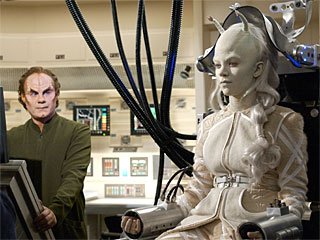
After a shaky start with "Daedelus" and the brilliance of "Observer Effect," the Andorian-Tellurite arc ("Babel One," "United" and "The Aenar") gave us some connecting Trek history, some affecting moments, good acting and character development, and a lot new about an old species, the Andorians. We see a beautiful ice planet, and meet a beautiful new sub-species, the Aenar. It seems obvious that the prominence of the Andorians in Enterprise is largely due to the character of Shran created by Jeffrey Combs (and maybe to the articulated antennae, too.) But "The Aenar" in particular opened possibilities that Enterprise might have explored further in the future, but sadly won't get the chance. However, I can picture a dozen hungry Star Trek novelists devouring this arc for future books. There was even something of a science fiction premise, the linking of virtual reality with telepathy.
After the imminent Klingon arc and Mirror universe stories, the final episodes, set on and around Earth, will deal directly with xenophobia (reacting to the foreign or alien with fear and prejudice) a theme discussed here at Soul of Star Trek as central to the first half of the season as well. In fact, xenophobia is also what will divide Trek's 21st century history into the Mirror Universe opposite of the TNG timeline in the upcoming two-part arc. (This prior post also correctly predicted that the discrepancy in Klingon appearance problem would be addressed in the Klingon arc, but now I'm not sure whether this was informed intuition or something I absorbed from Manny Coto's stream of consciousness conversation on the Paramount lot last summer.)
That xenophobia is the last theme Star Trek Enterprise will address is fitting, given Star Trek's cultural history in the forefront of proposing the astonishing idea that aliens aren't necessary evil monsters automatically bent on conquest and destruction. That whole theme started in the 1890s with H.G. Wells' novel, The War of the Worlds. But Wells tale was complex and cautionary, meant to show western civilization in the inferior position it routinely inflicted on "primitive" cultures it conquered, like the Tasmanians and the American Indians. Moreover, Wells gave the Martians a reason for their attempted conquest: their planet was growing cold and would soon be unable to support life.
But the rash of space invasion stories that followed over the next half century or so---especially on screens---quickly dispensed with complexity and rationale, and space visitors were rarely anything but grotesque marauding monsters (even if they looked more like men in ape suits wearing diving helmets) who bellowed, screeched and killed, when they weren't shooting lethal rays from their foreheads. At first, humans were shown to be good-natured but naïve in trying to make friends, but that formality was soon dispensed with, and the appearance of an alien was automatically followed by concerted attempts to kill it, as sheer common sense reflex.
Star Trek fans all know the story of the Horta, and how in one episode of the original series, the stereotype was broken. A very alien species was portrayed as acting rationally based on a value shared with humans, protecting its young and the species' future. Once understanding was achieved, a mutually beneficial solution followed.
It was an approach that Star Trek cultivated in ever more complex variations in later TV and film stories, resulting eventually in examining our prejudices concerning other species on earth (the whales in Star Trek IV: The Voyage Home) and each other (the Russians, in the guise of Klingons in Star Trek VI: The Undiscovered Country.)
This helped to open up the possibilities further explored in particular by Stanley Kubrick in 2001 and Steven Speilberg in Close Encounters of the Third Kind and E.T. The monstrous aliens soon returned of course (in the Alien series, for example), occasionally balanced by other examples of foreign wonder and alien possibility (The Abyss, Contact, Mission to Mars.)
Lately it seems the alien monster has dominated, beginning even before fear became the official response to actual violation on 9-11, and Cold Warriors morphed into neocon chicken-hawks, while waves of racism returned in more elusive, coded disguises. With two new versions of Wells' War of the Worlds about to flood movie theatres this year---the more prominent being a blockbuster by Steven Speilberg-- the cycle may even reach new heights of artificial hysteria before the circle is closed.
While these new movies shouldn't be pre-judged (for they may revive and expand on Wells' themes lost in prior adaptations), it's safe to say that it's been a rather long time since anybody, in science fiction or out, has taken a popular culture stand against xenophobia. It looks like once again it's up to Star Trek, and meeting that challenge is a fitting end.
Friday, February 11, 2005

Monday, February 07, 2005
TrekCheck/ After "Enterprise": Speculations of the Week
In his generous and evocative comments prompted by the cancellation of Star Trek: Enterprise, former Star Trek writer and current producer of the Sci-Fi Channel hit Battlestar Galactica, Ronald D. Moore said a couple of things that seemed significant to me.
The first comes as a result of claimed inside knowledge. "Star Trek isn't dead and it isn't dying." "...I know first hand that Viacom considers 'the Franchise' to be one of their crown jewels and I've personally heard them refer to the 'next fifty years of Star Trek' as a corporate priority."
Moore then refers to Star Trek now entering "an interregnum, a pause in the treadmill of overlapping productions that have become the norm for the series that was once considered 'too cerebral for television.'"
These quotes come from Moore's Galactica blog, and can be found here. Battlestar Galactica Blog
So according to Moore, Viacom (now the parent of Paramount) is committed to Star Trek's future, and is planning for it. But while others refer to a "pause" (as he also does) or a rest or hiatus, Moore is unique in using the word "interregnum." It's an unusual word, which means "the interval of time between the end of a sovereign's reign and the accession of a successor."
It could simply be a metaphor for the time between "Enterprise" and the next series or other Star Trek manifestation. Or it could he be suggesting a change in leadership? As he writes so eloquently, the creative staff that has built the Star Trek universe for decades will soon disband, taking with them great talent, dedication and institutional memory. But could there be more changes in the offing? Does Moore know something else from his Viacom sources?
Leaving aside such parsing, and consideration of interpersonal politics among current and former Star Trek producers and writers (especially since the relationships of Moore, Brannon Braga and Rick Berman reportedly have a complex and not always serene history), the cancellation of Enterprise does lead to questions about the future of the current Star Trek leadership. More about that in a moment.
Implicit in my speculations is my sense that the next new Star Trek story will appear as a feature film, not a television series.
A New Launch?
If Viacom values "the franchise" so highly, and Paramount's new chief is known for risk-taking and working with high profile movie stars, then another possible future for Star Trek emerges. It would involve treating Star Trek as others are treating Batman and Superman: they use the basic character and key elements of the story, but develop new concepts and stories not bound by what's been established in previous movies or television shows.
Instead, they combine the "brand" with other attractions: the latest in special effects, for instance, plus either a well-known actor in a different kind of role (the strategy in the last series of Batman films), or introducing an unknown to become identified with the role (Christopher Reeve in the latest Superman series of films.) Now a new Batman film is forthcoming, with Superman in the wings, with no direct relationship to the previous film series.
This kind of a "relaunch" or reintroduction almost inevitably means a big budget Event movie, with high production values and stars, even bankable stars, if not as heroes then as antagonists. It would probably mean a major "A" list director, probably associated with blockbuster science fiction or fantasy. There are probably a few who would love to make a Star Trek film, if they had the freedom and the budget.
Speculating on how that strategy would be applied to Star Trek suggests many fascinating questions, including some troubling ones. Would Viacom dare to tempt fan wrath by straying too far from established Trek lore? Would Paramount attempt to re-imagine Star Trek with the classic characters of Kirk, Spock and McCoy, played by different, younger actors? This has been suggested in the past, but has always seemed to me unlikely, especially while the original series actors are alive and working.
It could be argued that Battlestar Galactica itself proves it might work, but the cast of the old TV show never achieved the iconic status of William Shatner and Leonard Nimoy. Though Batman was successfully transferred from a TV series to the big screen without Adam West, he hadn't actually created the character. I can think of one disastrous attempt: the controversy over not only bypassing Clayton Moore for a new Lone Ranger movie in the 1970s but banning him from personal appearances as the Lone Ranger, essentially sunk that movie even before it was made.
More recently the Lost in Space feature had well-known stars replacing familiar actors, but it didn't do well. But in that case, the character of the concept was changed as well as the actors. Even though it was a decent film in its own right, it apparently didn't attract fans of the comic and campy series, yet the series reputation may have kept ordinary science fiction fans away.
In any case, the only story idea for the next Star Trek movie that we know anything about, involves no previous established characters, and Rick Berman has more than hinted that it's being talked about as a big budget feature. Though some Trek observers believe Berman is being strung along, and that Paramount has no intentions of making this movie, at least with him as producer, it is intriguing to consider the possibility of a Star Trek feature with major stars playing new characters. In fact that's probably the only kind that could attract a major director. But if they are all new characters in an era not portrayed before, and especially if Berman and other current or past Star Trek people aren't involved, how will it be Star Trek?
I'd guess that Paramount wouldn't proceed without somebody associated with past Trek, unless they plan to wait ten years, but it's still worth asking the question. On the Special Edition DVD of the last original cast feature, Star Trek VI: The Undiscovered Country, William Shatner mentions that Gene Roddenberry died shortly before this film was released, and boldly says that for all intents and purposes, Star Trek died with him.
Though it's an exaggeration, there is some profound truth in that. From his own ideas and interests, and his uncanny ability to inspire and then guide the ideas of others, Gene Roddenberry provided the original, continuing and evolving vision of Star Trek. For awhile, others carried that vision forward and added their own. But while it is probably true as Brent Spiner said recently, that Rick Berman was a scrupulous caretaker of that vision as he understood it, Berman has said on several occasions that it wasn't his vision.
I don't know Rick Berman and have only spoken to him once briefly, so I don't pretend to analyze his point of view or evaluate his passion. As a writer and a producer, he added creatively to the Star Trek vision (I'm thinking particularly of "Star Trek: First Contact.") He guided Star Trek through most of its life. But he didn't appear to be as interested in science fiction as Roddenberry was, especially as a way of telling stories to illuminate contemporary issues of importance. It is inevitably a different thing to develop and express a vision, than it is to conform to someone else's. Perhaps it's time to re-discover the sources of the Roddenberry vision.
It Came From Inner Space
The original series was a product of the 1950s and 1960s. It came from Roddenberry's own life and experiences, and the experiences of his generation, particularly in World War II. Its roots were in classic science fiction from H.G. Wells through Olaf Stapledon to his contemporaries like Arthur C. Clarke, Isaac Asimov and Ray Bradbury. As a television show it owed more to The Twilight Zone than Wagon Train (as in "Wagon Train to the Stars.")
It seems to me the Roddenberry's vision was a strong presence through Star Trek: The Next Generation, but began waning after that. The experiences of writers and producers after Roddenberry were of their own time, and Star Trek as television and film had to exist and find ways to tell stories in new media environments. I don't for a moment discount the difficulties.
But I do think that looking back at the essentials of the original series, The Next Generation and the feature films, it is possible to learn the soul of Roddenberry's vision, and to take it forward. It may also take more insight into the experiences of Roddenberry's lifetime, as well as the importance of his science fiction sources, and the issues they were addressing.
Others suggest that those with the future of Star Trek in their hands should look around at other science fiction shows and movies. Certainly there are lessons in technique and budget and so on, but I would hate to see Star Trek become too generic, especially since I don't much care for much of what passes as science fiction on TV and in film. Much of it seems to me to simply be action adventure with more futuristic weaponry and faster camera cuts. The essence of Star Trek was in how humans can change, not how their technology allows them to kill more distant beings more efficiently, or how today's technology allows directors to better manipulate the glandular pulsing of the audience. If new Star Trek follows some fashionable and commercial course, empty of its key ideas, people will be pining for the good old days when Rick Berman was at least trying to preserve a Star Trek integrity.
Roddenberry's essential question, made most explicit in the character of Data was: what does it mean to be human? Not only as individuals, but as societies, and in relationships of all kind: to each other, to "alien" and other life, and to the universe. In the context of the 1960s particularly, it was a question that came naturally, as it should today.
It did not mean either some magical transformation into perfection,or that human behavior is necessarily fixed in some deterministically repeating pattern forever: patterns which happen to be the easiest to dramatize, since they are usually overtly violent and very familiar, not only from life but from past drama.
This was the challenge of Roddenberry's science fiction. It is why, contrary to Moore and others, the appearance of the Counsellor in The Next Generation wasn't some eighties therapy fad, but represented a real step forward, a necessary path to a survivable future. It formalized and socialized the self-scrutiny that was always central to Star Trek drama. (For Star Trek was always drama, story, that used the medium to best advantage, to entertain audiences partly by entertaining ideas.)
Which leads at long last to a second point Ron Moore made, that the future of Star Trek for the moment lies with its fans. He refers to the fans' creativity, and I couldn't agree more: anyone who is going to determine Star Trek's future should be looking at the stories and films being created by Star Trek fans. (The official Star Trek novels are another important source, as the Reeves-Stevens alone have more than proved with their stellar contribution to this season's Enterprise.) And for however long the pause lasts after Enterprise, Star Trek fans should seek their entertainment from each other, as well as from the old stories.
But they also should examine what binds Star Trek fans to Star Trek's most enduring representatives, the original cast members like Nichele Nichols, George Takei and Walter Koenig, as well as those they revere for their creative contributions to the Star Trek vision, like Leonard Nimoy and William Shatner, and then those that followed them, from the Next Generation cast to Enterprise. Listen to most of them and you hear how central are the ideas and ideals of Star Trek.
Star Trek is storytelling, it is an embodied vision of an exciting future, but a future we would like to live in, and a future we wish were here right now. Some Star Trek fans do more than yearn for Infinite Diversity in Infinite Combinations, or the ethics of the Prime Directive. They try to express them in their lives. Between here and that future, are many stories still to be told.
It's not going to be easy to attract new audiences while satisfying Star Trek fans who parse each story for textual references like Biblical scholars, sometimes forgetting that there were stories outside Trek, from The Heart of Darkness to Captain Video, that partly inspired original series episodes.
It's also true that some fans of this era see something else in Star Trek that would appall Roddenberry (so it isn't surprising that these days, rants demeaning Roddenberry appear with predictable frequency on Star Trek fan sites.) The vision needs revived and re-energized and expanded, but at the heart of the enterprise there must be a real vision, and an understanding of what makes Star Trek Star Trek. In other words, the soul of Star Trek.
Home
In his generous and evocative comments prompted by the cancellation of Star Trek: Enterprise, former Star Trek writer and current producer of the Sci-Fi Channel hit Battlestar Galactica, Ronald D. Moore said a couple of things that seemed significant to me.
The first comes as a result of claimed inside knowledge. "Star Trek isn't dead and it isn't dying." "...I know first hand that Viacom considers 'the Franchise' to be one of their crown jewels and I've personally heard them refer to the 'next fifty years of Star Trek' as a corporate priority."
Moore then refers to Star Trek now entering "an interregnum, a pause in the treadmill of overlapping productions that have become the norm for the series that was once considered 'too cerebral for television.'"
These quotes come from Moore's Galactica blog, and can be found here. Battlestar Galactica Blog
So according to Moore, Viacom (now the parent of Paramount) is committed to Star Trek's future, and is planning for it. But while others refer to a "pause" (as he also does) or a rest or hiatus, Moore is unique in using the word "interregnum." It's an unusual word, which means "the interval of time between the end of a sovereign's reign and the accession of a successor."
It could simply be a metaphor for the time between "Enterprise" and the next series or other Star Trek manifestation. Or it could he be suggesting a change in leadership? As he writes so eloquently, the creative staff that has built the Star Trek universe for decades will soon disband, taking with them great talent, dedication and institutional memory. But could there be more changes in the offing? Does Moore know something else from his Viacom sources?
Leaving aside such parsing, and consideration of interpersonal politics among current and former Star Trek producers and writers (especially since the relationships of Moore, Brannon Braga and Rick Berman reportedly have a complex and not always serene history), the cancellation of Enterprise does lead to questions about the future of the current Star Trek leadership. More about that in a moment.
Implicit in my speculations is my sense that the next new Star Trek story will appear as a feature film, not a television series.
A New Launch?
If Viacom values "the franchise" so highly, and Paramount's new chief is known for risk-taking and working with high profile movie stars, then another possible future for Star Trek emerges. It would involve treating Star Trek as others are treating Batman and Superman: they use the basic character and key elements of the story, but develop new concepts and stories not bound by what's been established in previous movies or television shows.
Instead, they combine the "brand" with other attractions: the latest in special effects, for instance, plus either a well-known actor in a different kind of role (the strategy in the last series of Batman films), or introducing an unknown to become identified with the role (Christopher Reeve in the latest Superman series of films.) Now a new Batman film is forthcoming, with Superman in the wings, with no direct relationship to the previous film series.
This kind of a "relaunch" or reintroduction almost inevitably means a big budget Event movie, with high production values and stars, even bankable stars, if not as heroes then as antagonists. It would probably mean a major "A" list director, probably associated with blockbuster science fiction or fantasy. There are probably a few who would love to make a Star Trek film, if they had the freedom and the budget.
Speculating on how that strategy would be applied to Star Trek suggests many fascinating questions, including some troubling ones. Would Viacom dare to tempt fan wrath by straying too far from established Trek lore? Would Paramount attempt to re-imagine Star Trek with the classic characters of Kirk, Spock and McCoy, played by different, younger actors? This has been suggested in the past, but has always seemed to me unlikely, especially while the original series actors are alive and working.
It could be argued that Battlestar Galactica itself proves it might work, but the cast of the old TV show never achieved the iconic status of William Shatner and Leonard Nimoy. Though Batman was successfully transferred from a TV series to the big screen without Adam West, he hadn't actually created the character. I can think of one disastrous attempt: the controversy over not only bypassing Clayton Moore for a new Lone Ranger movie in the 1970s but banning him from personal appearances as the Lone Ranger, essentially sunk that movie even before it was made.
More recently the Lost in Space feature had well-known stars replacing familiar actors, but it didn't do well. But in that case, the character of the concept was changed as well as the actors. Even though it was a decent film in its own right, it apparently didn't attract fans of the comic and campy series, yet the series reputation may have kept ordinary science fiction fans away.
In any case, the only story idea for the next Star Trek movie that we know anything about, involves no previous established characters, and Rick Berman has more than hinted that it's being talked about as a big budget feature. Though some Trek observers believe Berman is being strung along, and that Paramount has no intentions of making this movie, at least with him as producer, it is intriguing to consider the possibility of a Star Trek feature with major stars playing new characters. In fact that's probably the only kind that could attract a major director. But if they are all new characters in an era not portrayed before, and especially if Berman and other current or past Star Trek people aren't involved, how will it be Star Trek?
I'd guess that Paramount wouldn't proceed without somebody associated with past Trek, unless they plan to wait ten years, but it's still worth asking the question. On the Special Edition DVD of the last original cast feature, Star Trek VI: The Undiscovered Country, William Shatner mentions that Gene Roddenberry died shortly before this film was released, and boldly says that for all intents and purposes, Star Trek died with him.
Though it's an exaggeration, there is some profound truth in that. From his own ideas and interests, and his uncanny ability to inspire and then guide the ideas of others, Gene Roddenberry provided the original, continuing and evolving vision of Star Trek. For awhile, others carried that vision forward and added their own. But while it is probably true as Brent Spiner said recently, that Rick Berman was a scrupulous caretaker of that vision as he understood it, Berman has said on several occasions that it wasn't his vision.
I don't know Rick Berman and have only spoken to him once briefly, so I don't pretend to analyze his point of view or evaluate his passion. As a writer and a producer, he added creatively to the Star Trek vision (I'm thinking particularly of "Star Trek: First Contact.") He guided Star Trek through most of its life. But he didn't appear to be as interested in science fiction as Roddenberry was, especially as a way of telling stories to illuminate contemporary issues of importance. It is inevitably a different thing to develop and express a vision, than it is to conform to someone else's. Perhaps it's time to re-discover the sources of the Roddenberry vision.
It Came From Inner Space
The original series was a product of the 1950s and 1960s. It came from Roddenberry's own life and experiences, and the experiences of his generation, particularly in World War II. Its roots were in classic science fiction from H.G. Wells through Olaf Stapledon to his contemporaries like Arthur C. Clarke, Isaac Asimov and Ray Bradbury. As a television show it owed more to The Twilight Zone than Wagon Train (as in "Wagon Train to the Stars.")
It seems to me the Roddenberry's vision was a strong presence through Star Trek: The Next Generation, but began waning after that. The experiences of writers and producers after Roddenberry were of their own time, and Star Trek as television and film had to exist and find ways to tell stories in new media environments. I don't for a moment discount the difficulties.
But I do think that looking back at the essentials of the original series, The Next Generation and the feature films, it is possible to learn the soul of Roddenberry's vision, and to take it forward. It may also take more insight into the experiences of Roddenberry's lifetime, as well as the importance of his science fiction sources, and the issues they were addressing.
Others suggest that those with the future of Star Trek in their hands should look around at other science fiction shows and movies. Certainly there are lessons in technique and budget and so on, but I would hate to see Star Trek become too generic, especially since I don't much care for much of what passes as science fiction on TV and in film. Much of it seems to me to simply be action adventure with more futuristic weaponry and faster camera cuts. The essence of Star Trek was in how humans can change, not how their technology allows them to kill more distant beings more efficiently, or how today's technology allows directors to better manipulate the glandular pulsing of the audience. If new Star Trek follows some fashionable and commercial course, empty of its key ideas, people will be pining for the good old days when Rick Berman was at least trying to preserve a Star Trek integrity.
Roddenberry's essential question, made most explicit in the character of Data was: what does it mean to be human? Not only as individuals, but as societies, and in relationships of all kind: to each other, to "alien" and other life, and to the universe. In the context of the 1960s particularly, it was a question that came naturally, as it should today.
It did not mean either some magical transformation into perfection,or that human behavior is necessarily fixed in some deterministically repeating pattern forever: patterns which happen to be the easiest to dramatize, since they are usually overtly violent and very familiar, not only from life but from past drama.
This was the challenge of Roddenberry's science fiction. It is why, contrary to Moore and others, the appearance of the Counsellor in The Next Generation wasn't some eighties therapy fad, but represented a real step forward, a necessary path to a survivable future. It formalized and socialized the self-scrutiny that was always central to Star Trek drama. (For Star Trek was always drama, story, that used the medium to best advantage, to entertain audiences partly by entertaining ideas.)
Which leads at long last to a second point Ron Moore made, that the future of Star Trek for the moment lies with its fans. He refers to the fans' creativity, and I couldn't agree more: anyone who is going to determine Star Trek's future should be looking at the stories and films being created by Star Trek fans. (The official Star Trek novels are another important source, as the Reeves-Stevens alone have more than proved with their stellar contribution to this season's Enterprise.) And for however long the pause lasts after Enterprise, Star Trek fans should seek their entertainment from each other, as well as from the old stories.
But they also should examine what binds Star Trek fans to Star Trek's most enduring representatives, the original cast members like Nichele Nichols, George Takei and Walter Koenig, as well as those they revere for their creative contributions to the Star Trek vision, like Leonard Nimoy and William Shatner, and then those that followed them, from the Next Generation cast to Enterprise. Listen to most of them and you hear how central are the ideas and ideals of Star Trek.
Star Trek is storytelling, it is an embodied vision of an exciting future, but a future we would like to live in, and a future we wish were here right now. Some Star Trek fans do more than yearn for Infinite Diversity in Infinite Combinations, or the ethics of the Prime Directive. They try to express them in their lives. Between here and that future, are many stories still to be told.
It's not going to be easy to attract new audiences while satisfying Star Trek fans who parse each story for textual references like Biblical scholars, sometimes forgetting that there were stories outside Trek, from The Heart of Darkness to Captain Video, that partly inspired original series episodes.
It's also true that some fans of this era see something else in Star Trek that would appall Roddenberry (so it isn't surprising that these days, rants demeaning Roddenberry appear with predictable frequency on Star Trek fan sites.) The vision needs revived and re-energized and expanded, but at the heart of the enterprise there must be a real vision, and an understanding of what makes Star Trek Star Trek. In other words, the soul of Star Trek.
Home
Thursday, February 03, 2005
Enterprise Envoi
After this season, new episodes of Star Trek: Enterprise will not be made for UPN. Immediately after the series was cancelled on February 2, Star Trek producer Rick Berman was talking about a pause of at least three years before another Star Trek series might begin.
The ratings for Enterprise hadn't improved enough, and the new Friday lineup on the Sci-Fi channel was further draining audience away. Before cancellation was announced, syndication rights had been sold to Enterprise for next year, and its first season is to appear soon on DVD.
Cancellation of the fifth Star Trek series at the end of its fourth season came at a nadir in the fortunes of the franchise. The last two feature films have not met expectations, and sales of nearly all kinds of Star Trek merchandise are down. The original series episodes are seen in mostly off-peak time periods on the Sci Fi Channel, while The Next Generation and Deep Space Nine repeat on afternoons surrounded by auto races and wrestlers on the former TNN, now Spike TV, which may be going through yet another transformation (its prez resigned, citing disagreement with its direction.)
There seems to be more going on than changes in television, or even in the most appropriate media for the future of Star Trek, and this cancellation signals more change. Yet there is still a lot of life in Star Trek and its audience, as responses to this cancellation are already beginning to reveal.
But that is fodder for future posts. Enterprise will be in production for another month or so, and we will be seeing new episodes until May. I've posted in detail my appreciation for the first nine episodes of this season. In one of the sadder ironies, the second episode since the break, "The Observer Effect," was one of the best of the series, ranking with better episodes of any Star Trek series, even though it was also the lowest rated episode to that date.
Remaining episodes should tie Enterprise closer to the original series and other Star Trek, as producer Manny Coto promised, ending with an episode planned to be "a Valentine," according to Berman, who is writing it with Brannon Braga.
There was some rumor and remains speculation that this will include appearances by Next Generation characters, and perhaps characters of other Star Trek series. Now that there's no reason for me to wait to be asked, I may as well spring my idea: although it's been established that Zephrane Cochrane is believed dead, his younger "First Contact" assistant, Lily Sloane, could still be alive in Archer's time. That in fact is the premise of a story by compatriot Morgan Dash, which you can find here.
As for Enterprise, several fan groups are already advocating that another network continue it. (In fact, one might wonder why the Sci Fi Channel counter-programmed against Enterprise so aggressively on Friday night.) We recall that in science fiction, there are always possibilities.
But given the economics of television, it is more likely that production will shut down. With no new series in sight, it will mean that a production team that has worked together on Star Trek for decades will dissolve. That more than anything will signal the end of an era. As an admirer of their work, and as someone who will continue to enjoy its fruits, I am thinking mostly of them now.
Of them, and those who've joined Star Trek to work on Enterprise: a cast of not only fine actors but fine people, it seems, in the best Star Trek tradition. There must be a different kind of difficulty for those who ascended in the last year or so, such as Manny Coto and the Reeves-Stevens, and who made their mark in such a short time.
For the next several weeks they can concentrate on making the best episodes possible, while appreciating the privilege of working and being with each other, for as long as it lasts.
After this season, new episodes of Star Trek: Enterprise will not be made for UPN. Immediately after the series was cancelled on February 2, Star Trek producer Rick Berman was talking about a pause of at least three years before another Star Trek series might begin.
The ratings for Enterprise hadn't improved enough, and the new Friday lineup on the Sci-Fi channel was further draining audience away. Before cancellation was announced, syndication rights had been sold to Enterprise for next year, and its first season is to appear soon on DVD.
Cancellation of the fifth Star Trek series at the end of its fourth season came at a nadir in the fortunes of the franchise. The last two feature films have not met expectations, and sales of nearly all kinds of Star Trek merchandise are down. The original series episodes are seen in mostly off-peak time periods on the Sci Fi Channel, while The Next Generation and Deep Space Nine repeat on afternoons surrounded by auto races and wrestlers on the former TNN, now Spike TV, which may be going through yet another transformation (its prez resigned, citing disagreement with its direction.)
There seems to be more going on than changes in television, or even in the most appropriate media for the future of Star Trek, and this cancellation signals more change. Yet there is still a lot of life in Star Trek and its audience, as responses to this cancellation are already beginning to reveal.
But that is fodder for future posts. Enterprise will be in production for another month or so, and we will be seeing new episodes until May. I've posted in detail my appreciation for the first nine episodes of this season. In one of the sadder ironies, the second episode since the break, "The Observer Effect," was one of the best of the series, ranking with better episodes of any Star Trek series, even though it was also the lowest rated episode to that date.
Remaining episodes should tie Enterprise closer to the original series and other Star Trek, as producer Manny Coto promised, ending with an episode planned to be "a Valentine," according to Berman, who is writing it with Brannon Braga.
There was some rumor and remains speculation that this will include appearances by Next Generation characters, and perhaps characters of other Star Trek series. Now that there's no reason for me to wait to be asked, I may as well spring my idea: although it's been established that Zephrane Cochrane is believed dead, his younger "First Contact" assistant, Lily Sloane, could still be alive in Archer's time. That in fact is the premise of a story by compatriot Morgan Dash, which you can find here.
As for Enterprise, several fan groups are already advocating that another network continue it. (In fact, one might wonder why the Sci Fi Channel counter-programmed against Enterprise so aggressively on Friday night.) We recall that in science fiction, there are always possibilities.
But given the economics of television, it is more likely that production will shut down. With no new series in sight, it will mean that a production team that has worked together on Star Trek for decades will dissolve. That more than anything will signal the end of an era. As an admirer of their work, and as someone who will continue to enjoy its fruits, I am thinking mostly of them now.
Of them, and those who've joined Star Trek to work on Enterprise: a cast of not only fine actors but fine people, it seems, in the best Star Trek tradition. There must be a different kind of difficulty for those who ascended in the last year or so, such as Manny Coto and the Reeves-Stevens, and who made their mark in such a short time.
For the next several weeks they can concentrate on making the best episodes possible, while appreciating the privilege of working and being with each other, for as long as it lasts.
Friday, January 14, 2005
TrekCheck: the Star Trek Future
Tonight begins the second half of the Enterprise season. After a very good and promising beginning, it faces stronger competition from the Friday Sci-Fi Channel lineup, including the new Galactica series.
If that's not enough to warrant worry about its future, there are the unknown consequences of the new Paramount regime which will officially take over in a couple of months.
I asked a lot of people this summer their views on the future of the Star Trek franchise, and now I'm asking myself. Here's what I see at the moment:
If Paramount decides that the Star Trek franchise is worth continuing there, they will probably be very leery of too long a hiatus between new Star Trek stories, either on TV (through renewal of Enterprise, or a new series) or as a feature film. To let the franchise slide is to lose whatever advantage there is to be gained from its current assets. So I'm guessing that they will be looking at the possibility of re-investing, or selling off the franchise, or simply letting it lie fallow if they can't get the deal they want.
The use of assets, such as the brand name, the fan base, and the people associated with the franchise's success, seems to be a big consideration in today's Hollywood. We can guess a bit about how the current regime is thinking about this in the recent story that Paramount is not entirely happy with the idea for the next Trek movie, a prequel that doesn't use characters already associated with Trek.
First of all, there is a line of thought that says the problem with Enterprise is that it is a prequel. Manny Coto's mantra of making it a true prequel series is a boon to fans, and is shoring up that crucial aspect of the franchise. But the theory is that Star Trek has always been about going farther into the future with its vision. I have no idea if this point of view is prevalent or not, and of course it doesn't explain the parallel box office weakness of the last movie, set in the 24th century. But it does point to one problem: Trek seems to lack someone who has or can pull together a vision of an evolving future the way Gene Roddenberry did.
But making use of your assets is very likely to be part of the reason the concept for the next movie is on shaky ground. For it to work requires some other calculations. Do you save budget by employing unknowns as the lead actors? Or do you employ more or less bankable stars who haven't been associated with Star Trek before? This second becomes a possibility with the reputation of the new Paramount chief for taking risks with big name talent.
Yet neither approach is an obvious winner. So what other alternatives are there?
One might be animation. There are several new techniques that have been used in successful movies, that allow both more imaginative CGI effects and solve some problems regarding actors. Star Trek's assets include actors who are retired or have passed away, or would have difficulty playing their characters in their prime. Many of the Trek stars would also be expensive to hire for full acting roles in a major motion picture.
Animation in some form allows the possibility for a story involving major characters from the various Trek crews and eras. The strongest Trek assets in the marketplace are still Captain Kirk, Mr. Spock and the original crew, and the TNG crew. With lamentable exceptions, the actors who created these characters can do voices for their animated versions, thus adding the needed link to the live-action shows and films. Some Trek fans discuss digital reproductions of these characters from old films and TV, but it may be some time before this technology is truly convincing, if it ever is. But used in an animation environment and with a consistent and striking style, it seems possible.
A mixed-cast story, probably convened by the most popular Trek character not to have appeared in a feature film---namely Q---could work nicely in this format. It's probably too late to create such a film in time for the 40th anniversary of Star Trek, but it would be a fitting and exciting way to celebrate it.
This concept would also work for a live action film, of course. In any case, some form of digital storytelling is likely to be in Star Trek's future. If Paramount or some other corporate entity doesn't do it, the fans will. Fans are doing it already, and of what little I've seen, the fan films employing CGI and related imagery placing familiar characters in new situations are more interesting and exciting than the fan-made live-action attempts.
UPDATE: Star Trek chief Rick Berman is now on record disputing interpretations of earlier statements to the effect that his prequel proposal for the next movie was nixed. So, should we say Never Mind? Or This Post is no longer operative? Not exactly---we'll wait and see. Berman also suggested that if approved, this feature could be the most elaborate and expensive Trek film yet. Now speculation centers on when it might be set. Before Enterprise? Between Enterprise and the original series 23rd century? If I had to guess, I'd say the second.
Tonight begins the second half of the Enterprise season. After a very good and promising beginning, it faces stronger competition from the Friday Sci-Fi Channel lineup, including the new Galactica series.
If that's not enough to warrant worry about its future, there are the unknown consequences of the new Paramount regime which will officially take over in a couple of months.
I asked a lot of people this summer their views on the future of the Star Trek franchise, and now I'm asking myself. Here's what I see at the moment:
If Paramount decides that the Star Trek franchise is worth continuing there, they will probably be very leery of too long a hiatus between new Star Trek stories, either on TV (through renewal of Enterprise, or a new series) or as a feature film. To let the franchise slide is to lose whatever advantage there is to be gained from its current assets. So I'm guessing that they will be looking at the possibility of re-investing, or selling off the franchise, or simply letting it lie fallow if they can't get the deal they want.
The use of assets, such as the brand name, the fan base, and the people associated with the franchise's success, seems to be a big consideration in today's Hollywood. We can guess a bit about how the current regime is thinking about this in the recent story that Paramount is not entirely happy with the idea for the next Trek movie, a prequel that doesn't use characters already associated with Trek.
First of all, there is a line of thought that says the problem with Enterprise is that it is a prequel. Manny Coto's mantra of making it a true prequel series is a boon to fans, and is shoring up that crucial aspect of the franchise. But the theory is that Star Trek has always been about going farther into the future with its vision. I have no idea if this point of view is prevalent or not, and of course it doesn't explain the parallel box office weakness of the last movie, set in the 24th century. But it does point to one problem: Trek seems to lack someone who has or can pull together a vision of an evolving future the way Gene Roddenberry did.
But making use of your assets is very likely to be part of the reason the concept for the next movie is on shaky ground. For it to work requires some other calculations. Do you save budget by employing unknowns as the lead actors? Or do you employ more or less bankable stars who haven't been associated with Star Trek before? This second becomes a possibility with the reputation of the new Paramount chief for taking risks with big name talent.
Yet neither approach is an obvious winner. So what other alternatives are there?
One might be animation. There are several new techniques that have been used in successful movies, that allow both more imaginative CGI effects and solve some problems regarding actors. Star Trek's assets include actors who are retired or have passed away, or would have difficulty playing their characters in their prime. Many of the Trek stars would also be expensive to hire for full acting roles in a major motion picture.
Animation in some form allows the possibility for a story involving major characters from the various Trek crews and eras. The strongest Trek assets in the marketplace are still Captain Kirk, Mr. Spock and the original crew, and the TNG crew. With lamentable exceptions, the actors who created these characters can do voices for their animated versions, thus adding the needed link to the live-action shows and films. Some Trek fans discuss digital reproductions of these characters from old films and TV, but it may be some time before this technology is truly convincing, if it ever is. But used in an animation environment and with a consistent and striking style, it seems possible.
A mixed-cast story, probably convened by the most popular Trek character not to have appeared in a feature film---namely Q---could work nicely in this format. It's probably too late to create such a film in time for the 40th anniversary of Star Trek, but it would be a fitting and exciting way to celebrate it.
This concept would also work for a live action film, of course. In any case, some form of digital storytelling is likely to be in Star Trek's future. If Paramount or some other corporate entity doesn't do it, the fans will. Fans are doing it already, and of what little I've seen, the fan films employing CGI and related imagery placing familiar characters in new situations are more interesting and exciting than the fan-made live-action attempts.
UPDATE: Star Trek chief Rick Berman is now on record disputing interpretations of earlier statements to the effect that his prequel proposal for the next movie was nixed. So, should we say Never Mind? Or This Post is no longer operative? Not exactly---we'll wait and see. Berman also suggested that if approved, this feature could be the most elaborate and expensive Trek film yet. Now speculation centers on when it might be set. Before Enterprise? Between Enterprise and the original series 23rd century? If I had to guess, I'd say the second.
Sunday, December 19, 2004
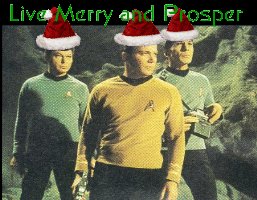
Tuesday, December 14, 2004
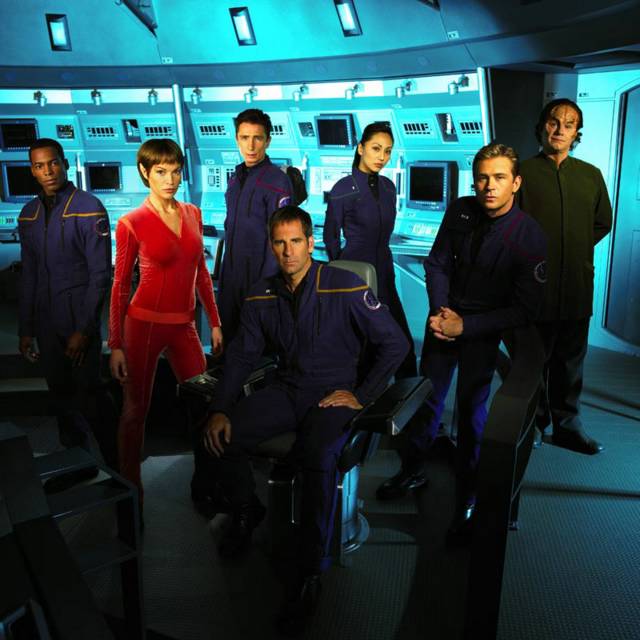
TrekCheck/ ENTERPRISE: the first 9 of Season 4, a commentary
The opening 9 episodes of the fourth season may turn out to be crucial for the Enterprise series. With a new producer, new writers and a new night, fans had new hope that it will live to see a fifth season, and perhaps more. So far, those hopes have not been dashed. These were intriguing episodes, and provide every reason to keep watching.
I'm not going to speculate on the future, except to say that I'm looking forward to the rest of the season. For now, I'd just like to add to the dialogue with my own reactions and thoughts on these first 9 stories.
Perspective on the Way I Watch
It's a Star Trek tradition, to state your franchise experience---kind of the way some Native peoples begin councils by reciting the names of their ancestors.
Well, I've seen every TOS and TNG episode and feature film multiple times in multiple media, plus many episodes of DS9 and Voyager at least once. I've seen all of the first three years of Enterprise, maybe lacking an ep or two. There's no UPN affiliate on the cable system where I live, but the local Fox station runs Enterprise, at midnight on Wednesday (now Friday) and again at 6p. Saturday. So I tape the episodes and watch them later, fast-forwarding through commercials (and the opening theme.)
It's common knowledge that the original Star Trek series didn't really catch on until it was syndicated in the 70s. A big factor in Star Trek's success then, I believe, was not only that it became available again, but that it ran every day. (I go into this a little more in my essay on Star Trek: The Motion Picture, which you can find below in the Trekalog, beginning at the June 30, 2004 post.) Seeing an episode every day gets you into the world of the series, and you begin to know the characters as they start to live in your subconscious and eventually your consciousness in your daily, so-called real life.
So in addition to seeing each of the first 9 episodes of the fourth season as they ran weekly, I've gone back to the videotape and watched them all again, at least one a day for several days in a row.
Which reminds me of something else important to Star Trek's success: multiple viewings. Subtleties in the stories, nuances in the performances, even entire arcs and subtexts within a story or relating to other stories, don't always reveal themselves the first time. Star Trek fans, like fervent fans of any show, might wind up seeing more than there actually is in a given story. But there is often quite a lot in Star Trek episodes that rewards repeated viewings. That includes these 9 episodes of Enterprise.
I'll take the opportunity that writing for nothing provides in this blog, to look at these shows as a writer as well as a viewer or a cultural historian, which describes much of what I do in my published nonfiction. My dramatic (and comic) writing has mostly been as an amateur, with some theatrical productions, but my opinion is sometimes sought because I'm pretty good at analyzing what works and what doesn't on stage, and of course that's part of writing about TV and movies, which I've done professionally. So that's how I watch.
Arcs
This new creative team was also doing something new for Star Trek: telling stories in three-episode "mini-arcs." The season started with two episodes that directly continued the semi-cliffhanger that ended the season-long Xindi arc of last year ("Storm Front" I & II) and a coda ("Home") that wraps up the Xindi saga with its aftermath and effects back on earth.
Then came the Arik Soong/Brent Spiner arc, three episodes about the ancestor of Data's creator who rescued 19 genetically engineered embryos kept in cold storage from the Eugenics Wars (referenced in TOS), "birthed" them through some unspecified process, and raised them on a remote planet for their first ten years. Now ten years after that, he is enlisted from his prison cell to help Archer and the Enterprise find the "Augments," who have commandeered a Klingon ship.
Then came the Vulcan arc: three episodes concerning a conflict on Vulcan between the High Command and a dissident group that believes the Vulcans have strayed from the true path of Surak, who rescued them from planetary violence with the gospel of logic centuries before.
"Storm Front" wasn't a true three episode arc: more like two fast-paced episodes and a coda in a different key. (Sort of like TNG's Borg two-parter, "Best of Both Worlds," followed by the quieter "Family" on earth.) The two true arcs showed promise that this could be a good format for Star Trek. But there are inherent problems. I imagine it's difficult enough to time out and pace a story in one 40 or so minute episode, but there are experienced hands who have done this for many years. To my knowledge, nobody has tried telling stories over three to five episodes as a regular procedure since the first run of Doctor Who. But that was a unique show, with different audience expectations (and production values) from Star Trek. So this team was really breaking new ground.
The results were a bit uneven, which is about the best you could expect. They might have been unnecessarily frenetic, but basically they all hold up, and they certainly kept moving. The pace of the Soong arc was quite good, but a little too much happened, and the second episode cliffhanger (Archer on his way up a ladder to prevent deadly toxins from killing everybody on Cold Station 12) was pretty weak. A different problem arose in the Vulcan arc. Though some thought the final episode was rushed, my feeling about the arc overall was that it was a bit padded, even if with extraneous action. On the other hand, the last few minutes of the first and second episodes of this arc had great pace and interest, so you really wanted to see the next episode. The team got that element of the mini-arc to work pretty quickly.
Some of these episodes leaned on the tried-and-true illusion of action that characterized Doctor Who episodes: getting caught and escaping. It's a relatively inexpensive kind of action sequence, and it does keep the actors in motion. But it's really a nervous substitute for action. It's serviceable when it advances the story at least a little.
The mini-arcs may be necessary to compensate for the steadily reduced portion of the hour that isn't comprised of commercials, but reserved for story-telling. This is something I asked Manny Coto about, and he acknowledged the difficulty of telling stories as fulsomely as TOS could, which had more minutes to work with. The mini-arc might help to counteract that limitation.
But it can't address what I regard as a chief reason people aren't watching dramatic storytelling on TV as much anymore. I don't think it's all because of the fad for so-called reality TV, which owes more to sensationalism than "reality." I believe it's mostly because blocks of so many commercials for so long interrupt the story so completely that dramatic tension is very hard to maintain, and it's too hard for viewers to pick up the threads of excellent, complex stories. The commercials slaughter mood (Norman Mailer once described totalitarianism as "the interruption of mood") and change emotions---you can wind up feeling distracted, frustrated, bored, assaulted and angry, just by the endless commercials. When the story starts again finally, your suspension of disbelief is suspended. (Which is another reason I prefer to watch TV drama on videotape. Maybe I'll get a TVo for Christmas.)
[continued below after the picture...]
The opening 9 episodes of the fourth season may turn out to be crucial for the Enterprise series. With a new producer, new writers and a new night, fans had new hope that it will live to see a fifth season, and perhaps more. So far, those hopes have not been dashed. These were intriguing episodes, and provide every reason to keep watching.
I'm not going to speculate on the future, except to say that I'm looking forward to the rest of the season. For now, I'd just like to add to the dialogue with my own reactions and thoughts on these first 9 stories.
Perspective on the Way I Watch
It's a Star Trek tradition, to state your franchise experience---kind of the way some Native peoples begin councils by reciting the names of their ancestors.
Well, I've seen every TOS and TNG episode and feature film multiple times in multiple media, plus many episodes of DS9 and Voyager at least once. I've seen all of the first three years of Enterprise, maybe lacking an ep or two. There's no UPN affiliate on the cable system where I live, but the local Fox station runs Enterprise, at midnight on Wednesday (now Friday) and again at 6p. Saturday. So I tape the episodes and watch them later, fast-forwarding through commercials (and the opening theme.)
It's common knowledge that the original Star Trek series didn't really catch on until it was syndicated in the 70s. A big factor in Star Trek's success then, I believe, was not only that it became available again, but that it ran every day. (I go into this a little more in my essay on Star Trek: The Motion Picture, which you can find below in the Trekalog, beginning at the June 30, 2004 post.) Seeing an episode every day gets you into the world of the series, and you begin to know the characters as they start to live in your subconscious and eventually your consciousness in your daily, so-called real life.
So in addition to seeing each of the first 9 episodes of the fourth season as they ran weekly, I've gone back to the videotape and watched them all again, at least one a day for several days in a row.
Which reminds me of something else important to Star Trek's success: multiple viewings. Subtleties in the stories, nuances in the performances, even entire arcs and subtexts within a story or relating to other stories, don't always reveal themselves the first time. Star Trek fans, like fervent fans of any show, might wind up seeing more than there actually is in a given story. But there is often quite a lot in Star Trek episodes that rewards repeated viewings. That includes these 9 episodes of Enterprise.
I'll take the opportunity that writing for nothing provides in this blog, to look at these shows as a writer as well as a viewer or a cultural historian, which describes much of what I do in my published nonfiction. My dramatic (and comic) writing has mostly been as an amateur, with some theatrical productions, but my opinion is sometimes sought because I'm pretty good at analyzing what works and what doesn't on stage, and of course that's part of writing about TV and movies, which I've done professionally. So that's how I watch.
Arcs
This new creative team was also doing something new for Star Trek: telling stories in three-episode "mini-arcs." The season started with two episodes that directly continued the semi-cliffhanger that ended the season-long Xindi arc of last year ("Storm Front" I & II) and a coda ("Home") that wraps up the Xindi saga with its aftermath and effects back on earth.
Then came the Arik Soong/Brent Spiner arc, three episodes about the ancestor of Data's creator who rescued 19 genetically engineered embryos kept in cold storage from the Eugenics Wars (referenced in TOS), "birthed" them through some unspecified process, and raised them on a remote planet for their first ten years. Now ten years after that, he is enlisted from his prison cell to help Archer and the Enterprise find the "Augments," who have commandeered a Klingon ship.
Then came the Vulcan arc: three episodes concerning a conflict on Vulcan between the High Command and a dissident group that believes the Vulcans have strayed from the true path of Surak, who rescued them from planetary violence with the gospel of logic centuries before.
"Storm Front" wasn't a true three episode arc: more like two fast-paced episodes and a coda in a different key. (Sort of like TNG's Borg two-parter, "Best of Both Worlds," followed by the quieter "Family" on earth.) The two true arcs showed promise that this could be a good format for Star Trek. But there are inherent problems. I imagine it's difficult enough to time out and pace a story in one 40 or so minute episode, but there are experienced hands who have done this for many years. To my knowledge, nobody has tried telling stories over three to five episodes as a regular procedure since the first run of Doctor Who. But that was a unique show, with different audience expectations (and production values) from Star Trek. So this team was really breaking new ground.
The results were a bit uneven, which is about the best you could expect. They might have been unnecessarily frenetic, but basically they all hold up, and they certainly kept moving. The pace of the Soong arc was quite good, but a little too much happened, and the second episode cliffhanger (Archer on his way up a ladder to prevent deadly toxins from killing everybody on Cold Station 12) was pretty weak. A different problem arose in the Vulcan arc. Though some thought the final episode was rushed, my feeling about the arc overall was that it was a bit padded, even if with extraneous action. On the other hand, the last few minutes of the first and second episodes of this arc had great pace and interest, so you really wanted to see the next episode. The team got that element of the mini-arc to work pretty quickly.
Some of these episodes leaned on the tried-and-true illusion of action that characterized Doctor Who episodes: getting caught and escaping. It's a relatively inexpensive kind of action sequence, and it does keep the actors in motion. But it's really a nervous substitute for action. It's serviceable when it advances the story at least a little.
The mini-arcs may be necessary to compensate for the steadily reduced portion of the hour that isn't comprised of commercials, but reserved for story-telling. This is something I asked Manny Coto about, and he acknowledged the difficulty of telling stories as fulsomely as TOS could, which had more minutes to work with. The mini-arc might help to counteract that limitation.
But it can't address what I regard as a chief reason people aren't watching dramatic storytelling on TV as much anymore. I don't think it's all because of the fad for so-called reality TV, which owes more to sensationalism than "reality." I believe it's mostly because blocks of so many commercials for so long interrupt the story so completely that dramatic tension is very hard to maintain, and it's too hard for viewers to pick up the threads of excellent, complex stories. The commercials slaughter mood (Norman Mailer once described totalitarianism as "the interruption of mood") and change emotions---you can wind up feeling distracted, frustrated, bored, assaulted and angry, just by the endless commercials. When the story starts again finally, your suspension of disbelief is suspended. (Which is another reason I prefer to watch TV drama on videotape. Maybe I'll get a TVo for Christmas.)
[continued below after the picture...]
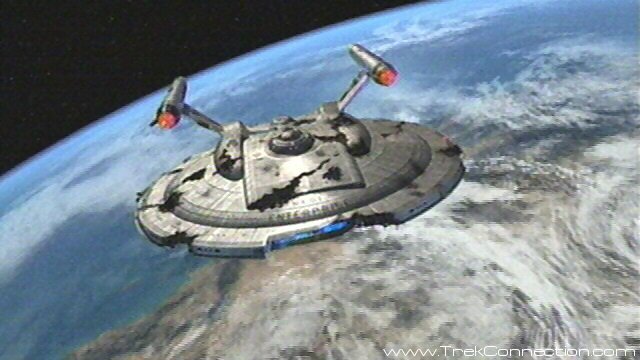
Within the Arcs: Storm Front
Within the arcs were great moments, not so good moments; great writing, not so good writing; and generally good stories. I liked Storm Front more than some critics and fans apparently did. Sure, I know the evil Nazis are a cliché, but the Nazis were real, and they can still be dramatically powerful both as a reminder and a caution. I don't think these stories exploited the Nazi associations, as some dramas-and even some so-called documentaries---have, for cheap villainy and stereotypes.
As Manny Coto said to me and other interviewers, his main goal for Enterprise was to make it a true prequel series to the rest of Star Trek. The first experiments were in Storm Front, and they expanded from there, once most of the loose ends from the previous Enterprise season (or seasons) were tied.
There's an inherent danger in referencing other Trek, which may have been a factor in the response to "Nemesis." Expanding and building on what came before (or in this case, events in the future of the Star Trek story universe, told in our past) is one thing, but repeating what we've seen before is another. Sometimes that's a matter of balance and perception.
For example, there were subtle echoes of Picard's relationship with Lily in "First Contact" in Archer's with Alicia (the 1940s earth woman who nursed his injuries.) I don't think it worked that well---it just reminded me of a relationship that was done better in the movie, where it had a chance to develop. Here it just seemed like a way to move the story forward by borrowing emotions from somewhere else.
Alicia however was a believable character. Even the hoodlums turned resistance fighters had their moments, even though they were movie hoods (what other kind do we know about, from that era?) It is plausible that those are the guys who would be the resistance, at least in Brooklyn (they were the ones with guns, after all.) No Albert Camus there, writing noble manifestos and smoking existential Galloises, between taking pot shots at Nazis. Alicia's story of the tenants resisting a Nazi ban on "colored music" by passing around a gramophone to play Billie Holliday was both affecting and realistic.
Another goal that Manny Coto expressed to me was to return to telling stories that illuminate contemporary issues, as did many of the best original series and subsequent Trek stories. This began in Storm Front with great theatrical flourish. The Nazi flags on the White House were followed by a fake newsreel praising the new Nazi-American alliance. There are some hints that this isn't entirely phony propaganda in this timeline---that there are American collaborators (as there were in France, for instance.) But the identification made most strongly is of course between the Nazis and the aliens from the future who are helping them.
(I'll have more to say about this in my "Arc of Arcs" section that follows.)
Coto and crew were given a writing problem: they had to explain the Nazi aliens, and wrap up the Xindi arc. They did that one better by wrapping up the Temporal Cold War arc (although we still don't know the identity of Future Man.) I thought they did all of this skillfully, and got an exciting story out of it.
I guess I liked the energy and the sort of slightly wacky mood of these episodes. The surreality of it was tipped off from the start when the Nazi officer taking Archer away in the open truck is talking to him about American movies. He says that the flaw in those war movies is that the Americans always win. Those are his last words, as immediately the Americans attack and win.
These were dramatic episodes, with action and meaning, and some fine acting from the guest cast. In the coda, "Home", the acting of the main cast was the chief attraction, and they all acquitted themselves well, while advancing both character development and story. I learned something more about each one of them (including Travis Mayweather), usually from a look or a gesture, or the way he or she said something. There were strong guest performances too, especially Joanna Gleason as T'Pol's mother and Ada Maris as Captain Erika Hernandez (I liked the fact that Archer's squeeze wasn't young and blond, but an equal.)
High points of this arc: the spot-on fake newsreel,;on the apparent threshhold of returning to his time, the alien making his speech about totalitarian destiny still in Nazi uniform; and the way that Gary Graham as Soval extends his hand to Archer and says thank you [for saving Earth and probably Vulcan from the Xindi]---he does it with a subtle effort and awkwardness that shows just how alien the gestures are for him, and yet how sincere.
Low point: the welcoming ceremony when the Enterprise crew returns. It looks fake and sounds the same, a kind of weak parody of the Star Wars welcome to the returning heroes.
Within the arcs were great moments, not so good moments; great writing, not so good writing; and generally good stories. I liked Storm Front more than some critics and fans apparently did. Sure, I know the evil Nazis are a cliché, but the Nazis were real, and they can still be dramatically powerful both as a reminder and a caution. I don't think these stories exploited the Nazi associations, as some dramas-and even some so-called documentaries---have, for cheap villainy and stereotypes.
As Manny Coto said to me and other interviewers, his main goal for Enterprise was to make it a true prequel series to the rest of Star Trek. The first experiments were in Storm Front, and they expanded from there, once most of the loose ends from the previous Enterprise season (or seasons) were tied.
There's an inherent danger in referencing other Trek, which may have been a factor in the response to "Nemesis." Expanding and building on what came before (or in this case, events in the future of the Star Trek story universe, told in our past) is one thing, but repeating what we've seen before is another. Sometimes that's a matter of balance and perception.
For example, there were subtle echoes of Picard's relationship with Lily in "First Contact" in Archer's with Alicia (the 1940s earth woman who nursed his injuries.) I don't think it worked that well---it just reminded me of a relationship that was done better in the movie, where it had a chance to develop. Here it just seemed like a way to move the story forward by borrowing emotions from somewhere else.
Alicia however was a believable character. Even the hoodlums turned resistance fighters had their moments, even though they were movie hoods (what other kind do we know about, from that era?) It is plausible that those are the guys who would be the resistance, at least in Brooklyn (they were the ones with guns, after all.) No Albert Camus there, writing noble manifestos and smoking existential Galloises, between taking pot shots at Nazis. Alicia's story of the tenants resisting a Nazi ban on "colored music" by passing around a gramophone to play Billie Holliday was both affecting and realistic.
Another goal that Manny Coto expressed to me was to return to telling stories that illuminate contemporary issues, as did many of the best original series and subsequent Trek stories. This began in Storm Front with great theatrical flourish. The Nazi flags on the White House were followed by a fake newsreel praising the new Nazi-American alliance. There are some hints that this isn't entirely phony propaganda in this timeline---that there are American collaborators (as there were in France, for instance.) But the identification made most strongly is of course between the Nazis and the aliens from the future who are helping them.
(I'll have more to say about this in my "Arc of Arcs" section that follows.)
Coto and crew were given a writing problem: they had to explain the Nazi aliens, and wrap up the Xindi arc. They did that one better by wrapping up the Temporal Cold War arc (although we still don't know the identity of Future Man.) I thought they did all of this skillfully, and got an exciting story out of it.
I guess I liked the energy and the sort of slightly wacky mood of these episodes. The surreality of it was tipped off from the start when the Nazi officer taking Archer away in the open truck is talking to him about American movies. He says that the flaw in those war movies is that the Americans always win. Those are his last words, as immediately the Americans attack and win.
These were dramatic episodes, with action and meaning, and some fine acting from the guest cast. In the coda, "Home", the acting of the main cast was the chief attraction, and they all acquitted themselves well, while advancing both character development and story. I learned something more about each one of them (including Travis Mayweather), usually from a look or a gesture, or the way he or she said something. There were strong guest performances too, especially Joanna Gleason as T'Pol's mother and Ada Maris as Captain Erika Hernandez (I liked the fact that Archer's squeeze wasn't young and blond, but an equal.)
High points of this arc: the spot-on fake newsreel,;on the apparent threshhold of returning to his time, the alien making his speech about totalitarian destiny still in Nazi uniform; and the way that Gary Graham as Soval extends his hand to Archer and says thank you [for saving Earth and probably Vulcan from the Xindi]---he does it with a subtle effort and awkwardness that shows just how alien the gestures are for him, and yet how sincere.
Low point: the welcoming ceremony when the Enterprise crew returns. It looks fake and sounds the same, a kind of weak parody of the Star Wars welcome to the returning heroes.
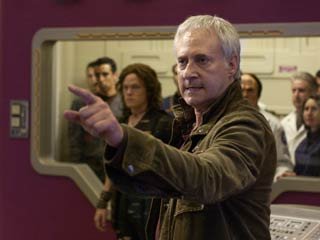
Soong/Spiner Arc
Brent Spiner created a complex character in Arik Soong, different from the three he created for Next Generation. In the first episode, we see Soong the outlaw scientist, devoted to his work, and both cynical and sardonic about authority. As we learn here and throughout the arc, he's also been a rogue player in interstellar politics and trade, and has dealt with some unsavory characters---but all, it seems, to support his vision and his work. He's complex but single-minded: not all that rare among visionaries, especially in science. We can see aspects of him in the later Soong, and certainly in Lore.
In the middle and third episodes, we see his paternal devotion to the Augments. The scene in which he views the remaining embryos is a bit startling: he really sees them as life he has some responsibility for. He also begins to see the flaws in his genetic engineering, and works to repair these flaws before the other embryos are "born."
His approach to parenting is a bit dodgy however. He apparently assumes the Augments have a moral compass though evidently he didn't teach them much about moral values as children, and now that they are adults, he still plays the authoritarian father. Maybe this is supposed to suggest to us that part of the reason the Augments are morally flawed is that Soong is as well. If so, perhaps that point could have been made more clearly.
In Cold Station 12, Soong realizes that the Augments are ethically challenged, especially Malik (a name out of Harry Potterdom which guarantees the kid is going to be a mal-icious mal-content) who is recognizably a sociopath: a charismatic liar who always blames others, as well as a vicious power-hungry killer. He's a kind of Richard III, whose mal-formed limbs aren't physical, but psychological and moral. Playing him that way might have been interesting. But Malik does seem to be struggling within himself early on, at least in relation to Soong.
The reason we're given for how the Augments behave is consistent with their behavior but seems a little too simplistic. Archer provides the formula: "Superior ability breeds superior ambition." But what does that mean? Depends on what you mean by superior. The only elements of superiority we are shown are physical strength and abilities, and adeptness at math and computer manipulation: technical intelligence. Otherwise most of the Augments are like super sheep, with no personalities or social, emotional or moral intelligence. The metaphor here may be technology: the Augments represent superior technology, which does tend to breed superior ambition, when technological power has outrun humanity's moral and psychological intelligence. A better formula is Phlox's analysis of the designers of these Augments in the Eugenics War---human intelligence and human instinct were out of synch.
The middle episode also features scenes of torture; there are extended torture scenes in the Vulcan arc as well. I object to these scenes, and when re-viewing these shows, I fast-forwarded through them. I think they compromise Enterprise as a family-friendly show because of their gratuitous violence, and they give a false sense of torture, at a time when polls show that many Americans share this false sense of torture while their government is actively engaged in it.
Torture of a kind appeared in TOS but it was not very realistic and usually was done with some exotic technology. I believe torture appeared in the TNG series exactly once, in an exemplary episode which explored the psychology of torture, and in which Picard explicitly told the truth about torture as a means of obtaining information: it doesn't work, and professionals in the information-extracting business know it doesn't work. (That's a big part of the internal dispute in the U.S. government right now, apart from violations of Geneva Accords in Iraqi prisons and Guantanamo.) The public doesn't seem to know it, but they should.
I can forgive all the scenes in caves, since I've seen the standing sets. But torture has been treated as a device rather than explored for what it is. This is certainly not unique to Enterprise, but I'd hope they would think about it harder. The fact is that while torture is employed on TV and in movies to extract information, it hardly ever was in the real world. It was mostly used to get people to admit to what the authorities wanted them to admit to. The Inquisition, for example. This is one of those TV/movie conventions that can be really harmful as it affects attitudes about real torture in the real world.
Sure, there's a point to it in this episode---to show how far Malik will go. It has more of a justification here, actually, than in the Vulcan arc. But even so, this point needs to be made. And as the case with any sort of violence on Star Trek, it doesn't need to be so graphic. That's been a Star Trek tradition---that all ages and families as a family can watch it. Maybe the demographics of young male viewers make it tempting, but that temptation should be resisted. I'd hate to see Star Trek cheapen itself with this kind of sensationalism, especially violence. I'm no expert but it seems to me that kids essentially ignore sexual suggestiveness, it goes right by them. But they are affected by graphic violence. I'll bet this is discussed frequently by the producers, so that's my two cents.
Back to the arc. To maintain the pace, there's a lot of action consisting of getting in and out of trouble that diverges from the main arc of the arc, but most of it is fun to see once. Some issues of genetic manipulation are at least raised, though the emphasis seems to be more on continuity with what's known about the Eugenics War. The conversation between Archer and Phlox in the middle ep will remain important in Star Trek lore, and I say that not just because I witnessed its taping (see account of my set visit below.)
It's also intriguing that Soong treats the genetically engineered embryos as children with a right to life, and that Malik views these artificially altered embryos as having inviolable integrity, when he objects to Soong's plans to introduce more changes into their genome, because they are "not what our creators intended." Though this may be more of Malik's mendacity: what really upsets him is that Soong wants to dampen their aggression, maybe even make them more Data-like. Still, it's an interesting irony.
As for Soong's modifications, it's not clear that dampening aggression is what's needed. Maybe Data's ethical programming, or some built-in introspection and sensitivity. Although that's already in the genome, however recessively. Humanity at its best is not more passive, but more conscious and compassionate.
The prequel links to the rest of the Star Trek saga really begin to multiply in this arc and the next, with the Orions, the Eugenics War and then all the Vulcanology: IDIC, needs of the many, the katra, "remember," etc. There's an echo of Kirk in the way Archer bluffs the Klingons. Even the name "Hernandez" has a Star Trek history. And there's an irony possible only if you know from the film, Star Trek: Insurrection, that "The Briar Patch" Soong heads for contains a planet of perpetual youth, which the Augments might have found, but they refuse to go there. And that the eventual creation of Soong's descendant will save the inhabitants of that planet from Federation treachery.
On the other hand, Enterprise still has trouble keeping its technology to prequel levels. After barely using the transporter for three seasons, this year it has suddenly become standard, and is capable of transporting somebody in motion, which Kirk-era transporters didn't seem able to do.
The foreshadowing ending was a little too much, with Soong deciding to give up genetics for designing artificial life forms, which he figured might take several generations to figure out. But it could have been worse. Imagine if he'd continued:
SOONG
Yes---creating an artificial lifeform will be part of my lore. I could do it now, if I only had more data...
But it might take a generation or two. Of course, I'm not married, and somebody else's genes might mess up my son's ability to do the work, so I'd better clone myself, and have my clone clone himself when the time comes. That way, my descendant in the twenty-fourth century will carry on my work without a pause, and he'll look exactly like me!
For the first true mini-arc, this worked well---it had good momentum, individual scenes and performances, good chemistry between Brent Spiner and the regular cast, particularly Scott Bacula, and some meaningful issues raised in subtle ways that will repay repeat viewings and discussions. Best of all, it was inviting; we want to see what they'll do next.
High points of this arc: Hard to specify except as Brent Spiner's acting and character creation.
Low points: the torture scene, T'Pol as a rag doll.
Brent Spiner created a complex character in Arik Soong, different from the three he created for Next Generation. In the first episode, we see Soong the outlaw scientist, devoted to his work, and both cynical and sardonic about authority. As we learn here and throughout the arc, he's also been a rogue player in interstellar politics and trade, and has dealt with some unsavory characters---but all, it seems, to support his vision and his work. He's complex but single-minded: not all that rare among visionaries, especially in science. We can see aspects of him in the later Soong, and certainly in Lore.
In the middle and third episodes, we see his paternal devotion to the Augments. The scene in which he views the remaining embryos is a bit startling: he really sees them as life he has some responsibility for. He also begins to see the flaws in his genetic engineering, and works to repair these flaws before the other embryos are "born."
His approach to parenting is a bit dodgy however. He apparently assumes the Augments have a moral compass though evidently he didn't teach them much about moral values as children, and now that they are adults, he still plays the authoritarian father. Maybe this is supposed to suggest to us that part of the reason the Augments are morally flawed is that Soong is as well. If so, perhaps that point could have been made more clearly.
In Cold Station 12, Soong realizes that the Augments are ethically challenged, especially Malik (a name out of Harry Potterdom which guarantees the kid is going to be a mal-icious mal-content) who is recognizably a sociopath: a charismatic liar who always blames others, as well as a vicious power-hungry killer. He's a kind of Richard III, whose mal-formed limbs aren't physical, but psychological and moral. Playing him that way might have been interesting. But Malik does seem to be struggling within himself early on, at least in relation to Soong.
The reason we're given for how the Augments behave is consistent with their behavior but seems a little too simplistic. Archer provides the formula: "Superior ability breeds superior ambition." But what does that mean? Depends on what you mean by superior. The only elements of superiority we are shown are physical strength and abilities, and adeptness at math and computer manipulation: technical intelligence. Otherwise most of the Augments are like super sheep, with no personalities or social, emotional or moral intelligence. The metaphor here may be technology: the Augments represent superior technology, which does tend to breed superior ambition, when technological power has outrun humanity's moral and psychological intelligence. A better formula is Phlox's analysis of the designers of these Augments in the Eugenics War---human intelligence and human instinct were out of synch.
The middle episode also features scenes of torture; there are extended torture scenes in the Vulcan arc as well. I object to these scenes, and when re-viewing these shows, I fast-forwarded through them. I think they compromise Enterprise as a family-friendly show because of their gratuitous violence, and they give a false sense of torture, at a time when polls show that many Americans share this false sense of torture while their government is actively engaged in it.
Torture of a kind appeared in TOS but it was not very realistic and usually was done with some exotic technology. I believe torture appeared in the TNG series exactly once, in an exemplary episode which explored the psychology of torture, and in which Picard explicitly told the truth about torture as a means of obtaining information: it doesn't work, and professionals in the information-extracting business know it doesn't work. (That's a big part of the internal dispute in the U.S. government right now, apart from violations of Geneva Accords in Iraqi prisons and Guantanamo.) The public doesn't seem to know it, but they should.
I can forgive all the scenes in caves, since I've seen the standing sets. But torture has been treated as a device rather than explored for what it is. This is certainly not unique to Enterprise, but I'd hope they would think about it harder. The fact is that while torture is employed on TV and in movies to extract information, it hardly ever was in the real world. It was mostly used to get people to admit to what the authorities wanted them to admit to. The Inquisition, for example. This is one of those TV/movie conventions that can be really harmful as it affects attitudes about real torture in the real world.
Sure, there's a point to it in this episode---to show how far Malik will go. It has more of a justification here, actually, than in the Vulcan arc. But even so, this point needs to be made. And as the case with any sort of violence on Star Trek, it doesn't need to be so graphic. That's been a Star Trek tradition---that all ages and families as a family can watch it. Maybe the demographics of young male viewers make it tempting, but that temptation should be resisted. I'd hate to see Star Trek cheapen itself with this kind of sensationalism, especially violence. I'm no expert but it seems to me that kids essentially ignore sexual suggestiveness, it goes right by them. But they are affected by graphic violence. I'll bet this is discussed frequently by the producers, so that's my two cents.
Back to the arc. To maintain the pace, there's a lot of action consisting of getting in and out of trouble that diverges from the main arc of the arc, but most of it is fun to see once. Some issues of genetic manipulation are at least raised, though the emphasis seems to be more on continuity with what's known about the Eugenics War. The conversation between Archer and Phlox in the middle ep will remain important in Star Trek lore, and I say that not just because I witnessed its taping (see account of my set visit below.)
It's also intriguing that Soong treats the genetically engineered embryos as children with a right to life, and that Malik views these artificially altered embryos as having inviolable integrity, when he objects to Soong's plans to introduce more changes into their genome, because they are "not what our creators intended." Though this may be more of Malik's mendacity: what really upsets him is that Soong wants to dampen their aggression, maybe even make them more Data-like. Still, it's an interesting irony.
As for Soong's modifications, it's not clear that dampening aggression is what's needed. Maybe Data's ethical programming, or some built-in introspection and sensitivity. Although that's already in the genome, however recessively. Humanity at its best is not more passive, but more conscious and compassionate.
The prequel links to the rest of the Star Trek saga really begin to multiply in this arc and the next, with the Orions, the Eugenics War and then all the Vulcanology: IDIC, needs of the many, the katra, "remember," etc. There's an echo of Kirk in the way Archer bluffs the Klingons. Even the name "Hernandez" has a Star Trek history. And there's an irony possible only if you know from the film, Star Trek: Insurrection, that "The Briar Patch" Soong heads for contains a planet of perpetual youth, which the Augments might have found, but they refuse to go there. And that the eventual creation of Soong's descendant will save the inhabitants of that planet from Federation treachery.
On the other hand, Enterprise still has trouble keeping its technology to prequel levels. After barely using the transporter for three seasons, this year it has suddenly become standard, and is capable of transporting somebody in motion, which Kirk-era transporters didn't seem able to do.
The foreshadowing ending was a little too much, with Soong deciding to give up genetics for designing artificial life forms, which he figured might take several generations to figure out. But it could have been worse. Imagine if he'd continued:
SOONG
Yes---creating an artificial lifeform will be part of my lore. I could do it now, if I only had more data...
But it might take a generation or two. Of course, I'm not married, and somebody else's genes might mess up my son's ability to do the work, so I'd better clone myself, and have my clone clone himself when the time comes. That way, my descendant in the twenty-fourth century will carry on my work without a pause, and he'll look exactly like me!
For the first true mini-arc, this worked well---it had good momentum, individual scenes and performances, good chemistry between Brent Spiner and the regular cast, particularly Scott Bacula, and some meaningful issues raised in subtle ways that will repay repeat viewings and discussions. Best of all, it was inviting; we want to see what they'll do next.
High points of this arc: Hard to specify except as Brent Spiner's acting and character creation.
Low points: the torture scene, T'Pol as a rag doll.

Vulcan arc
I watched the first moments of the first episode ("The Forge"), with almost a sigh of relief as well as appreciation. With writers Garfield and Judith Reeves-Stevens, we are in very good hands. The opening dialogue between Admiral Forrest and Soval is the best written, most succinct dialogue I can recall in all of Enterprise. There is equally good dialogue between Archer and T'Pol.
The Forge and the Awakening, along with the Vulcan scenes that introduced T'Pol's mother, T'Les, show surer hands in Vulcan dialogue. I noticed that, when confronted with an accusation, these Vulcans (notably Soval and T'Les) were straightforward in their response, without any of the emotional denial or "whataya mean by that?' comebacks of humans in confrontation.
I was sorry to see T'Les die, although that scene was a very good one, an acting triumph for Joanna Cassidy and especially Jolene Blalock. I'd be cautious about killing off too many subsidiary characters, though. It begins to feel formulaic, and future possibilities for these characters are ended. Subsidiary characters invented for the purpose of a single story (for instance, Spock's parents) can generate more story---these characters are greatly responsible for the richness of the ST universe.
In the Awakening everyone is hot blooded. The Vulcan leader of the High Council, the young T'Pau, and Archer, when he confronts the woman he believes killed Admiral Forrest, is angry and belligerent. Though more in control, the ambassador is operating out of deep feeling. The coolest head, ironically, seems to be Trip. He's fairly passive at being in charge, at first just disbelieving that Vulcans would attack the Enterprise, and then withdrawing only after the advice of the ambassador. But he's credible, especially when he admits doubts but agrees he's doing what he thinks Archer would do, and he does it resolutely.
Gary Graham gets to strut his stuff in this arc. Actors can be amazing---here's a guy cast apparently for a bit part who is given this opportunity and runs with it. The writers don't do him any favors by tasking him with making credible the sudden revelation of the Andorian invasion plot, but they do give him a strong character arc, and one more classic scene: aboard Enterprise, Trip is asking Soval why he's suddenly helping humans instead of criticizing them. Having been posted on earth for so long, he says, "I developed an affinity for your people." "You did a pretty good job of hiding it," Trip says. And to Trip's delight, Soval replies in all sincerity, "Thank you." It's a Spock moment, written and performed perfectly.
Kara Zediker as T'Pau did a good, nuanced job, too. It seems the formidable great priestess of TOS was once quite a fox.
The central metaphor of this arc, a surprise to no one, is the war in Iraq. The Vulcan leader V'las is GW Bush, Dick Cheney and Donald Rumsfeld rolled into one giant head. V'las's WMD excuse to launch a pre-emptive strike is the Xindi weaponry that the Andorians also don't have. His lines, "Sooner or later the Andorians will make use of this technology. Is it logical for us to wait for that day?" is a virtual paraphrase of the we can't wait for "the smoking gun in the form of a mushroom cloud" rhetoric of Bush and Condi Rice, and their later insistence that the Iraq invasion was justified because of Saddam's desire to develop weapons. Like Malik, and our sociopathic administration, he sets up a situation and then says, "This is the only way," meaning that innocents will die to further his ambition, ideology and agenda. For anybody who misses the references, there's dialogue like, "We're in the desert. There's a storm." The Syranites are referred to several times as "insurgents." (More about this in "The Arc of Arcs.")
There might even be a subtle political parody here. It seems that in the so-called real world the group of militarists behind the Iraq invasion policy call themselves the Vulcans---a reference to the god of fire rather than to Star Trek. So in this arc, some Star Trek Vulcans sound a lot like some D.C. Vulcans.
As for the planet Vulcan, we see a bit more of it, and there's visual continuity with previous glimpses, the enhanced DVD Star Trek: The Motion Picture scenes especially. The Reeves-Stevens obviously know even more about Vulcan from the novels they've written and read that describe it more in detail. I believe this was the first time that we saw a Vulcan cityscape?
Making the ordeal a trek through the desert was certainly appropriate, not only for the earth associations with the desert religions (Christianity, Judaism, Muslim) but with the nature of the planet Vulcan. Not only is the name associated with fire and heat, but once upon a time the existence of a planet Vulcan in our solar system was theorized, even closer to the sun than Mercury (as a way to account for an apparent discrepancy in Mercury's orbit.) Anyway, they did good planet work---even the caves seemed different.
Though there are even more twists and turns in this arc, some seem forced. But in terms of writing to create tension and forward momentum, these multiple conflicts and multiple jeopardy pay off in dramatic tension and excitement. Add in an effective contemporary metaphor, the furthering of Vulcan history, the tie-ins with the rest of Star Trek and more loose ends of Enterprise past tied up, this arc whets the appetite for the future.
What's going to happen in the future? I hope the effects of carrying Surak's katra on Archer's sudden ability to toss Vulcans around and use the neck pinch are addressed in the next episode or two. Maybe with some joke about Archer no longer being able to do the neck pinch.
Archer's character has gone through a lot from last season to these 9 episodes. It will be interesting to see what he's like now, after having Surak in his head. The effects of all this on T'Pol need to be defined, too. There was less indication of what direction this will take, for even after her mind meld with T'Pau, she seemed an emotional mess. It gave her some nice moments---with her mother, with Archer, and with her husband, who turns out to be a good guy after all, and T'Pol is moved but he can't accept her admiration---a very nice touch. But she also seemed irrationally petulant and even possessive towards Archer at times. She needs some consistency now.
The regular cast showed their ensemble instincts in these arcs. There was good ensemble work as the crew tried to function without Archer in the first arc and most of the third. The basketball game was a brief but very nice touch. Each actor had significant moments over the 9 episodes, though a kind of hierarchy remains: Archer, Trip and T'Pol, then Phlox and Reed, then Hoshi and Travis.
Despite this and uneven writing in the past, individually the actors all seem to be finding colors for their characters. Scott Bacula is becoming a more naturalistic version of Shatner in how he moves stories forward with his energy, authority and machismo. It seems that the future may bring more TNG-style showcase episodes or arcs for the other characters. In past years the other regular actors--John Billingsley, Jolene Blalock, Conner Trinneer, Dominic Keating, Linda Park and Anthony Montgomery--have shown the ability to carry scenes and work with one another to carry episodes. All they need is good stories and good writing.
And apropos of nothing that happened in these episodes, look for a solution in coming weeks to why the original series Klingons look different than the Klingons before and after it. This is just a hunch.
Such "continuity" problems can be fun to play with as writing challenges, and they can generate stories. But the inherent problems of a prequel series remains: you may create as many continuity problems as you solve. The aforementioned transporter effect is one, and here we have a brief (or briefly glimpsed), private ceremony to extract Surak's katra from Archer, but in Kirk's time (in Star Trek III) the priestess says the ceremony to extract the katra hasn't been performed "since ages past, and then only in legend." I suppose this could be finessed by the difference in the two situations, with the Spock regenerated on the Genesis planet as essentially a empty vessel. But these problems are likely to crop up from time to time. They will likely inspire the creativity of posters on the Trek BBSs.
High points: the Kir' Shara display in the Council chamber---a nice emotional high. T'Pol's final scenes with her husband, and with her mother. Surak showing Archer the mushroom cloud.
Awkward moments: the ceiling beams start to fall before the explosion goes off when Reed and Mayweather set off the remaining bomb, and one of the Vulcan soldiers begins to convulse before he hits the electrical field created by the minerals in the rocks. And that's sure not much.
I watched the first moments of the first episode ("The Forge"), with almost a sigh of relief as well as appreciation. With writers Garfield and Judith Reeves-Stevens, we are in very good hands. The opening dialogue between Admiral Forrest and Soval is the best written, most succinct dialogue I can recall in all of Enterprise. There is equally good dialogue between Archer and T'Pol.
The Forge and the Awakening, along with the Vulcan scenes that introduced T'Pol's mother, T'Les, show surer hands in Vulcan dialogue. I noticed that, when confronted with an accusation, these Vulcans (notably Soval and T'Les) were straightforward in their response, without any of the emotional denial or "whataya mean by that?' comebacks of humans in confrontation.
I was sorry to see T'Les die, although that scene was a very good one, an acting triumph for Joanna Cassidy and especially Jolene Blalock. I'd be cautious about killing off too many subsidiary characters, though. It begins to feel formulaic, and future possibilities for these characters are ended. Subsidiary characters invented for the purpose of a single story (for instance, Spock's parents) can generate more story---these characters are greatly responsible for the richness of the ST universe.
In the Awakening everyone is hot blooded. The Vulcan leader of the High Council, the young T'Pau, and Archer, when he confronts the woman he believes killed Admiral Forrest, is angry and belligerent. Though more in control, the ambassador is operating out of deep feeling. The coolest head, ironically, seems to be Trip. He's fairly passive at being in charge, at first just disbelieving that Vulcans would attack the Enterprise, and then withdrawing only after the advice of the ambassador. But he's credible, especially when he admits doubts but agrees he's doing what he thinks Archer would do, and he does it resolutely.
Gary Graham gets to strut his stuff in this arc. Actors can be amazing---here's a guy cast apparently for a bit part who is given this opportunity and runs with it. The writers don't do him any favors by tasking him with making credible the sudden revelation of the Andorian invasion plot, but they do give him a strong character arc, and one more classic scene: aboard Enterprise, Trip is asking Soval why he's suddenly helping humans instead of criticizing them. Having been posted on earth for so long, he says, "I developed an affinity for your people." "You did a pretty good job of hiding it," Trip says. And to Trip's delight, Soval replies in all sincerity, "Thank you." It's a Spock moment, written and performed perfectly.
Kara Zediker as T'Pau did a good, nuanced job, too. It seems the formidable great priestess of TOS was once quite a fox.
The central metaphor of this arc, a surprise to no one, is the war in Iraq. The Vulcan leader V'las is GW Bush, Dick Cheney and Donald Rumsfeld rolled into one giant head. V'las's WMD excuse to launch a pre-emptive strike is the Xindi weaponry that the Andorians also don't have. His lines, "Sooner or later the Andorians will make use of this technology. Is it logical for us to wait for that day?" is a virtual paraphrase of the we can't wait for "the smoking gun in the form of a mushroom cloud" rhetoric of Bush and Condi Rice, and their later insistence that the Iraq invasion was justified because of Saddam's desire to develop weapons. Like Malik, and our sociopathic administration, he sets up a situation and then says, "This is the only way," meaning that innocents will die to further his ambition, ideology and agenda. For anybody who misses the references, there's dialogue like, "We're in the desert. There's a storm." The Syranites are referred to several times as "insurgents." (More about this in "The Arc of Arcs.")
There might even be a subtle political parody here. It seems that in the so-called real world the group of militarists behind the Iraq invasion policy call themselves the Vulcans---a reference to the god of fire rather than to Star Trek. So in this arc, some Star Trek Vulcans sound a lot like some D.C. Vulcans.
As for the planet Vulcan, we see a bit more of it, and there's visual continuity with previous glimpses, the enhanced DVD Star Trek: The Motion Picture scenes especially. The Reeves-Stevens obviously know even more about Vulcan from the novels they've written and read that describe it more in detail. I believe this was the first time that we saw a Vulcan cityscape?
Making the ordeal a trek through the desert was certainly appropriate, not only for the earth associations with the desert religions (Christianity, Judaism, Muslim) but with the nature of the planet Vulcan. Not only is the name associated with fire and heat, but once upon a time the existence of a planet Vulcan in our solar system was theorized, even closer to the sun than Mercury (as a way to account for an apparent discrepancy in Mercury's orbit.) Anyway, they did good planet work---even the caves seemed different.
Though there are even more twists and turns in this arc, some seem forced. But in terms of writing to create tension and forward momentum, these multiple conflicts and multiple jeopardy pay off in dramatic tension and excitement. Add in an effective contemporary metaphor, the furthering of Vulcan history, the tie-ins with the rest of Star Trek and more loose ends of Enterprise past tied up, this arc whets the appetite for the future.
What's going to happen in the future? I hope the effects of carrying Surak's katra on Archer's sudden ability to toss Vulcans around and use the neck pinch are addressed in the next episode or two. Maybe with some joke about Archer no longer being able to do the neck pinch.
Archer's character has gone through a lot from last season to these 9 episodes. It will be interesting to see what he's like now, after having Surak in his head. The effects of all this on T'Pol need to be defined, too. There was less indication of what direction this will take, for even after her mind meld with T'Pau, she seemed an emotional mess. It gave her some nice moments---with her mother, with Archer, and with her husband, who turns out to be a good guy after all, and T'Pol is moved but he can't accept her admiration---a very nice touch. But she also seemed irrationally petulant and even possessive towards Archer at times. She needs some consistency now.
The regular cast showed their ensemble instincts in these arcs. There was good ensemble work as the crew tried to function without Archer in the first arc and most of the third. The basketball game was a brief but very nice touch. Each actor had significant moments over the 9 episodes, though a kind of hierarchy remains: Archer, Trip and T'Pol, then Phlox and Reed, then Hoshi and Travis.
Despite this and uneven writing in the past, individually the actors all seem to be finding colors for their characters. Scott Bacula is becoming a more naturalistic version of Shatner in how he moves stories forward with his energy, authority and machismo. It seems that the future may bring more TNG-style showcase episodes or arcs for the other characters. In past years the other regular actors--John Billingsley, Jolene Blalock, Conner Trinneer, Dominic Keating, Linda Park and Anthony Montgomery--have shown the ability to carry scenes and work with one another to carry episodes. All they need is good stories and good writing.
And apropos of nothing that happened in these episodes, look for a solution in coming weeks to why the original series Klingons look different than the Klingons before and after it. This is just a hunch.
Such "continuity" problems can be fun to play with as writing challenges, and they can generate stories. But the inherent problems of a prequel series remains: you may create as many continuity problems as you solve. The aforementioned transporter effect is one, and here we have a brief (or briefly glimpsed), private ceremony to extract Surak's katra from Archer, but in Kirk's time (in Star Trek III) the priestess says the ceremony to extract the katra hasn't been performed "since ages past, and then only in legend." I suppose this could be finessed by the difference in the two situations, with the Spock regenerated on the Genesis planet as essentially a empty vessel. But these problems are likely to crop up from time to time. They will likely inspire the creativity of posters on the Trek BBSs.
High points: the Kir' Shara display in the Council chamber---a nice emotional high. T'Pol's final scenes with her husband, and with her mother. Surak showing Archer the mushroom cloud.
Awkward moments: the ceiling beams start to fall before the explosion goes off when Reed and Mayweather set off the remaining bomb, and one of the Vulcan soldiers begins to convulse before he hits the electrical field created by the minerals in the rocks. And that's sure not much.

Arc of Arcs
Is there an overarching theme (as opposed to an over-Archering theme) to these episodes: an arc of arcs? Yes, I think so, even if it wasn't entirely designed to be.
The shadow of 9-11 and Iraq hover over everything, and join the original engagement with issues of war and peace, and attitudes towards the alien and the unknown, that have always characterized Star Trek.
That arc of these arcs centers on the meaning of "xenophobia." The word itself is used in "Home" to explain earth's reaction to the Xindi attack and threat. According to the American Heritage Dictionary, a xenophobe is "unduly fearful or contemptuous of that which is foreign, especially of strangers or foreign peoples." For foreign or strangers, read also: alien.
That's what alien means: the ultimate foreigner. The prefix Xen (as in xenoblast, xenogenic, xenograft) means "foreign." It's pretty close to Xindi.
Xenophobia often arises in a population when it feels threatened or has been attacked. So after 9-11, anybody looking remotely Arab (including people from India, Hawaii, anybody with dark hair) could find themselves in danger, and some were attacked without provocation. Then France wouldn't join enthusiastically in the Iraq misadventure, and suddenly the French had cooties, and we got a U.S. Congress establishing Freedom Fries.
In the Enterprise universe, humanity has become xenophobic after the Xindi terrorist attack, and we get a scene of intergalactic racism in a bar, which spills over into an attack on Starfleet for making contact with strange new worlds, and letting them know where earth is so they can come attack it. Trip, Reed and Mayweather defend Phlox.
Yet later in that episode ("Home"), Archer himself echoes some of the barfighters' sentiments, without the racial prejudice: that maybe earth shouldn't be out exploring space and attracting dangerous aliens. He earlier uttered without apparent irony one of the more deceptive Bush phrases justifying his xenophobic "we're Good, they are Evil" stance, when he said that some species "don't share our values." That's Bush's reasoning for why al Qeada attacked America, simplistic at best and pernicious in effect. Terrorism is not defensible, but it's well known that people in the Third World and especially in the Middle East have legitimate grievances, and the political situation in Iraq is much more complex than a battle against insurgents who "hate our freedom." It's actually what Bush thinks---that he and his true believers have the right to attack anybody who doesn't "share their values," which apparently means letting Halliburton run their country.
The idea of xenophobia echoes through these arcs. The other side of xenophobia is a belief in ideological, religious and racial purity, and so the leader of the aliens in Storm Front who are helping the Nazis, talks about their common dream to perfect their respective races. (Pretty funny coming from a guy with a face like his, but that's our prejudice.) The theme of racial superiority continues in the Augments, who believe themselves to be a genetically engineered Master Race.
Racism and prejudice as domestic forms of xenophobia comes through in Storm Front, when Archer sees the Nazi invasion from the point of view of an African American in the 1940s.
The Vulcans are dealing with their own xenophobia, emphasized by the conflict between those who believe in Infinite Diversity in Infinite Combinations, and the High Council leader who provokes a war to further reunification of Vulcans and Romulans, linked by race.
Surak's influence on Archer may heal his xenophobia, and the triumph of the Syranites seems to mean the Vulcans will be dealing with theirs. This is a very appropriate theme for our times, as well as for the times created by Enterprise stories over three years plus 9 episodes.
Star Trek has always taken conflict seriously. Who really is the enemy, and why? What you do depends on your answers to these questions. Star Trek captains have always defended their ships and crew, and innocent life. They did not succumb to revenge---though even Captain Picard was tempted. The best Trek makes careful distinctions, and honors nuance---that word that some tried to make into an accusation of indecision in the recent U.S. election campaign. That's a very dangerous (and illogical) provocation, and the best Trek has always said so.
Home
Is there an overarching theme (as opposed to an over-Archering theme) to these episodes: an arc of arcs? Yes, I think so, even if it wasn't entirely designed to be.
The shadow of 9-11 and Iraq hover over everything, and join the original engagement with issues of war and peace, and attitudes towards the alien and the unknown, that have always characterized Star Trek.
That arc of these arcs centers on the meaning of "xenophobia." The word itself is used in "Home" to explain earth's reaction to the Xindi attack and threat. According to the American Heritage Dictionary, a xenophobe is "unduly fearful or contemptuous of that which is foreign, especially of strangers or foreign peoples." For foreign or strangers, read also: alien.
That's what alien means: the ultimate foreigner. The prefix Xen (as in xenoblast, xenogenic, xenograft) means "foreign." It's pretty close to Xindi.
Xenophobia often arises in a population when it feels threatened or has been attacked. So after 9-11, anybody looking remotely Arab (including people from India, Hawaii, anybody with dark hair) could find themselves in danger, and some were attacked without provocation. Then France wouldn't join enthusiastically in the Iraq misadventure, and suddenly the French had cooties, and we got a U.S. Congress establishing Freedom Fries.
In the Enterprise universe, humanity has become xenophobic after the Xindi terrorist attack, and we get a scene of intergalactic racism in a bar, which spills over into an attack on Starfleet for making contact with strange new worlds, and letting them know where earth is so they can come attack it. Trip, Reed and Mayweather defend Phlox.
Yet later in that episode ("Home"), Archer himself echoes some of the barfighters' sentiments, without the racial prejudice: that maybe earth shouldn't be out exploring space and attracting dangerous aliens. He earlier uttered without apparent irony one of the more deceptive Bush phrases justifying his xenophobic "we're Good, they are Evil" stance, when he said that some species "don't share our values." That's Bush's reasoning for why al Qeada attacked America, simplistic at best and pernicious in effect. Terrorism is not defensible, but it's well known that people in the Third World and especially in the Middle East have legitimate grievances, and the political situation in Iraq is much more complex than a battle against insurgents who "hate our freedom." It's actually what Bush thinks---that he and his true believers have the right to attack anybody who doesn't "share their values," which apparently means letting Halliburton run their country.
The idea of xenophobia echoes through these arcs. The other side of xenophobia is a belief in ideological, religious and racial purity, and so the leader of the aliens in Storm Front who are helping the Nazis, talks about their common dream to perfect their respective races. (Pretty funny coming from a guy with a face like his, but that's our prejudice.) The theme of racial superiority continues in the Augments, who believe themselves to be a genetically engineered Master Race.
Racism and prejudice as domestic forms of xenophobia comes through in Storm Front, when Archer sees the Nazi invasion from the point of view of an African American in the 1940s.
The Vulcans are dealing with their own xenophobia, emphasized by the conflict between those who believe in Infinite Diversity in Infinite Combinations, and the High Council leader who provokes a war to further reunification of Vulcans and Romulans, linked by race.
Surak's influence on Archer may heal his xenophobia, and the triumph of the Syranites seems to mean the Vulcans will be dealing with theirs. This is a very appropriate theme for our times, as well as for the times created by Enterprise stories over three years plus 9 episodes.
Star Trek has always taken conflict seriously. Who really is the enemy, and why? What you do depends on your answers to these questions. Star Trek captains have always defended their ships and crew, and innocent life. They did not succumb to revenge---though even Captain Picard was tempted. The best Trek makes careful distinctions, and honors nuance---that word that some tried to make into an accusation of indecision in the recent U.S. election campaign. That's a very dangerous (and illogical) provocation, and the best Trek has always said so.
Home
Subscribe to:
Posts (Atom)